
Showing posts with label Germany. Show all posts
Showing posts with label Germany. Show all posts
Thursday, 11 October 2012
Countries With the Most Billionaires

Thursday, 27 September 2012
10 Europe Country in Autumn

Wednesday, 9 November 2011
Munich City

Introduction
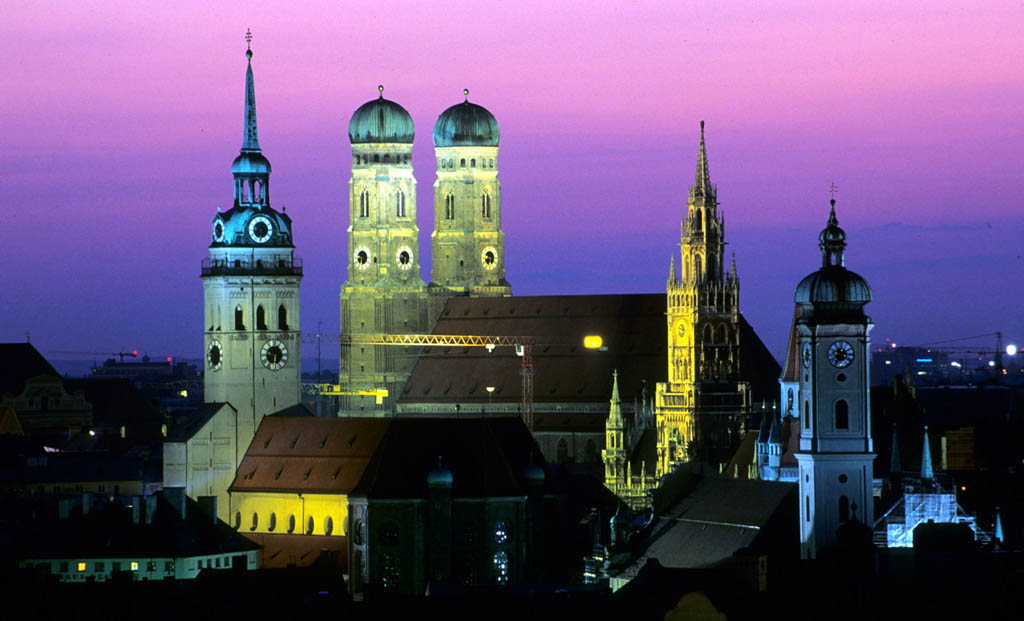
Capital of Bavarian oompah-pah, beer and BMW-riding excess. Munich, rivalled only by Berlin as Germany's most popular destination, is a sophisticated city that enjoys contradicting itself. Don some ironic lederhosen and head down to the capital of Bavaria, where folk traditions ride alongside BMWs and hearty meals share the table with haute cuisine.
 The city is a haven for all sorts of culture, with a staggering array of museums, a vibrant arts scene and the infamous revels of Oktoberfest. Bavaria is souvenir-icon Germany at its postcard best, and the fairy-tale Gothic, Biergarten-filled city of Munich is no exception.
 The heart of Munich is bisected by the Isar River, flowing northwards from its source 60km (37mi) away in the Bavarian Alps. Most of the city's sights are clustered on the river's left bank. It's a 15-minute walk from the Hauptbahnhof to the Altstadt, the historic old centre - just head east through Karlsplatz (aka Stachus) and along the pedestrianised Kaufingerstrasse. It's difficult to get lost if you use the twin onion-domed towers of the Frauenkirche as a landmark. The grand old square Marienplatz lies at the heart of the Altstadt, with the former royal palace to the north. Southwest of the Hauptbahnhof there's the gentrified Westend and the Oktoberfest grounds at Theresienwiese. The university is north of Marienplatz at Schwabing, bordered by the Englischer Garten (English Garden), Europe's largest park. Schloss Nymphenburg is around 7km (4.3mi) northwest of the centre, and Olympiapark is to the north. The area around the Hauptbahnhof (main train station) enjoys a huge selection of accommodation, while the nearby Westend district is stuffed with appealing cafes. There's a major pub and restaurant quarter east of Marienplatz, and plenty of window-shopping along Maximilianstrasse.
 Places of Interest
Munich, rivalled only by Berlin as Germany's most popular destination, is a sophisticated city that enjoys contradicting itself. Don some ironic lederhosen and head down to the capital of Bavaria, where folk traditions ride alongside BMWs and hearty meals share the table with haute cuisine.
 The city is a haven for all sorts of culture, with a staggering array of museums, a vibrant arts scene and the infamous revels of Oktoberfest. Bavaria is souvenir-icon Germany at its postcard best, and the fairy-tale Gothic, Biergarten-filled city of Munich is no exception.
 Destination Facts
Time zone: GMT +1
Area: 310
Coordinates: 48.1409759521 latitude and 11.5429534912 longitude
Population: 1300000
Languages: German belongs to the Germanic branch of the Indo-European language family and is spoken by over 100 million people worldwide, mainly in Germany, Austria and Switzerland.
Currency: Euro (€)
Daylight Saving: From last Sunday in March to last Sunday in October
Area codes: 089
 Getting there and away
Munich's multi-level Franz-Josef-Strauss Flughafen (airport) is only slightly less busy than Frankfurt's mega flughafen, but it's way less intimidating. Flights bound for Europe, New York and Sydney jet in and out, either direct or via Frankfurt, and a host of German cities are served by at least six flights daily. Departure tax is included in the ticket price, as are airport security fees. There are rapid train connections every two hours or so to all major German cities, and frequent services to European cities like Vienna, Prague, Z ü rich, Rome and Paris. Driving to Munich along Germany's excellent roads can be fun, but your car will be next to useless once you've arrived. Boat/car/train/bus combos are another possibility: ferries go between Germany and the UK, Sweden, Denmark, Norway and Finland.
 Getting around
Getting from museum A to beer hall Z is simple: either promenade with the M ü ncheners along the central pedestrian zone from the Hauptbahnhof to Marienplatz or catch a ride on Munich's excellent public transport network (MVV). The system is zone-based and most places of interest are within the inner-city white zone. The underground will get you to most of the sights, with buses filling in the gaps. A novel but expensive way to get around is via pedicabs. You can also cycle your way around the city.
 Weather
Weather-wise, the shoulder seasons - April-May, September-October - are generally good times to visit Munich, with enough sunshine to go around. If you visit between November and March you'll have below-freezing temperatures and sunless skies. As a general rule, you can expect rain any time of year; there's also a chance of experiencing the F ö hn, a warm, dry wind that's blamed for everything from headaches to crankiness and lethargy.
Related posts: Cologne City, Hamburg City, Frankfurt City, Berlin City
Capital of Bavarian oompah-pah, beer and BMW-riding excess. Munich, rivalled only by Berlin as Germany's most popular destination, is a sophisticated city that enjoys contradicting itself. Don some ironic lederhosen and head down to the capital of Bavaria, where folk traditions ride alongside BMWs and hearty meals share the table with haute cuisine.
Munich, rivalled only by Berlin as Germany's most popular destination, is a sophisticated city that enjoys contradicting itself. Don some ironic lederhosen and head down to the capital of Bavaria, where folk traditions ride alongside BMWs and hearty meals share the table with haute cuisine.
Time zone: GMT +1
Area: 310
Coordinates: 48.1409759521 latitude and 11.5429534912 longitude
Population: 1300000
Languages: German belongs to the Germanic branch of the Indo-European language family and is spoken by over 100 million people worldwide, mainly in Germany, Austria and Switzerland.
Currency: Euro (€)
Daylight Saving: From last Sunday in March to last Sunday in October
Area codes: 089
Munich's multi-level Franz-Josef-Strauss Flughafen (airport) is only slightly less busy than Frankfurt's mega flughafen, but it's way less intimidating. Flights bound for Europe, New York and Sydney jet in and out, either direct or via Frankfurt, and a host of German cities are served by at least six flights daily. Departure tax is included in the ticket price, as are airport security fees. There are rapid train connections every two hours or so to all major German cities, and frequent services to European cities like Vienna, Prague, Z ü rich, Rome and Paris. Driving to Munich along Germany's excellent roads can be fun, but your car will be next to useless once you've arrived. Boat/car/train/bus combos are another possibility: ferries go between Germany and the UK, Sweden, Denmark, Norway and Finland.
Getting from museum A to beer hall Z is simple: either promenade with the M ü ncheners along the central pedestrian zone from the Hauptbahnhof to Marienplatz or catch a ride on Munich's excellent public transport network (MVV). The system is zone-based and most places of interest are within the inner-city white zone. The underground will get you to most of the sights, with buses filling in the gaps. A novel but expensive way to get around is via pedicabs. You can also cycle your way around the city.
Weather-wise, the shoulder seasons - April-May, September-October - are generally good times to visit Munich, with enough sunshine to go around. If you visit between November and March you'll have below-freezing temperatures and sunless skies. As a general rule, you can expect rain any time of year; there's also a chance of experiencing the F ö hn, a warm, dry wind that's blamed for everything from headaches to crankiness and lethargy.
Related posts: Cologne City, Hamburg City, Frankfurt City, Berlin City
Monday, 24 October 2011
Cologne City

Introduction
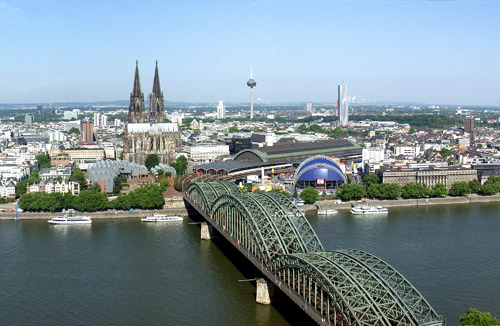
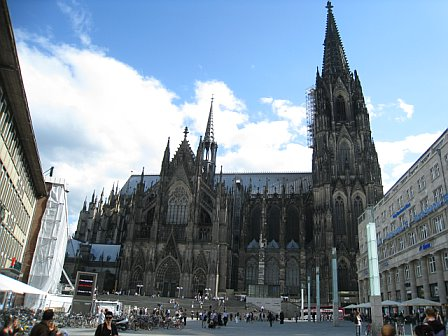
A city so good you'll want to dab it behind your ears. Cologne (K ö ln) does spoil its visitors: it heaps on the magnificent architecture, splendid museums, superb theatre and concerts, excellent dance clubs, and enormous department stores, and then, if that wasn't enough, it heaps some great food and beer on top.
Destination Facts
Time zone: GMT +1
Area: 405
Coordinates: 50.9423446655 latitude and 6.93487167358 longitude
Population: 965300
Area codes: 0221
 Getting there and away
K ö ln-Bonn Airport (www.airport -cgn.de) offers connections to around 30 European cities. The bus station (Busbahnhof) is just behind the Hauptbahnhof, on Breslauer Platz. Eurolines (www.eurolines.com) buses go to Paris ) and back daily (8 hours; some trips overnight) and to Warsaw daily (21 hours). Trips to Prague (12 hours) are scheduled three times a week. Cologne is a major train hub with regional and main-line train services to Bonn (40 minutes), D ü sseldorf (30 minutes) and Aachen (1 hour) several times an hour. Superfast ICE trains make hourly trips to Frankfurt (1.25 hours) and Berlin (4.25 hours), and every two hours to Munich (4.5 hours). Hamburg is served by IC trains (4 hours). Cologne is also a major autobahn hub and is encircled by the immense K ö lner Ring, with exits to the A1, A3, A4, A57, A555 and A559 leading in all directions. Note that this ring road can often get jammed with traffic.
Getting around
Driving in Cologne can be awful. You can all too easily end up in a tunnel you don't want to be in, or on a bridge you don't want to cross. And most streets in the centre have residential parking only, so you'll often be forced to pay too much for the pleasure of leaving your vehicle. Note that some parking lots close at night and charge an overnight fee, while taxis can be ruinously expensive. It's much better to hire a bike or take public transport. Cologne's mix of buses, trams, and U-Bahn or S-Bahn trains is operated by the Verkehrsverbund Rhein-Sieg in cooperation with Bonn's system. Buy your tickets (either short-trip or 24-hour) from the orange ticket machines at stations and aboard trams; be sure to stamp them.
 Weather
Cologne has cold winters and rainy summers - oddly, the city gets most of its precipitation in the summer months of June and August. Both of which means the nicest weather is in spring - from March to May - and autumn, from September to October. Rain aside, however, July and August are delightful months to visit in terms of temperature. The daytime maximum average temperatures in these months hover around 24 ° C (75 ° F).
Related Cities: Hamburg, Frankfurt, Berlin, Germany Country
A city so good you'll want to dab it behind your ears. Cologne (K ö ln) does spoil its visitors: it heaps on the magnificent architecture, splendid museums, superb theatre and concerts, excellent dance clubs, and enormous department stores, and then, if that wasn't enough, it heaps some great food and beer on top.
Destination Facts
Time zone: GMT +1
Area: 405
Coordinates: 50.9423446655 latitude and 6.93487167358 longitude
Population: 965300
Area codes: 0221
K ö ln-Bonn Airport (www.airport -cgn.de) offers connections to around 30 European cities. The bus station (Busbahnhof) is just behind the Hauptbahnhof, on Breslauer Platz. Eurolines (www.eurolines.com) buses go to Paris ) and back daily (8 hours; some trips overnight) and to Warsaw daily (21 hours). Trips to Prague (12 hours) are scheduled three times a week. Cologne is a major train hub with regional and main-line train services to Bonn (40 minutes), D ü sseldorf (30 minutes) and Aachen (1 hour) several times an hour. Superfast ICE trains make hourly trips to Frankfurt (1.25 hours) and Berlin (4.25 hours), and every two hours to Munich (4.5 hours). Hamburg is served by IC trains (4 hours). Cologne is also a major autobahn hub and is encircled by the immense K ö lner Ring, with exits to the A1, A3, A4, A57, A555 and A559 leading in all directions. Note that this ring road can often get jammed with traffic.
Getting around
Driving in Cologne can be awful. You can all too easily end up in a tunnel you don't want to be in, or on a bridge you don't want to cross. And most streets in the centre have residential parking only, so you'll often be forced to pay too much for the pleasure of leaving your vehicle. Note that some parking lots close at night and charge an overnight fee, while taxis can be ruinously expensive. It's much better to hire a bike or take public transport. Cologne's mix of buses, trams, and U-Bahn or S-Bahn trains is operated by the Verkehrsverbund Rhein-Sieg in cooperation with Bonn's system. Buy your tickets (either short-trip or 24-hour) from the orange ticket machines at stations and aboard trams; be sure to stamp them.
Cologne has cold winters and rainy summers - oddly, the city gets most of its precipitation in the summer months of June and August. Both of which means the nicest weather is in spring - from March to May - and autumn, from September to October. Rain aside, however, July and August are delightful months to visit in terms of temperature. The daytime maximum average temperatures in these months hover around 24 ° C (75 ° F).
Related Cities: Hamburg, Frankfurt, Berlin, Germany Country
Friday, 30 September 2011
Hamburg City

Introduction
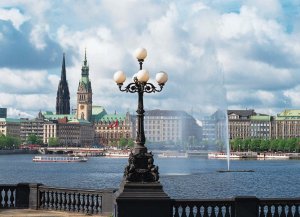
Germany's second-biggest city is no also-ran, but a thriving up-and-comer. Squeezed between scenic lakes and huge container ships on the busy Elbe river, Germany's largest port has, so the locals say, much in common with Venice and Amsterdam. Its dynamism, multiculturalism and hedonistic red-light district, the Reeperbahn, originate from its colourful maritime past.
Destination Facts
Time zone: GMT +1
Area: 755
Coordinates: 53.5709991455 latitude and 10.0279998779 longitude
Population: 1700000
Area codes: 040
Getting There
There isn't really a particular time of year that is best to visit Hamburg, because it can be chilly year round. Hamburg is particularly renowned for its Schmuddelwetter; literally this means 'foul weather' but in practice it usually just means constant drizzle. Summer temperatures usually don't creep much over 20 ° C (68 ° F) and winter is prime time if you want to head south to the Harz Mountains.
 Getting there and away
Flying into Hamburg is fairly easy; its international airport has flights across Europe, and is well connected to the city centre, with an airport bus running every 15-20min from 06:00-11:00 (25min trip). You can also take an airport bus to Altona or take the S-1 or U-1 trains to Ohlsdorf and change to an airport express bus. The city is well served by trains, with four main train stations. There are hourly trains to L ü beck, Kiel, Bremen, Frankfurt and Munich. There are also regular direct services to Berlin, Cologne, Copenhagen and Paris. Buses connect with Berlin, Paris, Amsterdam and Copenhagen, with some agencies specialising in trips to Eastern Europe. If you're driving, the autobahns A1 (L ü beck-Bremen) and A7 (Hanover-Kiel) cross just south of the city.
Getting around
Hamburg's extensive system of U-Bahn, S-Bahn, buses and ferries won't leave you stranded. S- and U-Bahn tickets can be purchased at the bright orange machines at station entrances, while bus tickets are available from the driver. City driving is surprisingly easy, with clear thoroughfares cutting through the town centre. The only drawback is expensive parking, particularly in the city centre or at hotel car parks.
Weather
While Germany can have pleasant summer weather, northern areas including Hamburg are known for their year-round Reizklima, or 'healthy, bracing climate'. Summer temperatures don't creep much over 20 ° C (68 ° F). Winter is prime ski time if you want to head south for the alps of the Harz Mountains.
 Places of Interest
Squeezed between scenic lakes and huge container ships on the busy Elbe river, Germany's largest port has, so the locals say, much in common with Venice and Amsterdam. Its dynamism, multiculturalism and hedonistic red-light district, the Reeperbahn, originate from its colourful maritime past.
Related posts: Frankfurt City, Germany Country, Berlin city
Germany's second-biggest city is no also-ran, but a thriving up-and-comer. Squeezed between scenic lakes and huge container ships on the busy Elbe river, Germany's largest port has, so the locals say, much in common with Venice and Amsterdam. Its dynamism, multiculturalism and hedonistic red-light district, the Reeperbahn, originate from its colourful maritime past.
Destination Facts
Time zone: GMT +1
Area: 755
Coordinates: 53.5709991455 latitude and 10.0279998779 longitude
Population: 1700000
Area codes: 040
Getting There
There isn't really a particular time of year that is best to visit Hamburg, because it can be chilly year round. Hamburg is particularly renowned for its Schmuddelwetter; literally this means 'foul weather' but in practice it usually just means constant drizzle. Summer temperatures usually don't creep much over 20 ° C (68 ° F) and winter is prime time if you want to head south to the Harz Mountains.
Flying into Hamburg is fairly easy; its international airport has flights across Europe, and is well connected to the city centre, with an airport bus running every 15-20min from 06:00-11:00 (25min trip). You can also take an airport bus to Altona or take the S-1 or U-1 trains to Ohlsdorf and change to an airport express bus. The city is well served by trains, with four main train stations. There are hourly trains to L ü beck, Kiel, Bremen, Frankfurt and Munich. There are also regular direct services to Berlin, Cologne, Copenhagen and Paris. Buses connect with Berlin, Paris, Amsterdam and Copenhagen, with some agencies specialising in trips to Eastern Europe. If you're driving, the autobahns A1 (L ü beck-Bremen) and A7 (Hanover-Kiel) cross just south of the city.
Getting around
Hamburg's extensive system of U-Bahn, S-Bahn, buses and ferries won't leave you stranded. S- and U-Bahn tickets can be purchased at the bright orange machines at station entrances, while bus tickets are available from the driver. City driving is surprisingly easy, with clear thoroughfares cutting through the town centre. The only drawback is expensive parking, particularly in the city centre or at hotel car parks.
Weather
While Germany can have pleasant summer weather, northern areas including Hamburg are known for their year-round Reizklima, or 'healthy, bracing climate'. Summer temperatures don't creep much over 20 ° C (68 ° F). Winter is prime ski time if you want to head south for the alps of the Harz Mountains.
Squeezed between scenic lakes and huge container ships on the busy Elbe river, Germany's largest port has, so the locals say, much in common with Venice and Amsterdam. Its dynamism, multiculturalism and hedonistic red-light district, the Reeperbahn, originate from its colourful maritime past.
Related posts: Frankfurt City, Germany Country, Berlin city
Tuesday, 27 September 2011
Frankfurt City

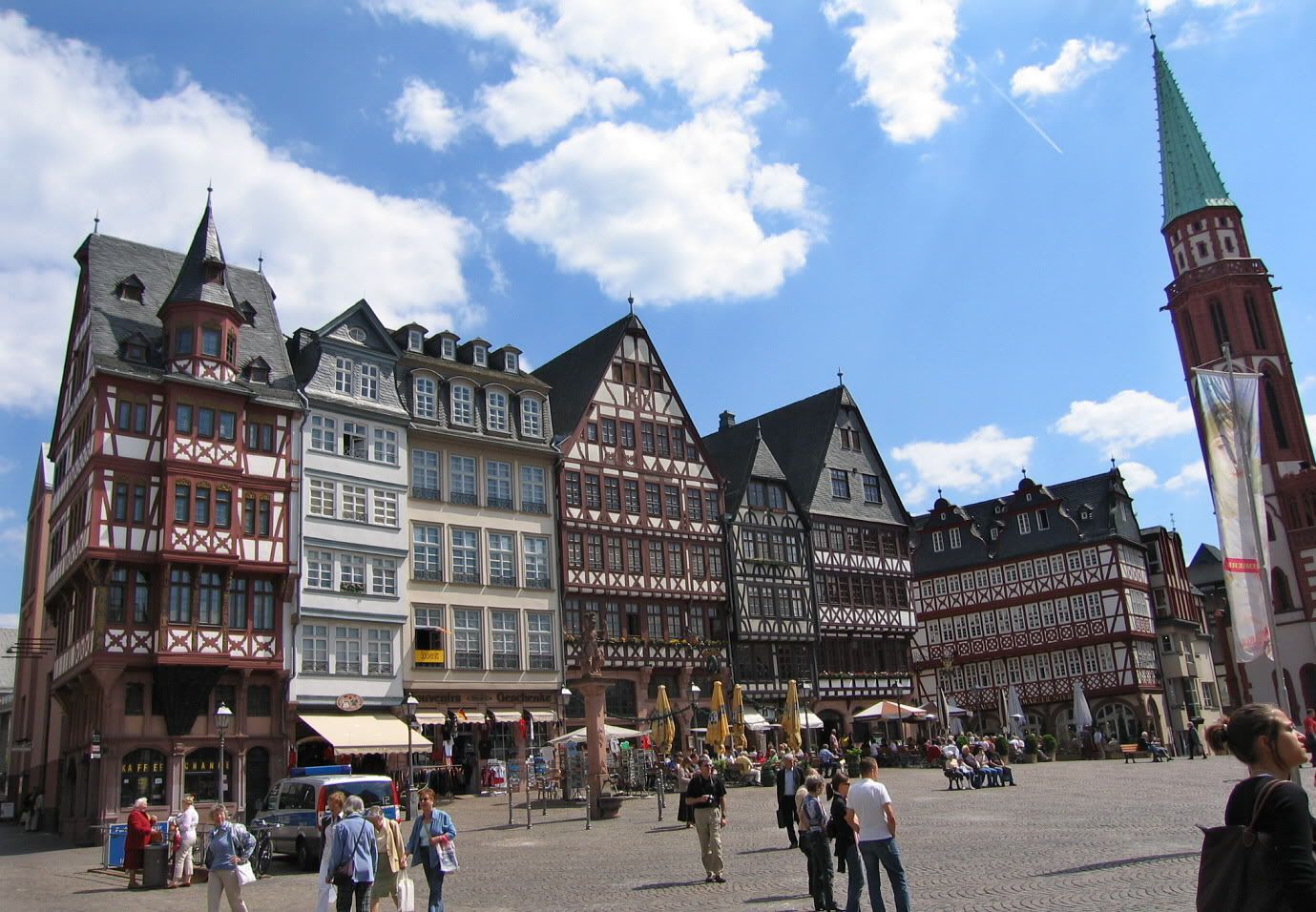
Frankfurt, the finance center, the truly European city, the transport hub. Whoever thinks of this city on the Main River, thinks of airports, the Pauls Church and Goethe. They think about the stock market, the annual book fair, and the skyline.
No doubt: Frankfurt proves that opposites attract. Frankfurt is a major metropolis in a smaller format, a world city with modesty -- and this is what makes this city on the Main so livable. There are often just a few steps between cosmopolitanism and small-town coziness in Frankfurt. The renowned museums on the banks of the Main River, the modern skyscrapers, the intellectuals of the Frankfurt Schule are just as much a part of the style of the city as local specialities such as green sauce, Ebbelwei (a fermented apple drink), and Frankfurt sausages. And the metropolis is colorful. People from 180 nations live peacefully together here where every third person has an international passport. The city loves a debate and is always communicative - something that the renowned city newspapers quickly make apparent. This city of poets and thinkers has also made sure that the scientists of the future have the tools that they need and Frankfurt is the center of the internet for Germany.
Destination Facts
Time zone: GMT +1
Area: 249
Coordinates: 50.1299972534 latitude and 8.66816711426 longitude
Population: 667598
Daylight Saving: From last Sunday in March to last Sunday in October
Area codes: 069
 Getting There
As a major trade show and convention town, Frankfurt's population swells during March-May and September-October - which just happen to be the best times to visit weatherwise. The solution is to book ahead or stay at places either beneath or beyond the conventioneers' budgets. The winter months (November-February) are prone to storms and freezing temperatures but bring a full social and entertainment schedule and zero tourist crowds. An exception is December when the Christmas market is in full swing, June to August can be rather hot and characterised by afternoon thunderstorms, but on the plus side, much of the action moves outdoors, and cafes, parks and the riverbank bustle with activity.
Weather
The weather in May, September and October is often better than in the 'summer' months (June to August), which can be rainy and temperamental. The average temperature is around 10 ° C (50 ° F), but temperatures at the height of the summer often soar well over 30 ° C (86 ° F). From November to February temperatures frequently slide below freezing point and storms are common.
Places of Interest
Put in the miles on foot and there are unexpected surprises.
Fl â neurs get the best view of Frankfurt. Luckily most of its obvious attractions are located around the city centre. Invest in a 'Museumsufer' ticket (available at museums) and spend a couple of days cruising Frankfurt's galleries and museums at a fraction of their individual prices.
 Frankfurt is often seen only as a transit hub or a business centre, but it's so much more. It boasts Germany's most spectacular skyline, mirrored in the Main River, and Europe's tallest office building. It's also the country's most international town; more than a quarter of its citizens are foreign. Frankfurt throws more money at the arts than any other European city, so you'll most likely catch a ground-breaking exhibition at one of its museums. And if you do happen to get stuck at the mega-airport there's a nightclub, art gallery and X-rated cinema to help while away those in-transit hours.
Related posts: Germany Country, Berlin city
Time zone: GMT +1
Area: 249
Coordinates: 50.1299972534 latitude and 8.66816711426 longitude
Population: 667598
Daylight Saving: From last Sunday in March to last Sunday in October
Area codes: 069
As a major trade show and convention town, Frankfurt's population swells during March-May and September-October - which just happen to be the best times to visit weatherwise. The solution is to book ahead or stay at places either beneath or beyond the conventioneers' budgets. The winter months (November-February) are prone to storms and freezing temperatures but bring a full social and entertainment schedule and zero tourist crowds. An exception is December when the Christmas market is in full swing, June to August can be rather hot and characterised by afternoon thunderstorms, but on the plus side, much of the action moves outdoors, and cafes, parks and the riverbank bustle with activity.
Weather
The weather in May, September and October is often better than in the 'summer' months (June to August), which can be rainy and temperamental. The average temperature is around 10 ° C (50 ° F), but temperatures at the height of the summer often soar well over 30 ° C (86 ° F). From November to February temperatures frequently slide below freezing point and storms are common.
Places of Interest
Put in the miles on foot and there are unexpected surprises.
Fl â neurs get the best view of Frankfurt. Luckily most of its obvious attractions are located around the city centre. Invest in a 'Museumsufer' ticket (available at museums) and spend a couple of days cruising Frankfurt's galleries and museums at a fraction of their individual prices.
Related posts: Germany Country, Berlin city
Saturday, 17 September 2011
Berlin City
Introduction
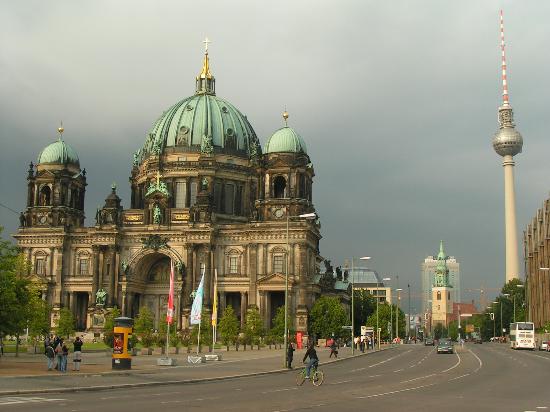
Cutting-edge Berlin is a feast of history, theatre and music. Berlin had modest beginnings as a trading centre in the 13th century, growing into a European powerhouse that hogged the 20th century stage. Since reunification in 1990, it has evolved into a dynamic, sexy and creative city where a surprising lightheartedness lurks beneath an austere exterior.
Berlin is the heart of modern Germany, with a stoic beat that echoes through grand public buildings, glorious museums and theatres, urbane restaurants, bustling pubs and raucous nightclubs. It's a city that thrives on change and that has made a virtue out of reinventing itself.
'All free men, wherever they may live, are citizens of Berlin, and, therefore, as a free man, I take pride in the words 'Ich bin ein Berliner!' - John F Kennedy, 1963
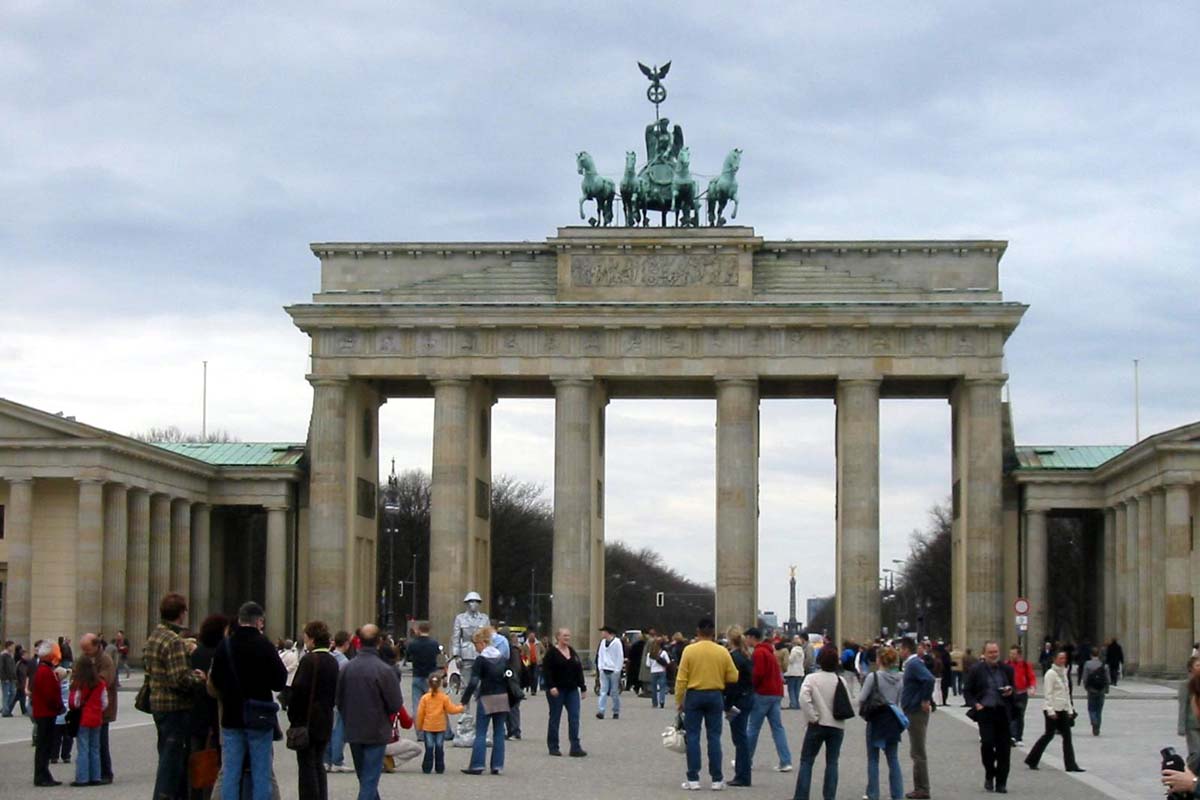
Berlin is made up of 12 administrative districts of which the central ones hold the most interest to visitors. Mitte, formerly In East Berlin, is the city's historic core and packs such blockbuster sights as the Brandenburger Tor, the Holocaust Memorial, Unter den Linden boulevard, Museumsinsel and the Fernsehturm (TV Tower). The Scheunenviertel area, anchored by the Hackesche H ö fe, is jammed with bars, restaurants, galleries and designer boutiques. To the north, gentrified and family-dominated Prenzlauer Berg beckons with a vibrant caf é culture, a bevy of unique owner-run shops and pockets of nightlife action. South of Mitte, Kreuzberg counts Checkpoint Charlie and the J ü disches Museum (Jewish Museum) among its highlights.Eastern Kreuzberg, around Kottbusser Tor, is the hub of Berlin's large Turkish population and the place to get down and dirty in trashy-chic bars and clubs. Across the Spree River, Friedrichshain is an eccentric mix of Stalinist architecture, gritty squat-style pubs, polished cocktail culture and chilly beach bars. The main sight is the East Side Gallery, the longest surviving section of the Wall. West of Mitte, Tiergarten boasts most of Berlin's large-scale post-reunification projects, including the government district, the Hauptbahnhof glass palace and Potsdamer Platz. The vast Tiergarten park links Mitte with Charlottenburg, the hub of western Berlin with lively shopping along Kurf ü rstendamm and the royal splendour of Schloss Charlottenburg. Much of the district is upmarket residential, as are the adjoining quarters of Wilmersdorf and Sch ö neberg, although the latter includes a throbbing gay district around Nollendorfplatz.
Destination Facts
Time zone: GMT +1
Area: 889
Coordinates: 52.5162734985 latitude and 13.3275728226 longitude
Population: 3431675
Daylight Saving: From last Sunday in March to last Sunday in October
Area codes: 030
Getting There
Berlin is a fascinating city year-round, although most visitors arrive between May and September when the weather is the most reliable. Things are busier in high season, but despite the crowds, summer is a lovely time to be here because much of life moves outdoors. Rain is, however, possible in any month, so come prepared. From November to early March, skies tend to be gloomy and the mercury often drops below freezing. On the plus side, there are fewer visitors and shorter queues. Avoid major holidays like Easter, Christmas and New Year and special events such as Loveparade - unless, of course, that's what brings you here in the first place.
Weather
Berlin has a moderately cool and humid climate determined by a mixing of air masses from the Atlantic Ocean and the continental climate of eastern Europe. Predictably, December to February are the coldest months. When the winds blow from Russia it can get mighty chilly, with temperatures dropping below freezing. Generally, though, winters are relatively mild. More than half of the city's annual inversion days (when stagnant cold air traps warmer air below, bringing about smog) occur in these months. July and August are the warmest times, though usually not chokingly hot. The nicest months are September and October, which deliver the added bonus of autumn foliage. May and June, when the trees are in bloom and the outdoor cafe season kicks off, are popular months too, though rain is more likely at this time.
 Places of Interest
Trawl through the layers of a city in constant flux. Berlin is a veritable motherlode for lovers of art, architecture and artefacts. Its great clusters of museums will keep the most dedicated culture addict happy. The layers of the city's history, from imperial fancy to war and violent division, exist in fascinating proximity to its dynamic present.
Berlin had modest beginnings as a trading centre in the 13th century, growing into a European powerhouse that hogged the 20th century stage. Since reunification in 1990, it has evolved into a dynamic, sexy and creative city where a surprising lightheartedness lurks beneath an austere exterior.
Berlin is the heart of modern Germany, with a stoic beat that echoes through grand public buildings, glorious museums and theatres, urbane restaurants, bustling pubs and raucous nightclubs. It's a city that thrives on change and that has made a virtue out of reinventing itself.
 Related Posts: Germany Country
Cutting-edge Berlin is a feast of history, theatre and music. Berlin had modest beginnings as a trading centre in the 13th century, growing into a European powerhouse that hogged the 20th century stage. Since reunification in 1990, it has evolved into a dynamic, sexy and creative city where a surprising lightheartedness lurks beneath an austere exterior.
Berlin is the heart of modern Germany, with a stoic beat that echoes through grand public buildings, glorious museums and theatres, urbane restaurants, bustling pubs and raucous nightclubs. It's a city that thrives on change and that has made a virtue out of reinventing itself.
'All free men, wherever they may live, are citizens of Berlin, and, therefore, as a free man, I take pride in the words 'Ich bin ein Berliner!' - John F Kennedy, 1963
Berlin is made up of 12 administrative districts of which the central ones hold the most interest to visitors. Mitte, formerly In East Berlin, is the city's historic core and packs such blockbuster sights as the Brandenburger Tor, the Holocaust Memorial, Unter den Linden boulevard, Museumsinsel and the Fernsehturm (TV Tower). The Scheunenviertel area, anchored by the Hackesche H ö fe, is jammed with bars, restaurants, galleries and designer boutiques. To the north, gentrified and family-dominated Prenzlauer Berg beckons with a vibrant caf é culture, a bevy of unique owner-run shops and pockets of nightlife action. South of Mitte, Kreuzberg counts Checkpoint Charlie and the J ü disches Museum (Jewish Museum) among its highlights.Eastern Kreuzberg, around Kottbusser Tor, is the hub of Berlin's large Turkish population and the place to get down and dirty in trashy-chic bars and clubs. Across the Spree River, Friedrichshain is an eccentric mix of Stalinist architecture, gritty squat-style pubs, polished cocktail culture and chilly beach bars. The main sight is the East Side Gallery, the longest surviving section of the Wall. West of Mitte, Tiergarten boasts most of Berlin's large-scale post-reunification projects, including the government district, the Hauptbahnhof glass palace and Potsdamer Platz. The vast Tiergarten park links Mitte with Charlottenburg, the hub of western Berlin with lively shopping along Kurf ü rstendamm and the royal splendour of Schloss Charlottenburg. Much of the district is upmarket residential, as are the adjoining quarters of Wilmersdorf and Sch ö neberg, although the latter includes a throbbing gay district around Nollendorfplatz.
Destination Facts
Time zone: GMT +1
Area: 889
Coordinates: 52.5162734985 latitude and 13.3275728226 longitude
Population: 3431675
Daylight Saving: From last Sunday in March to last Sunday in October
Area codes: 030
Getting There
Berlin is a fascinating city year-round, although most visitors arrive between May and September when the weather is the most reliable. Things are busier in high season, but despite the crowds, summer is a lovely time to be here because much of life moves outdoors. Rain is, however, possible in any month, so come prepared. From November to early March, skies tend to be gloomy and the mercury often drops below freezing. On the plus side, there are fewer visitors and shorter queues. Avoid major holidays like Easter, Christmas and New Year and special events such as Loveparade - unless, of course, that's what brings you here in the first place.
Weather
Berlin has a moderately cool and humid climate determined by a mixing of air masses from the Atlantic Ocean and the continental climate of eastern Europe. Predictably, December to February are the coldest months. When the winds blow from Russia it can get mighty chilly, with temperatures dropping below freezing. Generally, though, winters are relatively mild. More than half of the city's annual inversion days (when stagnant cold air traps warmer air below, bringing about smog) occur in these months. July and August are the warmest times, though usually not chokingly hot. The nicest months are September and October, which deliver the added bonus of autumn foliage. May and June, when the trees are in bloom and the outdoor cafe season kicks off, are popular months too, though rain is more likely at this time.
Trawl through the layers of a city in constant flux. Berlin is a veritable motherlode for lovers of art, architecture and artefacts. Its great clusters of museums will keep the most dedicated culture addict happy. The layers of the city's history, from imperial fancy to war and violent division, exist in fascinating proximity to its dynamic present.
Berlin had modest beginnings as a trading centre in the 13th century, growing into a European powerhouse that hogged the 20th century stage. Since reunification in 1990, it has evolved into a dynamic, sexy and creative city where a surprising lightheartedness lurks beneath an austere exterior.
Berlin is the heart of modern Germany, with a stoic beat that echoes through grand public buildings, glorious museums and theatres, urbane restaurants, bustling pubs and raucous nightclubs. It's a city that thrives on change and that has made a virtue out of reinventing itself.
Subscribe to:
Posts (Atom)