
Showing posts with label France. Show all posts
Showing posts with label France. Show all posts
Thursday, 27 September 2012
10 Europe Country in Autumn

Friday, 21 October 2011
Nice City


Introduction
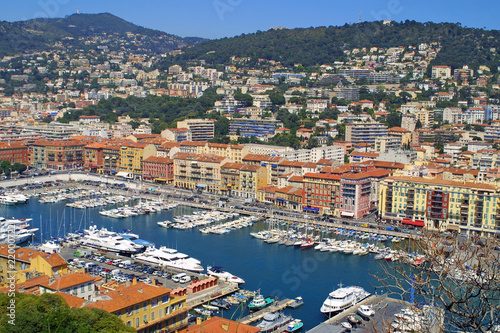
If Serge Gainsbourg's 'Couleur Caf é ' were a town. Nice, the capital of the C ô te d'Azur, is not 'nice' - what an insult! Nice is a sparky, sexy city, with a gritty underside that keeps it grounded. If Nice were a person, it would wear designer cocktail dresses with old army boots, cause lots of trouble and be livid about that insipid adjective.
 Destination Facts
Time zone: GMT +1
Area: 72
Coordinates: 43.4212 latitude and 7.2217 longitude
Population: 342000
Area codes: 04
 Getting there and away
A é roport International Nice-C ô te d'Azur (www.nice.aeroport.fr) is 6km (3.7mi) west of Nice. Over 40 national and international airlines fly in and out of Nice, and services to Paris are very frequent. Several bus companies link Nice with domestic and international destinations. If you'd rather travel by rail, there are fast trains running all along the coast and an infrequent TGV (high-speed train) service to Paris - you may find it quicker to catch a train to Marseille and change there. Regular ferries sail from Nice to Corsica.
 Getting around
When the Communaut é d'Agglom é ration Nice C ô te d'Azur (the Nice C ô te d'Azur Community of Municipalities, which comprises 24 towns) was created in 2005, a new public transport provider was established called Ligne d'azur. Some of the public transport changes introduced since then include a single fare system for all 24 towns and modified fares and itineraries. The website (www.lignedazur.com) has all the details. At the time of writing, unlimited travel for one day costs 4 euros which entitles you to travel on the new express bus services (98 and 99) that travel between downtown Nice and the airport. The city is building a new tramway, which is expected to be completed later this year. It will run north and east from Place Massena - north all the way to the Nice football stadium; east along Jean Jaures and around the Old town and through Place Garibaldi to points in the city's far east. Trams will run from 05:00- 01:00 daily. If you'd rather drive, there are plenty of car rental companies to choose from. Exploring the centre of town is best done on foot, but having your own wheels can be helpful for discovering the rest of the C ô te d'Azur. Of course, travelling by sea is another option; rent a yacht and live the high life - if only for a day.
 Weather
The C ô te d'Azur has a proven reputation for sun, with an average 2500 hours per year. Winter (Nov-Feb) hardly ever gets colder than 5 ° C (41 ° F) and from then on it's all just differing degrees of warm, from a mild average of 15 ° C (59 ° F) most of the year right up to temperatures of 40 ° C (104 ° F) in July and August.
Related City: Corsica, Bordeaux, Paris city
If Serge Gainsbourg's 'Couleur Caf é ' were a town. Nice, the capital of the C ô te d'Azur, is not 'nice' - what an insult! Nice is a sparky, sexy city, with a gritty underside that keeps it grounded. If Nice were a person, it would wear designer cocktail dresses with old army boots, cause lots of trouble and be livid about that insipid adjective.
Time zone: GMT +1
Area: 72
Coordinates: 43.4212 latitude and 7.2217 longitude
Population: 342000
Area codes: 04
A é roport International Nice-C ô te d'Azur (www.nice.aeroport.fr) is 6km (3.7mi) west of Nice. Over 40 national and international airlines fly in and out of Nice, and services to Paris are very frequent. Several bus companies link Nice with domestic and international destinations. If you'd rather travel by rail, there are fast trains running all along the coast and an infrequent TGV (high-speed train) service to Paris - you may find it quicker to catch a train to Marseille and change there. Regular ferries sail from Nice to Corsica.
When the Communaut é d'Agglom é ration Nice C ô te d'Azur (the Nice C ô te d'Azur Community of Municipalities, which comprises 24 towns) was created in 2005, a new public transport provider was established called Ligne d'azur. Some of the public transport changes introduced since then include a single fare system for all 24 towns and modified fares and itineraries. The website (www.lignedazur.com) has all the details. At the time of writing, unlimited travel for one day costs 4 euros which entitles you to travel on the new express bus services (98 and 99) that travel between downtown Nice and the airport. The city is building a new tramway, which is expected to be completed later this year. It will run north and east from Place Massena - north all the way to the Nice football stadium; east along Jean Jaures and around the Old town and through Place Garibaldi to points in the city's far east. Trams will run from 05:00- 01:00 daily. If you'd rather drive, there are plenty of car rental companies to choose from. Exploring the centre of town is best done on foot, but having your own wheels can be helpful for discovering the rest of the C ô te d'Azur. Of course, travelling by sea is another option; rent a yacht and live the high life - if only for a day.
The C ô te d'Azur has a proven reputation for sun, with an average 2500 hours per year. Winter (Nov-Feb) hardly ever gets colder than 5 ° C (41 ° F) and from then on it's all just differing degrees of warm, from a mild average of 15 ° C (59 ° F) most of the year right up to temperatures of 40 ° C (104 ° F) in July and August.
Related City: Corsica, Bordeaux, Paris city
Thursday, 29 September 2011
Corsica City

Introduction
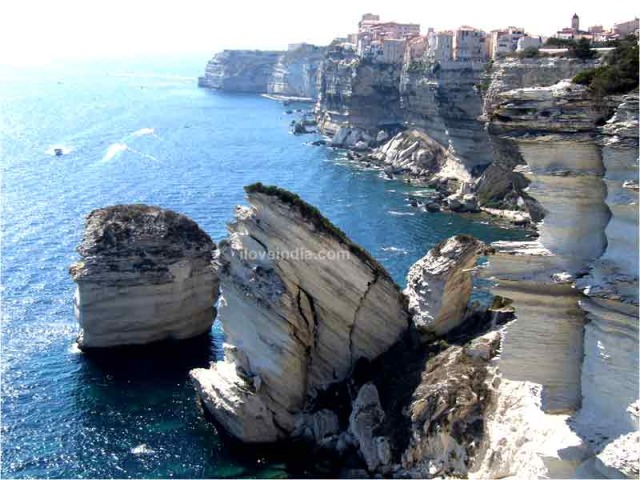
An island to suit both the rugged bulls and the lounge lizards. Balzac described Corsica as 'a French island basking in the Italian sun', but the island has a singular character that is entirely its own. This beautiful, wild playground is the ultimate combination destination - physical exertion in the elements by day, French wine and cuisine by evening.
Proud, wild, defiantly independent and just a touch old-fashioned, Corsica is in many ways a separate nation to the rest of France. In fact, the island has been French for only 200 of its 4000-year history, and the island's unique culture, music and language have survived intact despite a couple of centuries of French rule.
Geography:
Almost nose-to-nose in the Mediterranean Sea with its Italian cousin Sardinia, Corsica sits at about knee height across the water from Italy's boot. Extending the physiological metaphor, the island looks a little like a hand, with a finger (Cap Corse) pointing sternly up towards its former master, Genoa. Corsica - or Corse, as it's known in French - is around a fifth the size of Switzerland and represents just 1.6% of all French territory. A land of incredible landscapes and amazing geological history, Corsica has 43 glacier lakes and mountains that rise up thousands of metres.
 Destination Facts
Time zone: GMT +1
Area: 8722
Population: 260000
Languages: French is the official language and spoken by everyone; regionally however you will come across Flemish, Alsacian, Breton, Basque, Catalan, Proven ç al and Corsican as well.
Currency: euro (€)
Daylight Saving: From last Sunday in March to last Sunday in October
Area codes: The whole island is covered by 04 95, which you have to dial regardless of where you're calling from.
Getting there and away
There are a few reasons why Corsica has remained relatively unspoilt, and one of them is that it's not the easiest place to get to. It's not on any of the major air routes, so you need to get to continental Europe and then make your way across to the island. Most air travellers will pass through a French connecting airport; Nice is the closest. The main operators to the island are Air France (www.airfrance.com) and Compagnie Corse Mediteran é e (www.ccm-airlines.com). Ajaccio, Bastia, Calvi and Figari are all serviced with modern airports. Watch out, airport taxes can be quite expensive because you pay for both departure and arrival. Road and rail are also options - if you can get yourself to continental Europe's coast, you can complete your journey by ferry. Approaching Corsica by sea is a great experience, and also underscores the island's remote position from the continent. From France, the Nice-Calvi/ Î le Rousse route is the fastest and cheapest - just three hours on the NGV (high-speed ferry); car ferries take around nine hours, often travelling overnight. Ferries also leave the mainland from Marseille and Toulon, and dock in Bastia and Ajaccio. Leaving from Italy is cheapest, with the Livorno-Bastia trip by NGV a lightning-fast two hours or four by slow boat. From Piombino by slow boat it takes three and a half hours, while Genoa-Bastia takes six and a half. You can also leave from Savona and dock in Bastia or Calvi. Heading south, it's a hop, skip and jump by boat from Bonifacio to Santa Teresa de Gallura in Sardinia. If you want to experience some yesteryear romance on the high seas, reserve an overnight berth in an older ferry. Be sure to book ahead for all ferries in high season, and remember that ferries can be cancelled at very short notice due to bad weather.
 Getting around
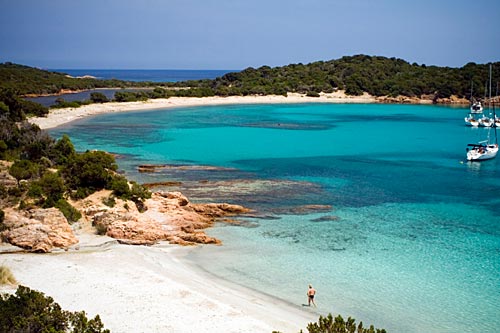
Getting around Corsica can be almost as tricky as getting to it. Despite the four airports on the island, you can't fly internally, so be prepared to get out on the roads. Buses serve all the major towns on the island and many of the little ones in between. Unfortunately, regular departures aren't their strong suit. If you're limited to public transport be prepared to shape your itinerary around (frustratingly) infrequent buses and the routes they ply. Train travel is also somewhat circumscribed, with journeys limited to the main Bastia-Ajaccio via Corte line and the Ponte Leccia- Î le Rousse-Algajola-Calvi spur. Still, the Corsican rail network was built in the heroic age of railroad building, and the scenery as well as the engineering brilliance of 38 tunnels, 34 viaducts and 12 bridges (one of them an Eiffel masterpiece) make rolling the rails a unique experience. Driving yourself around offers the most flexibility; however, the narrow roads, blind hairpin bends, sheer drops, impatient locals, parking problems and traffic jams in towns not built for cars all make for less than pleasant motoring. Cycling is a popular way to get around and you can hire mountain bikes throughout the island. Most towns are small enough to simply walk around, although the larger Ajaccio and Bastia make it easier with local bus services. Elsewhere you may find yourself reliant on taxis.
 Weather
The Mediterranean climate, characterised by summer droughts and sun, gives Corsica an average annual temperature of 12 ° C (53 ° F). Between June and September, average temperatures often exceed 25 ° C (80 ° F), in July and August temperatures can sizzle above 35 ° C (90 ° F). Spring and autumn are both fine, with average temperatures of around 15 ° C (27 ° F) and maximum temperatures of around 20 ° C (70 ° F).
Places of Interest
Balzac described Corsica as 'a French island basking in the Italian sun', but the island has a singular character that is entirely its own. This beautiful, wild playground is the ultimate combination destination - physical exertion in the elements by day, French wine and cuisine by evening.
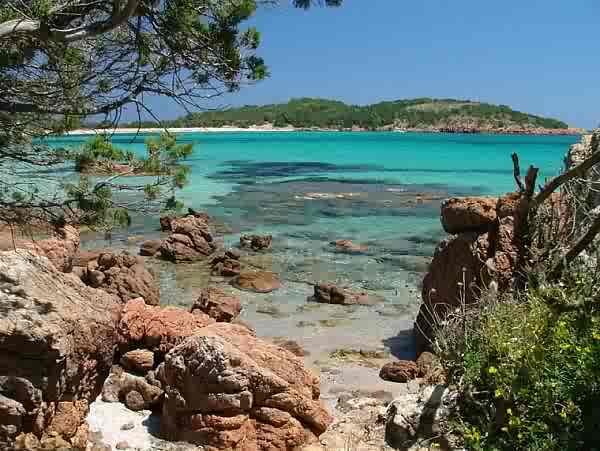 Proud, wild, defiantly independent and just a touch old-fashioned, Corsica is in many ways a separate nation to the rest of France. In fact, the island has been French for only 200 of its 4000-year history, and the island's unique culture, music and language have survived intact despite a couple of centuries of French rule.
Related City: Paris City, Bordeaux City, France Contry
An island to suit both the rugged bulls and the lounge lizards. Balzac described Corsica as 'a French island basking in the Italian sun', but the island has a singular character that is entirely its own. This beautiful, wild playground is the ultimate combination destination - physical exertion in the elements by day, French wine and cuisine by evening.
Proud, wild, defiantly independent and just a touch old-fashioned, Corsica is in many ways a separate nation to the rest of France. In fact, the island has been French for only 200 of its 4000-year history, and the island's unique culture, music and language have survived intact despite a couple of centuries of French rule.
Geography:
Almost nose-to-nose in the Mediterranean Sea with its Italian cousin Sardinia, Corsica sits at about knee height across the water from Italy's boot. Extending the physiological metaphor, the island looks a little like a hand, with a finger (Cap Corse) pointing sternly up towards its former master, Genoa. Corsica - or Corse, as it's known in French - is around a fifth the size of Switzerland and represents just 1.6% of all French territory. A land of incredible landscapes and amazing geological history, Corsica has 43 glacier lakes and mountains that rise up thousands of metres.
Time zone: GMT +1
Area: 8722
Population: 260000
Languages: French is the official language and spoken by everyone; regionally however you will come across Flemish, Alsacian, Breton, Basque, Catalan, Proven ç al and Corsican as well.
Currency: euro (€)
Daylight Saving: From last Sunday in March to last Sunday in October
Area codes: The whole island is covered by 04 95, which you have to dial regardless of where you're calling from.
Getting there and away
There are a few reasons why Corsica has remained relatively unspoilt, and one of them is that it's not the easiest place to get to. It's not on any of the major air routes, so you need to get to continental Europe and then make your way across to the island. Most air travellers will pass through a French connecting airport; Nice is the closest. The main operators to the island are Air France (www.airfrance.com) and Compagnie Corse Mediteran é e (www.ccm-airlines.com). Ajaccio, Bastia, Calvi and Figari are all serviced with modern airports. Watch out, airport taxes can be quite expensive because you pay for both departure and arrival. Road and rail are also options - if you can get yourself to continental Europe's coast, you can complete your journey by ferry. Approaching Corsica by sea is a great experience, and also underscores the island's remote position from the continent. From France, the Nice-Calvi/ Î le Rousse route is the fastest and cheapest - just three hours on the NGV (high-speed ferry); car ferries take around nine hours, often travelling overnight. Ferries also leave the mainland from Marseille and Toulon, and dock in Bastia and Ajaccio. Leaving from Italy is cheapest, with the Livorno-Bastia trip by NGV a lightning-fast two hours or four by slow boat. From Piombino by slow boat it takes three and a half hours, while Genoa-Bastia takes six and a half. You can also leave from Savona and dock in Bastia or Calvi. Heading south, it's a hop, skip and jump by boat from Bonifacio to Santa Teresa de Gallura in Sardinia. If you want to experience some yesteryear romance on the high seas, reserve an overnight berth in an older ferry. Be sure to book ahead for all ferries in high season, and remember that ferries can be cancelled at very short notice due to bad weather.
Getting around Corsica can be almost as tricky as getting to it. Despite the four airports on the island, you can't fly internally, so be prepared to get out on the roads. Buses serve all the major towns on the island and many of the little ones in between. Unfortunately, regular departures aren't their strong suit. If you're limited to public transport be prepared to shape your itinerary around (frustratingly) infrequent buses and the routes they ply. Train travel is also somewhat circumscribed, with journeys limited to the main Bastia-Ajaccio via Corte line and the Ponte Leccia- Î le Rousse-Algajola-Calvi spur. Still, the Corsican rail network was built in the heroic age of railroad building, and the scenery as well as the engineering brilliance of 38 tunnels, 34 viaducts and 12 bridges (one of them an Eiffel masterpiece) make rolling the rails a unique experience. Driving yourself around offers the most flexibility; however, the narrow roads, blind hairpin bends, sheer drops, impatient locals, parking problems and traffic jams in towns not built for cars all make for less than pleasant motoring. Cycling is a popular way to get around and you can hire mountain bikes throughout the island. Most towns are small enough to simply walk around, although the larger Ajaccio and Bastia make it easier with local bus services. Elsewhere you may find yourself reliant on taxis.
The Mediterranean climate, characterised by summer droughts and sun, gives Corsica an average annual temperature of 12 ° C (53 ° F). Between June and September, average temperatures often exceed 25 ° C (80 ° F), in July and August temperatures can sizzle above 35 ° C (90 ° F). Spring and autumn are both fine, with average temperatures of around 15 ° C (27 ° F) and maximum temperatures of around 20 ° C (70 ° F).
Places of Interest
Balzac described Corsica as 'a French island basking in the Italian sun', but the island has a singular character that is entirely its own. This beautiful, wild playground is the ultimate combination destination - physical exertion in the elements by day, French wine and cuisine by evening.
Related City: Paris City, Bordeaux City, France Contry
Saturday, 24 September 2011
Bordeaux City

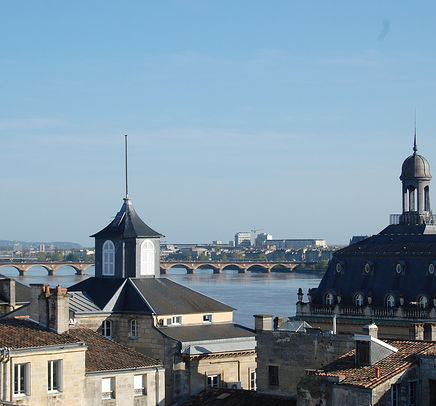
Introduction
The clink of wine glasses echoes through this picturesque town. Practise your best sant é - you'll be raising your glass a lot in Bordeaux, home to one of France's seven key wine regions and known for its award-winning big reds. Tour the chateaux, imbibe the world-class wines and indulge in the regional cuisine, but remember that Bordeaux offers much more.
Destination Facts
Time zone: GMT +1
Area: 4936
Coordinates: 44.83333 latitude and -0.56667 longitude
Population: 215363
Area codes: 05 56
Getting there and away
Bordeaux airport is in M é rignac, 10km (6mi) west of the city centre. Buses to places all over the Gironde (and nearby d é partements) leave from the Halte Routi è re All è es de Chartres in the northeast corner of Esplanade des Quinconces; schedules are posted. Citrame Aquitane runs most buses to destinations in the Gironde and has an information kiosk at the Halte Routi è re. The Eurolines office faces the train station. Bordeaux is one of France's most important rail transit points. The station, Gare St-Jean, is about 3km (2mi) from the city centre at the southern terminus of cours de la Marne. Be extra careful with your bags here. Destinations include Paris' Gare Montparnasse, Bayonne, Nantes, Poitiers, La Rochelle and Toulouse. All the big car rental companies have offices in the train station building.
Getting around
You can get around Bordeaux in a variety of ways. You can rent a bicycle or go-ped motorised scooter, hop on one of the urban buses (including night buses on weekends and during large events), or catch a cab. There is also a new tramway system - the first section opened in December 2003, with more lines to follow. Parking in the city centre is hard to find and pricey.
Weather
France, including Bordeaux, is at its best in spring, though winter-like relapses aren't unknown. Autumn is pleasant but the days are fairly short. Bordeaux' proximity to the Atlantic Ocean ensures a fairly mild climate.

Places of Interest
Practise your best sant é - you'll be raising your glass a lot in Bordeaux, home to one of France's seven key wine regions and known for its award-winning big reds. Tour the chateaux, imbibe the world-class wines and indulge in the regional cuisine, but remember that Bordeaux offers much more.
 Related posts: France Country, Paris City
The clink of wine glasses echoes through this picturesque town. Practise your best sant é - you'll be raising your glass a lot in Bordeaux, home to one of France's seven key wine regions and known for its award-winning big reds. Tour the chateaux, imbibe the world-class wines and indulge in the regional cuisine, but remember that Bordeaux offers much more.
Destination Facts
Time zone: GMT +1
Area: 4936
Coordinates: 44.83333 latitude and -0.56667 longitude
Population: 215363
Area codes: 05 56
Getting there and away
Bordeaux airport is in M é rignac, 10km (6mi) west of the city centre. Buses to places all over the Gironde (and nearby d é partements) leave from the Halte Routi è re All è es de Chartres in the northeast corner of Esplanade des Quinconces; schedules are posted. Citrame Aquitane runs most buses to destinations in the Gironde and has an information kiosk at the Halte Routi è re. The Eurolines office faces the train station. Bordeaux is one of France's most important rail transit points. The station, Gare St-Jean, is about 3km (2mi) from the city centre at the southern terminus of cours de la Marne. Be extra careful with your bags here. Destinations include Paris' Gare Montparnasse, Bayonne, Nantes, Poitiers, La Rochelle and Toulouse. All the big car rental companies have offices in the train station building.
Getting around
You can get around Bordeaux in a variety of ways. You can rent a bicycle or go-ped motorised scooter, hop on one of the urban buses (including night buses on weekends and during large events), or catch a cab. There is also a new tramway system - the first section opened in December 2003, with more lines to follow. Parking in the city centre is hard to find and pricey.
Weather
France, including Bordeaux, is at its best in spring, though winter-like relapses aren't unknown. Autumn is pleasant but the days are fairly short. Bordeaux' proximity to the Atlantic Ocean ensures a fairly mild climate.
Places of Interest
Practise your best sant é - you'll be raising your glass a lot in Bordeaux, home to one of France's seven key wine regions and known for its award-winning big reds. Tour the chateaux, imbibe the world-class wines and indulge in the regional cuisine, but remember that Bordeaux offers much more.
Sunday, 18 September 2011
Paris City


Introduction
Gay Paree will put the joie back in your vivre. Paris stimulates the senses, demanding to be seen, heard, touched, tasted and smelt. From romance along the Seine to landscapes on bus-sized canvases to the pick-an-ism types in cafes monologuing on the use of garlic or the finer points of Jerry Lewis, Paris is the essence of all things French.
Gaze rapturously at its breezy boulevards, impressive monuments, great works of art and magic lights. Savour its gourmet selection of cheese, chocolate, wine and seafood. Feel the wind in your face as you rollerblade through Bastille, or a frisson of fear and pleasure atop the Eiffel Tower.
'Paris, I believe, is a man in his twenties in love with an older woman.' - John Berger
Both the capital of the nation and of the historic Î le de France region, Paris is located in northern central France. Central Paris - known as Intra-Muros, or within the walls - is a nice, oval-ish shape, divided neatly in two by the Seine, with 20 arrondissements (districts) spiralling clockwise from the centre in a logical fashion. The area north of the river, the Rive Droite (Right Bank), includes the tree-lined Avenue des Champs- É lys é es, running west to the Arc de Triomphe. East of the avenue is the massive Mus é e du Louvre, the Centre Georges Pompidou and a lively district of museums, shops, markets and restaurants. Immediately south of the Centre Georges Pompidou on the Î le de la Cit é is the world-famous Notre Dame. The area south of the river, the Rive Gauche (Left Bank), is home to the city's most prominent landmark, the Eiffel Tower. To the east, in the Saint Germain de Pr é s and Montparnasse districts, Paris' famous academic, artistic and intellectual milieus waft in and out of focus through a haze of Gitanes smoke.
Destination Facts
Mayor: Bertrand Delano ë
Time zone: GMT +1 (Central European Time).
Area: 105
Coordinates: 48.8819999695 latitude and 2.43300008774 longitude
Population: 2200000
Daylight Saving: From last Sunday in March to last Sunday in October
Area codes: Area codes have been integrated into all French telephone numbers. Dial all 10 digits for calls within France. Paris numbers always start with 01.
Getting there and away
Paris is a major international hub served by three airports and six long-distance train stations. The train system is most impressive, and will whip you quickly to most places in France; there are TGV services to Amsterdam and Brussels and the Eurostar to London. Buses are fine for travel between Paris and other countries, but for the rest of France they're not so hot.
Getting around
The most satisfying way to get around Paris is on foot - just watch out for the pedestrian crossings, which cars tend not to respect - or on its efficient public transport system which incorporates the M é tro, the RER (regional express trains), trams, buses and night buses . The m é tro fluvial ('metro boat') known as the Vogu é o (www.vogueo.fr) also operates along the Seine. Cycling is also now a viable option thanks to the success of the V é lib' (www.velib.paris.fr), a self-service bike hiring system.
Weather
The Paris basin lies midway between Brittany and Alsace, and is affected by the climates of both. The Î le de France region records the nation's lowest annual precipitation, but rainfall patterns are erratic; you're just as likely to be caught in a heavy spring shower or an autumn downpour as in a sudden summer cloudburst. Paris' average yearly temperature is 12 ° C (54 ° F) (3 ° C/37 ° F in January, 19 ° C/66 ° F in July), but the mercury sometimes drops below zero in winter and can climb to the mid-30s (high-80s/low-90s ° F) or higher in the middle of summer.
Places of Interest
From Left Bank swagger to Right Bank swank. Many of Paris' significant sights are strung along its river, and its quartiers each have their own distinct personalities, so you can experience a lot without covering much ground. The museums, monuments and the two islands are a magnet for visitors but it can be just as rewarding to wander.
 Paris stimulates the senses, demanding to be seen, heard, touched, tasted and smelt. From romance along the Seine to landscapes on bus-sized canvases to the pick-an-ism types in cafes monologuing on the use of garlic or the finer points of Jerry Lewis, Paris is the essence of all things French.
 Gaze rapturously at its breezy boulevards, impressive monuments, great works of art and magic lights. Savour its gourmet selection of cheese, chocolate, wine and seafood. Feel the wind in your face as you rollerblade through Bastille, or a frisson of fear and pleasure atop the Eiffel Tower.
 Events
Most museums and shops are closed on France's jours f é ri é s (public holidays). When a holiday falls on a Tuesday or Thursday, expect to see a lot of shuttered storefronts on that Monday or Friday as well. The doors of banks are good places to check for announcements of long holiday weekends.France's national day, 14 July, commemorates the 1789 storming of the Bastille prison, the event that kicked off the French Revolution. Across the country, the holiday is celebrated with serious abandon, especially in Paris, where the day ends with a massive fireworks display and throngs of people in the streets.
Related Posts: France country
Gay Paree will put the joie back in your vivre. Paris stimulates the senses, demanding to be seen, heard, touched, tasted and smelt. From romance along the Seine to landscapes on bus-sized canvases to the pick-an-ism types in cafes monologuing on the use of garlic or the finer points of Jerry Lewis, Paris is the essence of all things French.
Gaze rapturously at its breezy boulevards, impressive monuments, great works of art and magic lights. Savour its gourmet selection of cheese, chocolate, wine and seafood. Feel the wind in your face as you rollerblade through Bastille, or a frisson of fear and pleasure atop the Eiffel Tower.
'Paris, I believe, is a man in his twenties in love with an older woman.' - John Berger
Both the capital of the nation and of the historic Î le de France region, Paris is located in northern central France. Central Paris - known as Intra-Muros, or within the walls - is a nice, oval-ish shape, divided neatly in two by the Seine, with 20 arrondissements (districts) spiralling clockwise from the centre in a logical fashion. The area north of the river, the Rive Droite (Right Bank), includes the tree-lined Avenue des Champs- É lys é es, running west to the Arc de Triomphe. East of the avenue is the massive Mus é e du Louvre, the Centre Georges Pompidou and a lively district of museums, shops, markets and restaurants. Immediately south of the Centre Georges Pompidou on the Î le de la Cit é is the world-famous Notre Dame. The area south of the river, the Rive Gauche (Left Bank), is home to the city's most prominent landmark, the Eiffel Tower. To the east, in the Saint Germain de Pr é s and Montparnasse districts, Paris' famous academic, artistic and intellectual milieus waft in and out of focus through a haze of Gitanes smoke.
Destination Facts
Mayor: Bertrand Delano ë
Time zone: GMT +1 (Central European Time).
Area: 105
Coordinates: 48.8819999695 latitude and 2.43300008774 longitude
Population: 2200000
Daylight Saving: From last Sunday in March to last Sunday in October
Area codes: Area codes have been integrated into all French telephone numbers. Dial all 10 digits for calls within France. Paris numbers always start with 01.
Getting there and away
Paris is a major international hub served by three airports and six long-distance train stations. The train system is most impressive, and will whip you quickly to most places in France; there are TGV services to Amsterdam and Brussels and the Eurostar to London. Buses are fine for travel between Paris and other countries, but for the rest of France they're not so hot.
Getting around
The most satisfying way to get around Paris is on foot - just watch out for the pedestrian crossings, which cars tend not to respect - or on its efficient public transport system which incorporates the M é tro, the RER (regional express trains), trams, buses and night buses . The m é tro fluvial ('metro boat') known as the Vogu é o (www.vogueo.fr) also operates along the Seine. Cycling is also now a viable option thanks to the success of the V é lib' (www.velib.paris.fr), a self-service bike hiring system.
Weather
The Paris basin lies midway between Brittany and Alsace, and is affected by the climates of both. The Î le de France region records the nation's lowest annual precipitation, but rainfall patterns are erratic; you're just as likely to be caught in a heavy spring shower or an autumn downpour as in a sudden summer cloudburst. Paris' average yearly temperature is 12 ° C (54 ° F) (3 ° C/37 ° F in January, 19 ° C/66 ° F in July), but the mercury sometimes drops below zero in winter and can climb to the mid-30s (high-80s/low-90s ° F) or higher in the middle of summer.
Places of Interest
From Left Bank swagger to Right Bank swank. Many of Paris' significant sights are strung along its river, and its quartiers each have their own distinct personalities, so you can experience a lot without covering much ground. The museums, monuments and the two islands are a magnet for visitors but it can be just as rewarding to wander.
Most museums and shops are closed on France's jours f é ri é s (public holidays). When a holiday falls on a Tuesday or Thursday, expect to see a lot of shuttered storefronts on that Monday or Friday as well. The doors of banks are good places to check for announcements of long holiday weekends.France's national day, 14 July, commemorates the 1789 storming of the Bastille prison, the event that kicked off the French Revolution. Across the country, the holiday is celebrated with serious abandon, especially in Paris, where the day ends with a massive fireworks display and throngs of people in the streets.
Related Posts: France country
Subscribe to:
Posts (Atom)