Showing posts with label Middle East. Show all posts

Tuesday, 26 July 2011

The Palestinian Territories Country

its
its
Introduction
Calls to prayer, churches and checkpoints. A microcosm of the Middle East, the Palestinian territories (the West Bank and the Gaza Strip) are littered with sites of historical interest. But visitors may want to think twice before following in the footsteps of the prophets: both the West Bank and Gaza remain hotly contested and unpredictable.

Destination Facts
Capital: Ramallah
President: Mahmmoud Abbas
Prime Minister: Ismail Haniya
Government: parliamentary democracy
Time zone: GMT +2
Area: 6220 sq km
Population: 3900000
Languages: Muslim, Jewish, Christian
Currency: New Israeli Sheqel (₪)
Country Dialing Code: 970

Getting There
When to travel into the Palestinian territories is almost entirely dependent on its level of security. Travellers are advised to check current warnings prior to travel. Weather-wise you could visit the territories anytime, although August can be uncomfortably hot, especially in low-lying areas and Gaza. December and January can be downright chilly.

Getting there and away
There is not much happening these days at Yasser Arafat International Airport, located at Rafah. Palestinian Airlines flights are currently suspended and the runway has been rendered unusable, thanks to a few bombs dropped by Israeli aircraft. There are several points of entry into the West Bank. From Jerusalem heading north the main checkpoint is Qalandia, just south of Ramallah. South of Jerusalem, the checkpoint nearest Bethlehem is at Gilo. Coming from Amman you enter the West Bank at the Allenby/King Hussein Bridge border crossing, from where transport is available to Jericho (there is an Israeli checkpoint between the two). At checkpoints you will be dealing with IDF soldiers. Rafah, the Gaza crossing on the Egyptian border, is now in the hands of the Palestinian Authority. However, the only people being allowed to cross are holders of Palestinian ID cards or Egyptian passports.

Getting around
Sheruts, small minibuses that carry around ten passengers, ply between the main cities with great frequency. But moving about is limited by the numerous IDF checkpoints and Israel's habit of closing or blocking major roadways. When checkpoints close taxis tend to find alternative routes through the territories but are always subject to stoppage and inspection by IDF soldiers. Many sheruts only ferry passengers between the checkpoints so you may need to change a couple of times if you are heading deep into the West Bank. Lines can be long at checkpoints but generally move quickly - looking like a tourist and flashing a foreign passport might help to get you through a little faster. If you are traveling from the Dead Sea through the West Bank to northern Israel (eg to Tiberias on Hwy 90), it is possible to drive your own car and there are few hassles associated with this.

Visa:
As long as you have already entered Israel, passport holders of most Western countries can enter the West Bank via its checkpoints from Israel. No special permits are needed to enter the West Bank. Travel into the Gaza Strip is off-limits to casual visitors. Only visitors with special permission (eg the media) are permitted to enter Gaza.

Weather
Summers in the West Bank are long and warm. Southern areas around Hebron can reach 35 ° C (95 ° F) during August, although the weather is a little cooler as you head north. At the other extreme, winters can be cold and wet, although snow is rare. Spring and autumn bring pleasant weather with highs around 23 ° C (74 ° F). The Gaza Strip suffers from high humidity at the height of summer but is pleasant for the rest of the year.

Places of Interest
A microcosm of the Middle East, the Palestinian territories (the West Bank and the Gaza Strip) are littered with sites of historical interest. But visitors may want to think twice before following in the footsteps of the prophets: both the West Bank and Gaza remain hotly contested and unpredictable.

Warning
A ceasefire is now in effect in Gaza but security in the region remains extremely uncertain, particularly in the border areas around the Gaza Strip and southwest Israel. Check travel advisories and news services before travelling. See Safe Travel for updated government warnings.
its

Saturday, 9 July 2011

Syria Country

its
its
Introduction
History-hounds will love this fascinating array of archaeological treasures. Syria's historic sites rival those of its Middle Eastern neighbours; it also lays claim to the oldest continuously occupied city (Damascus vies for the title with Aleppo), the spunkiest Crusader castle (Crac des Chevaliers) and the best preserved Roman theatre (in Bosra).

Destination Facts
Capital: Damascus
Prime Minister: Muhammad Naji al-Otari
President: Bashar al-Assad
Government: presidential republic
Time zone: GMT +2
Area: 185180
Population: 20000000
Languages: Sunni Muslim (74%), other Muslim (16%), Christian, Druze (10%)
Currency: Syrian Pound (S £ )
Country Dialing Code: 963

Getting There
The best time of year to go to Syria is spring (March to May) when the weather is mild and wildflowers are in bloom. In Damascus, the winter rains will have cleared the haze and swollen the rivers, so the wooden norias (waterwheels) in Hama will be turning and fresh, clean water flowing through the city. Autumn (September to November) is the next-best choice, between the intense heat of summer and the cloud of winter. If you go in summer (June to August), don't be caught without a hat, sunscreen and water bottle, especially if you're going to Palmyra or the northeast. Coastal areas such as Lattakia can get extremely humid, while the interiors will be very hot and dry. Winter can also be rather unpleasant. The winter rains can make sightseeing difficult, but if you're lucky, a blanket of snow may cover Damascus and the high altitudes. Bear in mind that the cheaper hotels may not have heating. If you are travelling during school holidays, you should book accommodation well in advance. Travelling in the Muslim fasting month of Ramadan may also require a bit more planning: some cafes and restaurants close during the day, and some offices operate reduced and erratic hours. Ramadan nights, particularly during the final three days of the Eid al-Fitr can be particularly lively.

Getting there and away
Syria has two international airports, one 35km (22mi) southeast of Damascus, the other just northeast of Aleppo. There is a third in Larrakia, which is international in name only. Both Damascus (DAM) and Aleppo (ALP) have regular connections to Europe, the Middle East, Africa and Asia. Buses run between Damascus and Istanbul (Turkey), Amman (Jordan), Beirut or Tripoli (Lebanon) and Riyadh (Saudi Arabia). Trains go from Aleppo to Istanbul and from Damascus to Amman. Service taxis also run from Damascus to most of the neighbouring countries. You can bring your own vehicle into Syria, but you will need local third-party insurance and a customs fee is payable. A carnet de passage en douane (an internationally recognised customs document allowing temporary import of a vehicle) is no longer needed, but check before leaving in case requirements change.

Getting around
There are internal flights between Damascus and Aleppo, Qamishle, Lattakia and Deir ez-Zur. Syria's road network is excellent, and buses are frequent and cheap - most Syrians use the bus, as very few have their own car. Distances are short and most trips take under four hours. Bus types include the traditional coach, minibuses and Japanese vans known as microbuses. Service taxis operate on the major bus routes but are considerably more expensive than microbuses. Syria's trains are modern, cheap and punctual, but the stations are usually out of town. The main line connects Damascus, Aleppo, Deir ez-Zur, Hassake and Qamishle with a secondary line along the coast. There are a few car-rental companies in Syria, but rates are around 50% higher than in the West and petrol is expensive and hard to find. If you do choose to drive, remember that Syrians drive on the right.

Visa:
All foreigners entering Syria must must obtain visas from Syrian consulates abroad, but if there is no Syrian representation in your home country, then in theory you should be able to get a visa at the border or on arrival at the airport. In reality, it's a situation that seems largely governed by the whims of the individual immigration official. Our advice is get your visa in advance. The easiest and surest way to get your visa is to apply for it in your home country. If that's not possible then consider picking up the visa en route.

Weather
Syria has a Mediterranean climate with hot, dry summers and mild, wet winters. Inland it gets progressively drier and more inhospitable, while on the coast things are more friendly, with average daily temperatures ranging from 31 ° C (87 ° F) in summer (July) to 10 ° C (50 ° F) in winter (January). In the steppes area, where most of the cities are, expect temperatures to be a couple of degrees warmer. The desert can clock temperatures of up to 46 ° C (115 ° F). The end of summer can sometimes bring baking khamsin winds from the east, which are best avoided. Syria doesn't get a whole lot of rain, but what it does get falls mainly on the coast in the months between November and April.

Wednesday, 29 June 2011

Yemen Country

its
its
Introduction
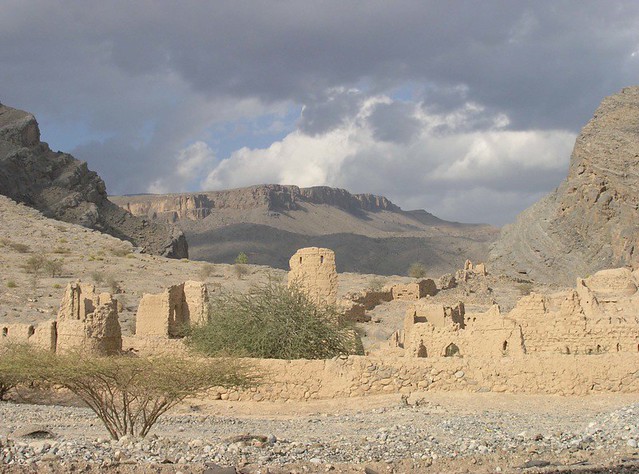
Step back in time to this cheap and cheerful pre-oil Arabia. After more upsets than a Delhi belly, Yemen is slowly becoming known as the 'undiscovered pearl of the Peninsula' by travellers in the know. Although the country is gradually modernising, you'll find plenty of old-style Arabia - from spicy souqs to sumptuous palaces - wherever you go.

Destination Facts
Capital: Sana'a
President: Ali Abdallah Saleh
Prime Minister: Ali Muhammad Mujawwar
Government: republic
Time zone: GMT +3
Area: 527970
Population: 21000000
Languages: Muslim, including Shaf'i (Sunni) and Zaydi (Shi'a); Jewish, Christian, Hindu
Currency: Yemeni Rial (YRIs)
Country Dialing Code: 967

Getting There
When you go depends on where you're going. If you're going to the Tihama, Aden or Hadhramawt, don't go in July - the heat will be unbearable. If you're heading for the highlands, December nights can be very cold. From October to February, most of the country is dry and dusty, and in March, April and August the temperature is pleasant but you may get wet in parts of Yemen. April to May and September to October are probably the best bets wherever you're heading. The observation of significant days is an important part of Yemen's culture. In addition to the main Islamic holidays, people recognise Revolution Day (26 September), National Day (14 October) and Independence Day (30 November).

Getting there and away
Yemen is served by flights from most of western Europe, Russia, north, south and east Africa, the Middle East and Asia. The majority of flights arrive and leave from San'a's airport. Buses travel to Saudi Arabia and to the Oman border (and further afield, but distances are long and journeys are slow). There are no non-commercial ferry services to/from Yemen, and it's very difficult to hitch a ride on a cargo boat. If you hire a car, you can drive from Oman through Salalah or from Saudi Arabia along the Tihama road, but leave plenty of time for bureaucracy.

Getting around
Yemenia, the national airline, offers plenty of internal flights in Yemen if you're in a hurry and can spare the cash. Note that flights are considerably cheaper if booked in Yemen and not through an agency or over the internet. At the time of writing, a travel permit was required by all tourists travelling to any place outside San'a and its immediate environs. Though travel permits are free, there's a catch: they are only issued to tourists travelling with a travel agency (Yemeni or foreign). In other words, independent travel is currently not on the cards. The ban should be lifted in the near future. When it is, buses travel along all major asphalt roads. You need to buy a ticket beforehand at the terminal or at a major stop. Taxis run on predetermined routes but without timetables - when they're full, they leave. Taxis travel most bus routes but also run on unpaved roads. You'll pay up to 50% more than you would on a bus. You can also hire private taxis. Rental cars generally come with their own drivers and are hired at travel agencies.

Visa:
Everybody (except citizens of the Gulf Cooperation Council - GCC - countries) needs a visa to enter Yemen. Note that you can't currently obtain visas at the airport or border crossings. If your passport carries evidence of a visit to Israel, you will not be granted a visa. Tourist visas generally last one to three months. A law was recently passed allowing citizens of the EU and G8 countries to obtain three-month visas at the airport. However, this appears yet to be in operation. Check the current situation with your embassy before leaving the country.

Weather
Climatically, Yemen can be divided into three main zones: the Tihama (the hot and humid Red Sea coastal strip); the central highlands (including San'a); and Wadi Hadramawt and the east, and the far north. The Tihama and the southern coast are hot and humid year-round but without much rain. Daytime temperatures are around 28° C (82° F) in winter and 37° C (98° F) in summer. The twice-yearly monsoons can be heavy in the southwest between mid-March and mid-April, and particularly from July to September. Beware of flooding and closed roads. The central highlands (which range from 1500m/4921ft to 3500m/11,483ft) enjoy a temperate climate for most of the year, though it can get hot at noon and chilly at night (particularly between October and February). San'a averages daytime temperatures between 25° C (77° F) and 30° C (86° F) - at night it can get down to freezing. Wadi Hadramawt and the east, and the far north, are hot (particularly between June and September) and very dry, with temperatures from 25° C (77° F) in December to 37° C (99° F) or more in June.

Places of Interest
After more upsets than a Delhi belly, Yemen is slowly becoming known as the 'undiscovered pearl of the Peninsula' by travellers in the know. Although the country is gradually modernising, you'll find plenty of old-style Arabia - from spicy souqs to sumptuous palaces - wherever you go.

Warning
Areas of Yemen are considered unsafe for travel, including popular sites within Sana'a and Hadramaut Provinces. Foreigners have been targeted in several violent attacks including bombings and kidnappings. Check Safe Travel for current government warnings.
its

Tuesday, 28 June 2011

United Arab Emirates Country

its
its
Introduction
Everything from desert safaris to designer shopping, in true exotic luxury. The United Arab Emirates (UAE) is a union of seven sovereign sheikhdoms, formed when the British withdrew from the Gulf in 1971. It boasts mountains, beaches, deserts, oases, camel racing, markets and the renowned duty-free shopping of dazzling Dubai - all packed into a relatively small area.

The UAE is a contradictory place where traditional Bedouin lifestyle meets Western consumerism and big-town bling. But rather than clashing, these disparate influences have produced a unique 21st-century nation that combines the cultures of conservative Islam and the liberal West in one package.

Geography:
The United Arab Emirates occupies part of the northeastern protrusion of the Arabian peninsula and is roughly the size of Portugal. It's bordered by Saudi Arabia in the south and west, and Oman in the east. Its northern coast faces Iran across the Persian Gulf, while Qatar is just 50km (30mi) to the northwest. The seven emirates are Abu Dhabi, Ajman, Dubai, Fujairah, Ras al-Khaimah, Sharjah and Umm al Qaiwain. The Emirate of Abu Dhabi represents 85% of this total; the smallest of the emirates, Ajman, measures only 250 sq km (100 sq mi). Around 80% of the country is somewhat featureless desert, running to the edges of the Empty Quarter, the largest sand desert in the world, which occupies southeastern Saudi Arabia. Salt flats mark the UAE's coastal areas, while the northern and eastern sections of the country are green and inviting with striking mountain scenery. Fauna includes the Arabian leopard and ibex, but you're unlikely to see more than camels and goats. In spring and autumn flocks of birds migrating from Central Asia and East Africa can sometimes be seen in the country's north. Outside of the mountainous areas of Fujairah and Ras al-Khaimah, much of the UAE's vegetation is the result of the government's 'greenery' programme: even the natural groves of date palms in the Buraimi Oasis on the country's eastern border have been supplemented by acres of grass and trees planted in municipal parks.

Destination Facts
Capital: Abu Dhabi
President: Sheikh Khalifa bin Zayed Al Nahyan
Prime Minister: Sheikh Mohammed bin Rashid Al Maktoum
Government: federation with specified powers delegated to the UAE federal government and other powers reserved to member emirates
Time zone: GMT +4
Area: 83600
Population: 3100000
People: UAE nationals (20%), expat workers - other Arab and Iranian, South Asian, European & East Asian (80%)
Languages: Muslim (96%), Hindu, Christian & other (4%)
Currency: UAE Dirham (Dh)
Major industries: oil, gas, tourism, aviation, re-exports
Major Trading Partners: USA, EU, Japan, South Korea, India
Country Dialing Code: 971

Getting There
The best time of the year to visit the UAE is between November and April, when the weather is at its coolest. The rest of the year you're more likely to be running from one air-conditioned environment to the next instead of getting out and about and exploring. Ramadan, the Muslim month of fasting, is strictly adhered to in the UAE; that means no eating, drinking or smoking in public from sunrise to sunset. Places that normally serve alcohol stop serving it during this month. Ramadan is timed by the moon and will start around September for the next couple of years.

Getting there and away
The country's main international airports are in Dubai and Abu Dhabi, though an increasing number of carriers are servicing Sharjah as well. Smaller international airports serve Ras al-Khaimah, Fujairah and Al-Ain. There are daily services to most major European cities from Dubai and Abu Dhabi, and also to major Middle Eastern and Gulf cities. There are also connections to the USA, North Africa, the Indian Subcontinent and Australia. There's no airport departure tax. There are daily bus services between Dubai and Muscat (in Oman) as well as Abu Dhabi and Muscat. Regular bus services operate between both Dubai and Abu Dhabi and Saudi Arabia's Eastern Province, though there are no bus or taxi services to Qatar. Boats ply between Sharjah and Bandar- é Abbas in Iran; the voyage takes 12 hours each way.

Getting around
Given the short flying time, there is no inter-city air service between the seven emirates. There are now regular bus services between every destination you would wish to visit in the UAE, however, having your own wheels here is a definite advantage. Car rental is only slightly more expensive than in Western countries, and is relatively easy to arrange in Dubai and Abu Dhabi. The highways are in excellent shape, it's only the odd errant camel, low-flying Mercedes and sheer boredom brought on by the often-featureless landscape that should trouble you. In the cities (especially in often grid-locked Dubai), however, chaos reigns supreme, self-preservation dictates that you should drive defensively - because no one else is. You drive on the right in the UAE, most of the time, and roundabouts are a test of courage. Only Dubai and Al-Ain have public bus networks useful to travellers. Taxis across the country generally have working meters - if you get in one that doesn't, get out and wait for one that does.

Visa:
Tourist visas are available on arrival in the UAE at approved ports of entry, including all airports and ports, for citizens of most developed countries. These include all Western European countries (except Malta and Cyprus), Australia, Brunei, Canada, Hong Kong, Japan, Malaysia, New Zealand, Singapore, South Korea and the USA. Tourist visas are valid for 60 days despite the fact that the stamp on your passport, which is in Arabic, says it is valid for 30 days. No fee is charged for tourist visas.

Weather
From May to September humidity is high and daytime temperatures commonly top 40° C (105° F) in Abu Dhabi and Dubai. In the eastern coastal cities of Fujairah and Khor Fakkan, the climate is slightly less hostile thanks to occasional breezes. Average daily high temperatures drop to the more comfortable 22-30° C (70-85° F) range the rest of the year, with December and January the most comfortable months, though it can be very windy in Abu Dhabi, Dubai and Sharjah and very cold in the desert areas around Al-Ain. Rainfall is non-existent between May and October, and negligible for much of the rest of the year.

Places of Interest
The United Arab Emirates (UAE) is a union of seven sovereign sheikhdoms, formed when the British withdrew from the Gulf in 1971. It boasts mountains, beaches, deserts, oases, camel racing, markets and the renowned duty-free shopping of dazzling Dubai - all packed into a relatively small area. The UAE is a contradictory place where traditional Bedouin lifestyle meets Western consumerism and big-town bling. But rather than clashing, these disparate influences have produced a unique 21st-century nation that combines the cultures of conservative Islam and the liberal West in one package.

Events
Religious holidays are tied to the Islamic Hijra calendar, so dates vary from year to year. Eid al-Fitr (the end of Ramadan), Eid al-Adha (Pilgrimage), Lailat al-Mi'raj (the Ascension of the Prophet), the Prophet's Birthday and the Islamic New Year are the main celebrations. Secular holidays include New Year's Day (1 January) and National Day (1 December).
its
its

Wednesday, 22 June 2011

Saudi Arabia Country

its
its
Introduction
Sure, there's the undulating sand, but there's archeology and technology too. Arabia has intrigued travellers for centuries. Its vast swathes of desert were the swaddling clothes of infant Islam, the Arab race and of Arabic, a language considered holy by Muslims. It's also home to Islam's two holiest cities and a host of modern, thriving, oil-rich metropolises.

Destination facts
Capital: Riyadh (pop 3 million)
King: Abdullah bin Abd al-Aziz
Government: monarchy
Time zone: GMT +3
Area: 2000000
Population: 24200000
Languages: Islam
Currency: Saudi Riyal (SRIs)
Country Dialing Code: 966

Getting There
The ideal time to visit Saudi Arabia is between November and February when the summer heat is over. Mid-April until October will see you sweltering with high humidity in the coastal regions. It''s appreciably milder in the mountains and around Taif year-round, which makes these places popular summer retreats. The Asir mountains are at their best a bit earlier and a bit later than the rest of the country - during winter they are often locked in fog. The Kingdom's Islamic holidays are another important factor in deciding when to go. Unless you've no choice, Ramadan is to be avoided at all costs: getting a daytime meal can be difficult, opening hours are kept to a minimum and officials can be decidedly (if understandably) surly. During the haj pilgrimage, most forms of transport and some accommodation are busier than normal and prices increase, although usually only in the Hejaz region.

Getting there and away
Flying to Saudi Arabia is an expensive proposition from the USA, and not much cheaper from Europe. There are buses between Saudi Arabia and Bahrain, Abu Dhabi, Dubai, Egypt, Jordan, Syria and Turkey. Such are the distances involved, however, that very few Westerners travel to surrounding countries by bus. There is also a car ferry that links Jeddah to Suez, as well as passenger-only services from Jeddah to Port Sudan and Musawwa (in Eritrea). There is no departure tax. As a rule the food on these boats is dreadful, the trip interminable, humidity fierce and schedules erratic - you'd be better off flying.

Getting around
All domestic air services are run by Saudi, which is quite reliable and reasonably priced. The most frequent and efficient service runs Jeddah-Riyadh-Dhahran. If you're not pressed for time and you don't have a car, the bus is a pretty good option. The bus company, SAPTCO, has comfortable, air-conditioned buses, but you can buy tickets only one day in advance or on the day of travel. Service taxis go to most of the same destinations as buses for around the same price, but don't run to a timetable. Saudi Arabia has the only stretch of railway track in the entire Arabian peninsula - one line from Riyadh to Dammam, via Hofuf and Abqaiq. Trains run three times a day except Thursday. If you plan to drive, a western driving license is acceptable and you must be a man. Rental rates are government controlled and comparable to rates in the West. Theoretically Saudis drive on the right; car insurance, sensibly, is compulsory.

Visa:
There is no such thing as a tourist visa for Saudi Arabia. You can enter the country with a visitor's transit or (if you're Muslim) hajj or umrah visa. To get a visitor's visa you will have to be sponsored by a Saudi individual or company. Another option is a 24- or 48-hour transit visa - to get one you have to prove that you had no choice other than to stopover in Saudi Arabia en route to your final destination. You can now also visit the country as a non-Muslim if you join an approved (and expensive - 5000.00 plus) organised tour.

Weather
From May to September, expect daytime temperatures of 45 ° C (113 ° F) or higher throughout the country with slightly cooler coastal temperatures. In the dead of winter (December to January) temperatures in the main cities (except Jeddah), will drop into the teens during the day and even hit zero in some places overnight (particularly in the central deserts). During winter the mountains can also be shrouded in fog. In the southern coastal areas it rains quite regularly (it's about the only place that does) with high humidity in the summer, but there's very little rainfall in the capital Riyadh and the northern parts of the Red Sea coast, making the cooler winter days a pleasure.

Thursday, 16 June 2011

Qatar Country

its
its
Introduction
A secret newly revealed to the outside world. It only began issuing tourist visas in 1989, but after a slow start Qatar has begun to reap the benefits of its new openness. Visitors are welcomed to a land of glitzy new hotels, towering sand dunes, ancient rock carvings and distinctive architecture.

Destination Facts
Capital: Doha
Emir: Hamad bin Khalifa al-Thani
Prime Minister: Hamad ibn Jassim Bin Jabor Al Thani
Government: traditional monarchy
Time zone: GMT +3
Area: 11400
Population: 800000
Languages: Arabic
Currency: Qatari Riyal (QR)
Country Dialing Code: 974

Getting There
Because the heat is so fierce in the summer and sandstorms are so common in spring and winter, the best time to visit is November or late February to early March. During these times the weather is much milder, with pleasant, even chilly evenings and the odd rainy day. For the sports-minded, key international fixtures will make a trip to Qatar worth the effort whatever season, and, in Doha at least, there are plenty of air-conditioned facilities to make even the worst summer tolerable. It's also worth remembering that summer brings to the desert its own consolations, like mirages and halos of heat above the sand.

Getting there and away
One of four part-owners of Gulf Air (along with Abu Dhabi, Bahrain and Oman), Qatar also has its own national carrier, Qatar Airways. If you fly either of these airlines you can get to Doha from anywhere in the Gulf, most of Asia, as well as from New York, Europe and a number of cities in India and Pakistan. There are also occasional flights from Bangkok, Cairo, Melbourne and Nairobi. The added competition has not made a dent in the high cost of airfares; flights between Qatar and New York are particularly expensive. There's no departure tax from Doha. Qatar has no bus or taxi service to neighbouring Saudi Arabia, but you can cross over the border in your own car if you have a valid visa.

Getting around
Qatar's small, serviceable airport is in the south-eastern section of Doha. Qatar does not have a bus or service-taxi system, so regular taxis and rented cars are your only options for getting to and from the airport and around the country. You can rent a car on most foreign licences; driving can be a little hairy, but you should be able to get a decent car in Doha or at the airport for around 30.00 a day.

Visa:
Everyone except nationals of other Gulf States needs a visa to enter Qatar. Visas are obtainable at the airport for many nationalities for 50.00. Embassies and large hotels within the country can sponsor visas. Israeli passport holders are not allowed in Qatar.

Weather
For half the year, the climate across the plains of Qatar is pretty unforgiving. During summer (May to September), temperatures generally average 35 ° C (95 ° F), but it's not uncommon for the mercury to rise to 50 ° C (122 ° F). The 90% humidity that comes with this time of year sags over the peninsular like a bad hangover and frequent sandstorms are an added irritation. During winter months (December-February) there's the odd shower but the days are mild and pleasant and evenings are cool. Throughout the year, but especially in spring, Qatar is subject to sandstorms; rainstorms can also hit the country in December and January, causing road closures.

Thursday, 9 June 2011

Oman Country

its
its
Introduction
Oman has broken the seal and emerged into the world. Oman has emerged from its hermit shell, revealing a land of friendly people and dramatic landscapes peppered with forts. Although it remains, in many ways, the most traditional country in the region, it's often more outward looking than it's given credit for.

Destination Facts
Capital: Muscat
Sultan: Qaboos bin Said Al Said
Government: monarchy
Time zone: GMT +4
Area: 212500
Population: 2800000
Languages: Ibadi Muslim (75%), Sunni Muslim, Shiite Muslim, Hindu
Currency: Rial Omani (OR)
Country Dialing Code: 968

Getting there
The best time to visit Oman is between November and mid-March, when the cooler air brings the mountain scenery sharply into focus and daytime temperatures average 25 ° C (77 ° F). During this time, you can reduce your costs by sharing local tours with other visitors. For the rest of the year, much of Oman is oppressively hot and hazy, particularly between May and August. Avoid the June to September rainy season in the south (though this is peak season for Emirati visitors to Dhofar who come specially to see the spectacle of green mountains in the desert).

Getting there and away
Europe has good air access to Oman, with flights available on most larger carriers between Oman and European capitals and other major cities. There's a departure tax of around US$5 included in the ticket price. Entering or leaving by land means travelling between Oman and the UAE as the border with Yemen is not easily negotiated by travellers. There's a daily bus service between Muscat and Dubai.

Getting around
Oman Air has daily flights between Muscat and Salalah, and regular services to Khasab. Intercity buses serve most main provincial towns daily. Renting a car in the Sultanate is easy but not cheap. Oman has a comprehensive system of service taxis and microbuses. Drivers depart when they have a few passengers, expecting to pick up and drop off other passengers along the way; it's a very cheap way to get around providing you're in no particular hurry. You can also take a taxi or microbus 'engaged' (ie privately) by paying for all of the seats in it. Only the larger towns have a has a local bus system. Muscat's Seeb International Airport is 40km (25mi) west of the city. There are car rental agencies at the airport and taxis run on fixed meters from the terminal building or cheaper buses can be caught from the highway, 0.5km from the airport building.

Visa:
In an effort to encourage tourism, Oman relaxed its visa regulations in late 2001. Visas are still required (except for citizens of other Gulf countries) but it is now possible for many foreign nationals (including those from the EU, the Americas, Australia and New Zealand) to obtain a visa at Muscat's Seeb Internationa Airport, or at border crossings. These visas are valid for two weeks. Tourist visas obtained through the Sultanate's embassies abroad are valid for three weeks. Visas are still obtainable through Oman's bigger hotels and tour companies. One-week extensions are available from the Immigration & Passports Directorate in Al-Khuwair in Muscat. A nominal fee is payable to cross into the Musandam peninsula from UAE and a road pass is necessary if you plan to travel by car from Muscat. If your passport shows any evidence of travel to Israel you will be denied entry to Oman. As always, check with authorities for any changes.

Weather
Its varied geography means Oman has a wide variety of climatic conditions. Muscat is fiercely hot and humid from mid-March until October and pleasantly warm from October to March. Indeed, during June unwavering humidity and average day-to-day 31-38° C (88-100° F) temperatures make for seriously dangerous conditions. In the Dhofar region in the south of the country, the weather is more temperate with temperatures of 30° C (90° F) all year round. The Salalah area is affected by the khareef, a drizzling rain, from June to September which turns the local mountains green.

Friday, 3 June 2011

Lebanon Country

its
its
Introduction
There's more to this place than ancient ruins and really good almond pastries. Lebanon packs a lot into its modest borders: ancient cities, ski resorts, impressive architecture and striking landscapes are just the start. Then there's great food (reputedly the best in the region), and great nightlife (Beirut claims to be the party capital of the Middle East).

Destination facts
Capital: Beirut (pop: 1.5 million)
President: Michel Suleiman
Prime Minister: Fouad Siniora
Government: republic
Time zone: GMT +2
Area: 10452
Population: 4400000
Languages: 60% Muslim, 40% Christian
Currency: Lebanese Pound (LL)
Country Dialing Code: 961

Getting there
The best time of year to visit Lebanon is spring (March to May) when the weather is mild and wildflowers are in bloom. If your timing is just right, you may be able to live the Lebanese cliche and, at the end of the snow season, ski in the mountains in the morning and swim on the coast in the afternoon. If you can't make the spring, aim for autumn (September to November), between the intense heat of summer and the cloud of winter. Like anywhere, if you are heading to Lebanon during school holidays, you should book accommodation well in advance. Religious and state holidays should not seriously disrupt any travel plans - transport, hotels, restaurants and many businesses function as normal. The Muslim fasting month of Ramadan may require a bit more planning: some cafes and restaurants close during the day, and some offices operate reduced and erratic hours. Ramadan nights, particularly during the final three days of the Eid al-Fitr can be particularly lively. You may wish to schedule your trip around annual festivals, such as those at Baalbek, Byblos, Palmyra and Bosra.

Getting there and away
Travel to Lebanon could not be easier these days. A growing number of airlines service Beirut, which has frequent connections to Europe, Africa, Asia and the rest of the Middle East. There are no direct flights to the USA. Flights between Beirut and Tehr ã n resumed in 1999 after a 20-year absence caused by the Iranian revolution and the Lebanese civil war. Beirut airport is 5km (3mi) south of the city centre. Syria is the only country that currently has an open land border with Lebanon - the border with Israel is likely to stay closed for some time. Lebanese visa rules change frequently, so check with your embassy for the latest rulings. Currently, you can obtain a visa when entering Lebanon from Syria at the border and vice-versa. Buses run between Beirut and Damascus every hour from 06:00 to 20:00 and there are buses and service taxis from Beirut to Lattakia and Hama (as well as Aleppo and Homs). From Tripoli there are buses to Hama, Aleppo and Damascus (as well as Lattakia and Homs). If you're planning to drive into Lebanon, be prepared to pay a hefty fee (in cash) at the border - though it's refundable when you leave.

Getting around
Lebanon is a tiny country: you can drive from one end to the other in about three hours. Most people use service taxis to get around, a huge number of which run like buses on set routes; they carry around five passengers, each of whom chip in for a fifth of the fare. The other system, private taxis, is a more traditional approach with the taxis taking you where you want to go for a negotiated fare. There are also many 'pirate taxis' cruising for fares. These are more expensive than service taxis, but look very similar, so it's best to ask before you get in. Bus networks are extensive, but some buses are poorly maintained, and also go too fast; accidents do happen. Generally, however, buses are reasonably safe, comfortable and reliable and are very cheap by Lebanese standards. It's unlikely that the country's rail service will be restored in the near future. Car rentals are fairly expensive in Lebanon but if you shop around you can find surprisingly reasonable prices. The country is notorious for the bad condition of its roads and the hair-raising driving style of its drivers. Road rules are effectively nonexistent, traffic jams are ubiquitous and there are no speed limits. On the upside, in theory everybody has agreed to drive on the right and fuel is cheap and easy to obtain.

Visa:
All nationalities need a visa to enter Lebanon. Australian, Canadian, most EU, New Zealand and US passport holders can obtain a visa (for between one to three months) on arrival (both at the airport and at the Syrian border). Entry will be refused if you are holding a used or unused, expired or valid visa for Israel, or have any Israeli stamp endorsed on your passport. Those wishing to study in Lebanon can apply in advance for a student one-year residence visa.

Weather
Lebanon has three different climate zones - the coastal strip, the mountains and the Bekaa Valley. The coastal strip has cool to mild, rainy winters with an average high around 17 ° C (62 ° F), which doubles during the hot, sometimes stifling, Mediterranean summers. The mountains have a typical alpine climate. Many people head to the hills to escape the oppressive summers of Beirut and come back again in winter for the snow. The Bekaa Valley has hot, dry summers and cold, dry winters with snow, frost and fierce winds.

Places of Interest
Lebanon packs a lot into its modest borders: ancient cities, ski resorts, impressive architecture and striking landscapes are just the start. Then there's great food (reputedly the best in the region), and great nightlife (Beirut claims to be the party capital of the Middle East).

Warning
The security situation in Lebanon can be fragile - travellers should exercise caution, avoid rallies, and monitor news reports. Check out Safe Travel for current government warnings.

Saturday, 28 May 2011

Kuwait Country

its
its
Introduction
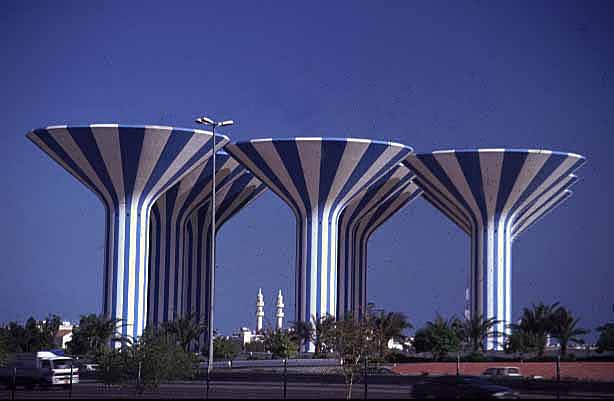
A heady mix of market bazaars and gleaming skyscrapers along a glistening coast. Kuwait is your prototypical oil-rich state, and travellers looking for a relaxed entry into the Muslim world can look forward to wandering around mosques, souks and other sandy traces of bygone Bedouin days. Behind the glitzy opulence lies a deep sense of traditional values and warm Arabian hospitality.

Destination Facts
Emir: Sheikh Sabah Al Ahmad Al Jabir
Government: nominal constitutional monarchy
Time zone: GMT +3
Area: 17800
Population: 2200000
Languages: Muslim (85%), Christian, Hindu
Currency: Kuwaiti Dinar (KD)
Country Dialing Code: 965

Getting There
The best time to visit Kuwait is in May or October - right before or right after summer, when the temperatures are civilised. Between February and April, the desert is laced in a gossamer of lime green and the city is decorated with petunias, making it the most pleasant time to visit.

Getting there and away
Kuwait International Airport is 16km (10mi) south of Kuwait City. Kuwait is not a particularly cheap place to fly to or from. The airlines and travel agents tightly control prices, and few discounted fares are available. There's a small airport departure tax that may not be included in your ticket. From the airport, taxis charge a reasonably steep flat fee to the city; buses make the trip a lot cheaper. Buses operate between Kuwait and Cairo via Aqaba in Jordan and Nuweiba in Egypt. There are also international bus services to Dammam in Saudi Arabia.

Getting around
Kuwait has a very cheap and extensive system of both local and intercity buses. You can also use local taxis to get around, though these have no meters, so get a firm price before starting out. If you are renting a car and you hold a driving licence and residence permit from another Gulf country, you can drive in Kuwait without any further paperwork. Otherwise you can drive on an International Driving Permit or a local licence from any western country, but you'll also be required to purchase insurance for your licence.

Visa:
Everyone except nationals of other Gulf States needs a visa to enter Kuwait. Kuwait has recently changed its visa entry requirements so that many countries can now obtain visas on arrival. There are currently 34 countries on this list so please check your consular information to see if this is possible. Other countries will need to arrange a visa prior to arrival. If your passport contains an Israeli stamp, you will be refused entry to Kuwait.

Weather
While temperatures can cook during Kuwait summers with days often topping 50 ° C (122 ° F) in August, the humidity inland is not so bad. On the coast you trade cooler temperatures for higher humidity. The winter months are often pleasant, featuring some of the region's coolest weather, with daytime temperatures hovering around 18 ° C (64 ° F) and nights being quite chilly but never literally freezing. The occasional annoying sandstorm occurs throughout the year but is particularly common in spring.

Places of Intersest
Kuwait is your prototypical oil-rich state, and travellers looking for a relaxed entry into the Muslim world can look forward to wandering around mosques, souks and other sandy traces of bygone Bedouin days. Behind the glitzy opulence lies a deep sense of traditional values and warm Arabian hospitality.

Saturday, 21 May 2011

Jordan Country

its
its
Introduction
Moody ruins, spectacular desert landscape and a friendly cup of tea. Bible stories, lost cities, Lawrence of Arabia - Jordan has romantic associations up to its eyeballs. It's a country that ought to be awash with tourists, but the Middle East's bad reputation has kept them away in droves. Don't be fooled: Jordan is, on the whole, peaceful.

More than that, it's one of the most welcoming, hospitable countries in the world. Where else could you leave your belongings on the street for hours at a time, and find them there when you get back? Where else do total strangers with nothing to sell invite you into their homes?
its
Geography
Jordan is bounded to the north by Syria, to the northeast by Iraq, to the east and south by Saudi Arabia and to the west by Israel. It has three distinct geographic zones: the fertile Jordan Valley, which runs down the western side of the country; the East Bank plateau, where most of the main towns are; and the East Bank, a desert which stretches east into Syria, Iraq and Saudi Arabia. Jordan is a smallish country shaped like a piece of a jigsaw puzzle. An apocryphal story holds that the lumpy eastern border was created by Winston Churchill after a very liquid lunch.
its
Destination Facts
Capital: Amman
King: Abdullah bin Al-Hussein (Abdullah II)
Prime Minister: Adnan Badran
Government: Constitutional monarchy
Time zone: GMT +2
Area: 89206
Population: 5460000
People: 98% Arab (60% Palestinian, many refugees), Circassians, Chechens, Armenians, Bedouins
Languages: 92% Sunni Muslim, 4% Shiite Muslim, 4% Christian
Currency: Jordanian Dinar (JD)
Major industries: Minerals, petroleum refining, tourism and agriculture
Major Trading Partners: India, Saudi Arabia, UAE, European Union, United States, Iraq
Daylight Saving: From late March to late October
Country Dialing Code: 962
its
Getting There
The best time to visit Jordan is in spring or autumn, when you can dodge the baking sun of summer and the freezing winds of winter. Although winter can be bitterly cold in most of the country, the Red Sea area and Aqaba are still very pleasant. If you're planning to travel through the rest of the Middle East, try heading north into Turkey around spring, or south into Egypt by autumn. The tourist authorities usually plan festivals (such as the Jerash Festival) for the summer period. The month of Ramadan is a time when visitors should not eat, drink or smoke in public during the day so it's a tricky time to visit. Eid al-Fitr, the great celebration at the end of Ramadan, is a fun time to visit but it's best to bunker down for a few days because public transport is heavily booked and hotel rooms are sometimes hard to find, especially in Aqaba.Note also that most of the excellent ecotourism projects operated in Jordan's Dana, Wadi Mujib and Ajlun nature reserves only operate between April and October.
its
Getting there and away
Amman has an international airport, with flights from Beirut, Cairo, Damascus and further afield. Departure tax is 5.00 for foreign travellers departing by land, air or sea. Buses travel between Amman and Damascus (about four hours unless there is considerable delay at the border), Baghdad (14 hours), Jeddah, Dammam and Riyadh (about 24 hours). There are indirect buses to Jerusalem; for Eilat you'll need to hire a taxi from Aquaba (5.00). You can also catch service taxis from Jordan to Syria and Iraq, or a train from Amman to Damascus (Monday and Thursday). A ferry/bus service runs from Amman to Cairo, or you can get a fast boat between Aqaba and Nuweiba in Sinai.
its
Getting around
The only domestic air route is between Amman and Aqaba. JETT bus company runs from Amman to Aqaba, the King Hussein Bridge, Petra and Hammamat Ma'in. Private buses run from Amman to Irbid and Aqaba. Minibuses travel between the smaller towns on an irregular service - usually they leave when they're full. Service taxis cover much the same routes. They're more expensive than minibuses, but a lot faster.
its
Visa:
All foreigners need a visa to enter Jordan. You can get a single-entry visa at the airport or at most border crossings when you arrive, or from consulates in your country. Visas are valid for three months from the date you enter the country but you must register at a police station within one month of arrival. Don't forget to register or you'll be liable to pay a fine of 1.5 for every unregistered day. Avoid registering at Wadi Musa, which is notorious for its red tape. Note that visas of any sort are not available at King Hussein (Allenby) Bridge, so don't come this way unless you already have a visa. Multiple-entry visas are not issued on arrival anywhere, and must be obtained in advance. One quirk in the system is that if you arrive in Jordan on a single-entry visa via any border except King Hussein (Allenby) Bridge, you can then cross into Israel and the Palestinian Territories via the King Hussein Bridge crossing and then return to Jordan the same way without needing a multiple-entry visa or another single-entry visa. The cost for all nationalities is 10.00 (single entry visa). Keep your passport on you whenever you're near the Israeli border, as there are lots of military checkpoints. Visitors arriving from Aquaba can request a free visa (Aquaba is a special economic zone). The ASEZ visa is valid for one month and there is no need to register with the police. ASEZ visa holders staying longer than one month can only extend the visa in Aquaba. If that sounds like too much of a hassle, you can always get a normal visa in Aquaba for the regular cost. ASEZ visa holders do not pay departure tax.
its
Weather
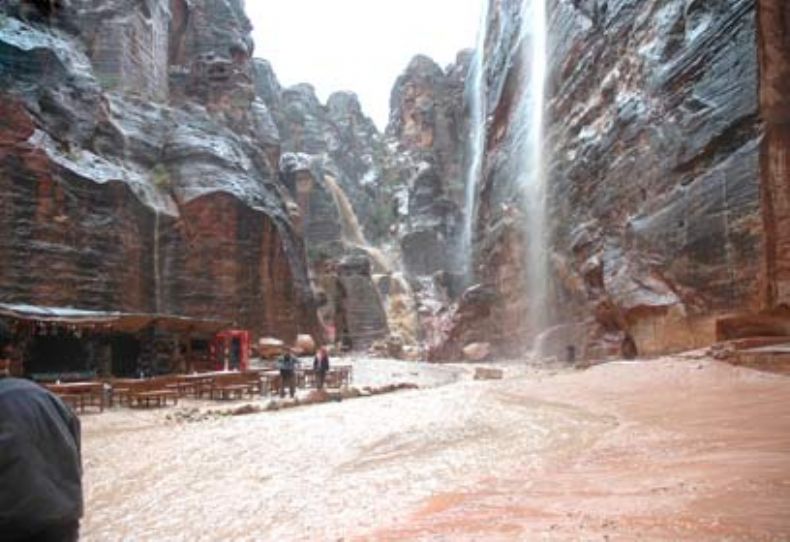
Jordan's climate varies dramatically from one end of the country to the other. The Jordan Valley can be incredibly hot in summer, around 40 ° C (104 ° F), while Amman and Petra occasionally get snow in winter. The Plateau area is usually warm and dry, fluctuating between the low 20 ° Cs (low 70 ° Fs) and high 30 ° Cs (high 90 ° Fs), while the desert suffers extremes of temperature - baking dry heat interspersed with freezing winds from central Asia.
its
Events
Not surprisingly, Jordanian holidays and festivals are mostly Islamic. The big one is Ramadan, a month where everyone fasts between sunup and sunset to conform to the fourth pillar of Islam. If you're in Jordan at this time, be sensitive to the fact that most of the people around you are fasting. Ramadan ends with a huge feast, Eid al-Fitr, where everyone prays together, visits friends, gives presents and lives it up. Eid al-Adah, held around February (though the month changes almost every year), is the other big feast of the year, and marks the time when Muslims should make the pilgrimage to Mecca. Non-religious holidays include Independence Day on 25 May.
its
Warning
Borders with Israel and Iraq are obvious potential trouble spots. Some travellers have been tempted to use Jordan as an easy route into Iraq - not a good idea.

Saturday, 14 May 2011

Iraq Country

its
its
Introduction
Dangerous? Sure. But Iraq also boasts a rich history and warm, resilient people. Long ago in the fertile valleys between the Tigris and Euphrates Rivers, the great civilisations of the age were born.

Modern Iraq was ancient Mesopotamia, and it was here that humans first began to cultivate their land, where writing was invented and where the Assyrians, Sumerians and Babylonians all made Iraq the centre of the ancient world.The country remains rich with the resonance of its glorious history, but recent years have been hard. Under Saddam Hussein, widespread political repression and conflicts with Iran, Kuwait and the West earned Iraq worldwide infamy and alarmed international human-rights organisations and Western armies in equal measure. Indeed in recent years, few countries have experienced such external interference as Iraq has, culminating in the 2003 American-led invasion of the country.

Destination Facts
Capital: Baghdad
Interim Prime Minister: Nouri al-Maliki
Interim President: Jalal Talabani
Government: interim government
Time zone: GMT +4
Area: 432162
Population: 24683313
Languages: Arabic, the official language, is spoken by 80% of the population The Kurds speak Kurdish, an Indo-European language. The Turkomans, who live in villages along the Baghdad to Mosul highway, speak a Turkish dialect. Persian is spoken by minorities near the Iranian border, while similar numbers speak Assyrian and Chaldean. English is quite widely spoken in urban centres.Official in Kurdish regions.
The official religion is Islam. Muslims make up 95% of the population, with considerably more Shiites than Sunni. The Shiites tend to live in the south of the country, the Sunni in the central and northern districts. The largest group of non-Muslims are Christians who belong to various sects, including Chaldeans, Assyrians, Syrian and Roman Catholics, Orthodox Armenians and Jacobites. Other religious minorities are the Yezidis, often erroneously called devil worshippers, and the Sabaeans, or Mandeans, who are followers of John the Baptist.
Currency: Iraqi Dinar (ID)
Country Dialing Code: 964

Getting There
If you don't want to wilt, avoid summer in Iraq as it's fiercely hot (May to September); the average summer temperature in Baghdad is 34° C and in Basra 37° C, but daytime temperatures can soar well above that. The north is slightly cooler, while in the south there's debilitatingly high humidity. Winter can be cold and the mountains can become covered with snow. The average winter temperature in Baghdad is 11° C and in Basra 14° C.

Getting there and away
Some commercial flights have now been re-established to Iraq, but there are no formal schedules, and flight details change by the week. Royal Jordanian Airlines (www.rja.com.jo/default.aspx) flies between Amman and Baghdad International Airport, while Austrian Airlines (http://www.aua.com/au/eng) offers a service between Vienna and Kurdistan in the north of the country. Hamburg International Airlines also flies into the Kurdistan region, with services to Erbil and Sulaimaniyah airports. Expat Airways, a no-frills Iraqi airline operating between Amman and Baghdad, has raised eyebrows since it opened last year for its controversial policy of banning non-Western passengers.Travelling overland to Iraq from Jordan, Syria and Iran is well-nigh impossible (and inadvisable) for foreigners. However, driving from Turkey into Kurdistan is a possibility. There have been no passenger ships operating to or from Iraq since the start of the Gulf War.

Getting around
Iraq has a good road network and there are buses between towns and cities, plus a rail line that connects Baghdad to Mosul and Basra. Shared taxis are used between towns and cities in the north of Iraq. Road travel is dangerous, however, due to the high incidence of bombings, explosions, car-jacking and robbery.

Visa:
At the time of writing, Iraqi embassies overseas were still not issuing visas to visitors. Some adventurous travellers have applied for visas at the Iraqi embassy in Jordan. We are not aware of anyone being granted a visa, other than journalists and aid workers.

Weather
The dry summer days from June to August scorch the air with temperatures between 38° C and 43° C (100° F and 110° F) in the middle of very pleasant autumn and spring months. Winter sees a bit of rain and fairly mild temperatures with average highs around 15° C to 18° C (60° F and 65° F) and tending to stay just above zero.

Warning
It won't come as a surprise to too many people that Iraq isn't the world's most popular holiday destination at the moment. Its turbulent and extreme domestic situation makes Iraq one of the least desirable places in the world to be. Widespread violence and kidnappings continue to occur, and the threat to foreigners remains high.The Kurdistan region in the country's north is considerably less dangerous, but military and terrorist activity at the Turkish border is an ongoing cause for concern.

Israel Country

its
its
Introduction
More than just a powder-keg or a promised land, Israel is unforgettable. Everyone has their own perception of what Israel is about: it's a travel-agency package of beaches and sun; it's the Promised Land of the Jews; it's a ticking time bomb. And while it is all of these things, it's much more besides. So be sure to look beyond the larger-than-life figures of the past.

Israel is a bustling, noisy, modern country. It's best not to arrive with preconceptions of spiritual epiphany. If you do, you'll almost certainly have them confirmed, but in doing so you run the risk of missing the best this fascinating place has to offer.

Geography:
Smaller than Belgium, New Jersey or Tasmania, Israel is bordered by the Mediterranean Sea to the west, Lebanon and Syria to the north, Jordan and the West Bank to the east and the Gaza Strip and Egypt to the south. The dominant geographic feature is the Rift Valley, which runs from Turkey through Israel and down into Africa. It contains the Dead Sea as well as the Jordan, Arava and Hula valleys and Lake Galilee. Israel is a dry country (the Jordan is its only main river), and only the north sustains agriculture. The country's main body of water, the Dead Sea, is incredibly salty, as well as being the lowest place on the planet. It's flanked by the Judean Desert, which further south becomes the Negev. Three geographic zones converge in Israel, and as a result you'll find a wealth of wildlife. Northern Israel is wet and mountainous, and supports laurel forests and streams filled with otters. The south of the country is desert, with wild tulips, irises and date palms. Israel is also the second largest flyway for migratory birds, with species from all over the world swapping hemispheres here. A fifth of the country is national parks - around 300 of them - and the Israelis are renowned for having turned the desert into a garden, as well as having reintroduced a number of species which have become locally extinct since Biblical times.

Destination Facts
Capital: Jerusalem
President: Shimon Peres
Prime Minister (acting): Tzipi Livni
Government: parliamentary democracy
Time zone: GMT +2
Area: 20770
Population: 6801000
People: Jewish (76%, Israel born 67%), non-Jewish (24%, mostly Arab)
Languages: Jewish (76%), Muslim (16%), Christian (2%), Druze (1.5%), unspecified (4.5%)
Currency: New Israeli Sheqel (₪)
Major industries: Military hardware, machinery, computer software, cut diamonds, phosphates
Major Trading Partners: USA, UK, Belgium/Luxembourg, Germany
Daylight Saving: From late March or early April to late September or early October
Country Dialing Code: 972

Getting There
Israel can be visited at any time of the year, but there are a few factors to consider when planning your trip. Weather-wise, the best time to visit is in the spring (April and May) or autumn (September and October) when temperatures are mild in most areas. November and March are likewise pleasant but do see some rain, especially in the coastal areas and up north. Winter (mid-November to mid-March) can be surprisingly chilly, with heavy rain along the coast and frost in the highlands. Summertime temperatures in the far south are extreme. In Tel Aviv the humidity will make you sweat standing in the shade. This is a good time to visit Jerusalem or other highland areas that are less affected by coastal humidity. Summer is also the peak season for tourists - hotel prices are at their highest and it can sometimes be difficult to find accommodation. You might also want to avoid major Jewish holidays, as the country fills up with pilgrims, accommodation prices go up and it's almost impossible to travel between cities.

Getting there and away
Israel's main gateway is the ultramodern Ben-Gurion airport (TLV, www.ben-gurion-airport.co.il), 20km (12mi) southeast of Tel Aviv and 50km (30mi) west of Jerusalem. There are plenty of flights to Israel, including non-stop flights from the USA, Europe, South Africa and the Far East. Airport security is tight, especially on national carrier El Al, and international travellers should check in at least three hours before their flight. Israel's only viable border crossing with Egypt is at Taba, near Eilat. You will need to pay a fee to leave Israel and one to enter Egypt; pick up your Egyptian visa at the consulate in Eilat before heading for the border. If you are only visiting the Sinai you can pick up a Sinai-only permit at the Taba crossing. If you are trying to get to Cairo in a hurry, the best way is Mazada Tours' (www.mazada.co.il) direct bus service between Tel Aviv or Jerusalem and Cairo - just make sure you have your Egyptian visa before you go. Israel's frontier with Jordan has three crossing points: the Allenby/King Hussein Bridge crossing (30km/18.5mi from Jerusalem, 40km/25mi from Amman), the Jordan River crossing (6km/4mi east of Beit She' an in Galilee) and the Yitzhak Rabin crossing near Eilat. You will need to get your visa (from the Jordanian embassy in Tel Aviv) prior to crossing into Jordan at the Allenby/King Hussein Bridge. At the other crossings you can purchase your visa directly at the border. Buses to Jordan from Israel run via Haifa and Nazareth, or Tel Aviv and Nazareth to Amman. All run via the the Allenby/King Hussein Bridge. If you're driving between Jordan and Israel use either Yitzhak Rabin/Wadi Araba or Jordan River Crossing/Sheikh Hussein Bridge. It is not permitted to cross the Allenby/King Hussein Bridge in your own vehicle. The ferry link between Cyprus and Haifa is currently suspended. These arrangements may change so please double-check with consulates and transport providers before you depart.

Getting around
Israel is so small that it would be silly to fly, but if you must there are flights between Haifa and Eilat and Tel Aviv and Eilat. The national bus service, Egged, has an extensive route system in Israel, partially due to the fact that it's also the major transport vehicle for soldiers moving about the country. Egged buses are modern, clean and equipped with air-con, making travel safe and comfortable. Remember that on Shabbat, Egged intercity buses don't run at all (Friday afternoon to Saturday evening). Arab buses, though older and slower than their Israeli counterparts, provide service between East Jerusalem and destinations in the West Bank. Israel State Railways runs a convenient, efficient and inexpensive network of passenger rail services. The main line runs along the coast, from Nahariya to Ashkelon, with spurs to Be'er Sheva and Dimona, Rishon LeZion and Rehovot, Ben-Gurion airport and Jerusalem. Share taxis, or sheruts, are one of the most popular forms of transport, particularly because they run on Shabbat. These 13-seat minivans, which depart from taxi ranks, operate on a fixed route for a fixed price like a bus and many run 24/7. Hiring a car is a great way to cover a lot of ground in a short amount of time. It doesn't make much sense to have one in Jerusalem or other big cities, but it's definitely a good idea for the Golan, Upper Galilee and Negev areas. Note that Tel Aviv has a serious parking shortage and you'll probably end up having to park in a private lot.

Visa:
Everyone needs a passport valid for at least six months, but unless you are a citizen of most African or some Central American countries, India, Singapore or some ex-Soviet republics, you do not need a visa to enter Israel. Tourists are allowed stays of up to 90 days. This visa can be extended for a fee at Ministry of the Interior offices, located throughout Israel's larger cities and towns. However, when crossing a land border customs might ask how long you intend to stay and what you state is generally what you'll get. If there is a chance you'll stay longer than your intended departure date you might as well ask for the full 90 days. You will be given a duplicate entry permit on arrival. Do not lose this very losable piece of paper! The main hassle with visiting Israel is avoiding having your passport stamped - most Arab countries will not allow you to enter if you have visited Israel. You won't get into Syria, Lebanon, Iran, Saudi Arabia, Libya or Yemen with an Israeli stamp. In Morocco, Tunisia, Egypt, Turkey or Jordan they don't care and in Bahrain, Qatar, the UAE and Oman, a little discretion should get you through. The best thing you can do is ask the officials to stamp your entry permit rather than your passport, or put Israel at the end of your Middle Eastern tour.

Weather
Israel has pronounced seasonal variation, and summers and winters can often get pretty severe. Southern Israel tends to cook in July and August, with the mercury climbing beyond 40 ° C (104 ° F); it's almost constantly dry as well. Elsewhere, November to March are significantly rainy months. Things are a tad cooler in the north with summer highs around 30 ° C (86 ° F) and winter lows sometimes below zero.

Events
Not surprisingly, Israeli holidays and festivals are mostly religious. Keep an eye out for Jewish holidays in particular, as the country really does grind to a halt on these days and you'll have to put your travel plans on hold. The Jewish Sabbath day, Shabbat, is celebrated from sunset Friday to sunset Saturday, and no work may be done on this day. Yom Kippur, in October, is the holiest day in the Jewish calendar. This is the Day of Atonement, and it is marked with 25 hours of abstinence from just about everything, combined with prayer, contemplation and confession. Pesach or the Feast of Passover celebrates the Jewish exodus from slavery in Egypt, led by Moses (or Charlton Heston). This week-long festival in April culminates in the Passover dinner or Seder consisting of several prescribed dishes, each commemorating a different Exodus event. Jewish religious festivals aren't all abstinence and abnegation though. Purim or the Feast of Lots commemorates the Persian Queen Esther's deliverance of her Jewish subjects from the despicable secular politician, Haman. Kids and adults alike dress up in costume and enjoy an evening of revelry. This is the time for the typically non-drinking Israelis to atone; according to tradition they get so plastered that they can't distinguish between 'bless Mordechai' and 'curse Haman'. The big one for Israeli Muslims is Ramadan, a month where everyone fasts between sun-up and sunset to conform to the fourth pillar of Islam. If you're in Israel at this time, be sensitive to the fact that most of the Muslims around you are very, very hungry. Ramadan ends with a huge feast, Eid al-Fitr, where everyone prays together, visits friends, gives presents and stuffs themselves.

Warning
The security situation in Israel remains tense and unpredictable, particularly in the northern border regions and areas surrounding the West Bank and Gaza. These areas, as well as those near the Lebanese border are still very dangerous and should be avoided. Palestinian rockets launched from Gaza frequently hit the southern Israeli town of Sderot. Travellers should exercise extreme caution, especially in Jerusalem, avoid any demonstrations and heed any local advice regarding safety. Check travel advisories and news services before travelling. See Safe Travel for updated government warnings.

Monday, 11 April 2011

Iran Country

its
its
Introduction
There's no room for preconceptions if you're packing to visit Iran.'Axis of evil'? Most visitors, after experiencing this friendliest of countries, couldn't agree less. For culture seekers, Iran has magnificent ruins of ancient cities, glorious mosques and mausoleums, and museums so interesting they're bound to leave your feet sore.

The more adventurous can enjoy trekking, budget-priced skiing, or some wicked rock climbing. Travellers with a deep-seated need for a few brews and/or a spot of heartfelt feminist discourse may want to consider another destination, but Iran has a huge amount to offer.

Geography:
The Islamic Republic of Iran is bordered to the north by the states of Armenia, Azerbaijan and Turkmenistan (all formerly of the USSR) and the Caspian Sea; to the east by Afghanistan and Pakistan; to the south by the Gulf of Oman and the Persian Gulf; and to the west by Iraq and Turkey. Iran is about one-fifth the size of the USA and nearly as big as Queensland, Australia. The country is dominated by three mountain ranges: the fertile, volcanic Sabalan and Talesh ranges in the north-west; the very long, Jurassic-era Zagros range, down the western border; and the dominant Alborz range, home of Iran's highest mountain, the permanently snowcapped Damavand (5670m/18600ft), to the north of Tehran. The two great Iranian deserts, the Dasht- é Kavir (more than 200000 sq km/78000 sq mi) and the Dasht- é Lut (more than 166000 sq km/64,740 sq mi), occupy most of the north-east and east of the central plain.

Destination Facts
Capital: Tehran
Supreme Leader (Rahbar): Ayatollah Ali Hoseini-Khamenel
President: Mahmoud Ahmadinejad
Government: Islamic republic
Time zone: GMT +3.5
Area: 1648000
Population: 70000000
People: Persian (Farsis), Azari, Arab, Lors, Turkmen, Kurdish, Armenian, Jewish
Languages: 89% Shi'ite Muslim, 10% Sunni Muslim, 1%Zoroastrian, Jewish, Christian, Baha'i
Currency: Iranian Rial (IR)
Major industries: Oil, gas, agriculture, carpets, armaments
Major Trading Partners: Japan, Germany, France, Italy, United Kingdom, United Arab Emirates, Belgium
Daylight Saving: From the weekend after 22 March to about the third weekend of September
Country Dialing Code: 98

Getting There
Generally the best times to visit Iran are mid-April to early June, and late September to early November - these times avoid the long, cold northern winter, the Iranian New Year (late March) and the summer, which can be unpleasantly hot in much of the country. And if the heat doesn't keep you away, take note that prices along the Caspian coast can quadruple during summer whereas great bargains can be found come wintertime. Many people prefer not to visit Iran during Ramadan, the Muslim month of fasting, but apart from most restaurants closing between dawn and dusk, Ramadan is not that bad for travelling.

Getting there and away
There's a vast network of flights between Iran and Asia, the Middle East and Europe. Visitors from the USA or Australasia usually have to fly via Asian or other Middle East hubs. Most flights land in Tehran, either at the older Mehrabad airport, or the new Imam Khomeini International Airport, 35km (22mi) south of the city. You can also fly into Shiraz, Esfahan and Mashhad, usually from other cities in the Middle East. Most tickets have the departure tax built in, though if you buy a ticket inside Iran you might have to pay 30.00 at the airport. Check when you buy. Regular buses and trains link Iran and Turkey, and less frequent buses run to Armenia, Azerbaijan, Turkmenistan and Afghanistan. Travelling overland to Pakistan is simple enough, if not that comfortable, either by public transport or in your own vehicle. However, check the security situation in Pakistan before setting off. Overland travel to Iraq is currently both illegal and stupid - don't do it. Iran has 2410km (1470mi) of coastal boundaries, but there are only a few ways to enter or leave Iran by sea. In the Persian Gulf, there are ferries from Sharjah and Dubai, United Arab Emirates, and from Bahrain, Kuwait and Qatar. It's also possible to travel across the Caspian Sea on an irregular cargo boat between the Azerbaijan capital of Baku and Bandar- é Anzali.

Getting around
Iran has a well developed transport system. All public transport is frequent, reliable, relatively safe and very cheap. But it's worth considering getting airborne for the following reasons: your visa probably won't last long enough for you to use public transport to remote cities; fares are very cheap; the country is vast, and the scenery is often boring; and flights (particularly on Iran Air) are frequent and reliable. If you can't get somewhere in Iran by bus (or minibus), chances are that no one wants to go there. There are lots of different bus companies offering competitive and mostly comfortable services. Transport can be a problem for about 10 days before, and especially after No Ruz, the chaotic Iranian New Year, which starts on or about 21 March. Road travel can be interrupted by roadblocks at any time of year, most frequently on either side of a main city, but occasionally dotted through remote areas near the Pakistan and Afghanistan borders. Foreigners are rarely hassled at roadblocks - the worst that will happen is that you'll have to show your passport and endure a delay. Trains are fairly efficient, reasonably fast and certainly cheap, but they're often not as convenient as buses, although they are safer and more comfortable (especially for overnight trips). The most exciting trips are between Tehran and Tabriz (for the scenery and excellent service) and between Tehran and Gorgan (for the number of tunnels and the scenery). The great Trans-Iranian Railway, built in the 1930s to connect the Caspian Sea at Bandar- é Torkaman with the Persian Gulf at Bandar- é Imam Khomeini is one of the great engineering achievements of the 20th century. Driving your own vehicle is a gutsy call. The distances are long, the traffic is appalling and it's hard to find secure parking. To all appearances, there are no road rules. The upside of driving is that the road surfaces are generally excellent and petrol is ridiculously cheap. Shared taxis are a better option between major towns. A seat costs about three times as much as a deluxe bus, but can be worth it if you want to hurry through a dull stretch of countryside.

Visa:
Everyone needs a visa to visit Iran, and unless you have a Turkish passport, it's going to be a hassle. The regulations are baffling, the costs often high. The best advice is to apply for a tourist visa at least six weeks before you leave home - more if you're British or American. You may want to consider paying an online agent to do it for you. The good news is that once you're in you're in - getting an extension inside Iran is often easier than getting any sort of visa outside the country. Admission is refused to holders of passports containing a visa (valid or expired) for Israel.

Weather
The seasons are clearly differentiated. Spring starts in March and is initially cold and windy, later becoming pleasantly warm and often sunny. Spring and autumn are easily the best times to come, and if you come in spring you avoid having countless Iranians tell you: 'Oh, but you must come back in the spring, it's beautiful.' Summer, which begins in June, is predominantly warm but hot at times, with plenty of sunshine interlaced with heavy rains. July is the hottest month, with temperatures ranging between 35 and 45° C (95-113° F). Autumn comes in September and is at first warm and usually sunny, turning cold, damp and foggy in November. Winter lasts from December until March and can include substantial snowfall, depending on how the weather is feeling and where you are. January and February can be bitterly cold, with temperatures often below -15° C (5° F) or -20° C (-4° F), though the days are often pleasantly mild, particularly in the south.

Warning
Potentially perilous areas in Iran include the western border with Iraq and the eastern border regions with Afghanistan and Pakistan. Overland travel to Iraq is not recommended unless you have a death wish. Travellers should avoid rallies and demonstrations, particularly in Tehran, as they have the potential to become violent. Check out Safe Travel for updated government warnings.

Tuesday, 5 April 2011

Bahrain Country

its
its
Introduction
For Westerners, Bahrain is an easy introduction to the Middle East. Bahrain's reputation as a relatively liberal and modern Gulf state has made it a favourite with travellers in the region and an excellent introduction to the Middle East. It was once the seat of one of the great trading empires of the ancient world, and is evocative of the past.

Getting There
Tourist brochures warn visitors away from the intensely hot summer months (early June to mid-September), when the sea is flat and vaporous, the cold tap runs hot and even the grass is too peppery to walk on. Yet, in many ways, this is Bahrain's most characterful time of the year: it's when you realise the importance of a wind tower, or a well in the desert, or a headscarf to keep out the hot, dry winds of a dust storm. If braving the extreme heat and humidity doesn't appeal, the best time to visit is November to March, avoiding Ramadan and Eid holidays, when an influx of Saudi tourists can make it hard to find a room.

Getting there and away
Europe has the best air connections with Bahrain; the best fares are usually from London, Italy or Greece. Flights from the US tend to be expensive and harder to find; fares are cheapest during the low seasons of early January to mid-June and mid-October to mid-December. Routes between Bahrain and other Arab countries in the Gulf are well served. Flights from India and South-East Asia tend to be inexpensive, with especially good deals from Bangkok or Delhi. There's an airport departure tax of around 8.00.

Getting around
Bahrain has a decent bus service linking most of the major towns with Manama and Muharraq. You can cover parts of central Manama and Muharraq on foot, though renting a car will make it easier to get to farther-flung attractions. There are agencies in Manama at the big hotels. You'll need to get an International Driving Permit before entering the country (you can't get one once you're there); driving is on the right. Bahrain's taxis are metered, but for longer trips expect to negotiate an hourly rate.

Destination Facts
Capital: Manama
King: King Hamad bin Isa Al Khalifa
Prime Minister: Khalifa bin Salman Al-Khalifa
Government: constitutional hereditary monarchy
Time zone: GMT +3
Area: 707
Population: 1050000
Languages: widely spoken
Shi'a Muslim (70%), Sunni Muslim (15%), other religions and indigenous beliefs
Currency: Bahraini Dinar (BD)
Country Dialing Code: 973

Weather
It can get extremely hot and humid in Bahrain from June to September, with high temperatures averaging 38° C (100° F) during the day. November to March tends to be much more pleasant, with warm days, cool nights and negligible rainfall.