
Showing posts with label China. Show all posts
Showing posts with label China. Show all posts
Thursday, 11 October 2012
Countries With the Most Billionaires

Wednesday, 25 April 2012
Kunming City


Smell the roses in the Spring City. Kunming has a flavour all of its own that seems a world away from Běijing. A thoroughly modern Chinese city, wide palm-lined roads and skyscrapers have replaced quaint alleyways and charming wooden buildings. But despite rapid economic growth, Kūnmíng is one of the more relaxed and cosmopolitan Chinese cities and an enjoyable place to spend a few days.
Destination Facts
Time zone: GMT +8
Area: 6200
Coordinates: 25.0388889 latitude and 102.7183333 longitude
Population: 5000000
Area codes: 0871

Yunnan Airlines/CAAC (tel: 316 4270, 313 8562; Tuodong Lu) issues tickets for any Chinese airline but the office only offers discounts on Yunnan Airlines flights. A good one-stop shop for booking flights is the Sanye International Air Service (tel: 353 0773; 66-68 Beijing Lu), next door to the long-distance bus station. The office deals with more than 20 international carriers and all the national ones. Other airline offices in K ū nm í ng are China Southern Airlines (tel: 310 1831; 433 Beijing Lu) and Shanghai Airlines (tel: 313 8502; 46 Dongfeng Donglu).


The Camellia Hotel and City Cafe carry a decent selection of bikes for hire. Fat Tyres Bike Shop (tel: 530 1755; 61 Qianju Jie) has a large stock of bicycles including some very good mountain bikes. It also organises Sunday morning bike rides - you need to make reservations ahead of time. Bus Nos 52 and 67 run between the centre of town and the airport. Bus No 63 runs from the east bus station to the Camellia Hotel and on to the main train station. Bus 23 runs from the north train station south down Beijing Lu to the main train station. The main city buses have no conductors and require exact change.

At an elevation of 1890m (6200ft), Kūnmíng has a milder climate than most other Chinese cities, and can be visited at any time of the year. Light clothes will usually be adequate, but it's wise to bring some woollies during the winter months when temperatures can suddenly drop, particularly in the evenings; there have even been a couple of light snowfalls in recent years. Winters are short, sunny and dry. In summer (June to August) Kunmíng offers cool respite, though rain is more prevalent.
Thursday, 12 April 2012
Hainan Dao City


Sun, surf and sand - Sino style. For Middle Kingdom travellers, it's not unlike Hawaii in the US - a dreamy getaway from the frigid north. The country's largest island is also its smallest province, and an equally small population gives the place a much less hectic feel.
Hainan Dao tempts with all the trappings of a tropical idyll and the central highlands, with their thick canopies of forest, offer superb - if challenging - hiking. Listen not to those who grouse about tour groups crowding their stretch of beach: there's much that's unexplored here.


Time zone: GMT +8
Area: 34000
Coordinates: 19 latitude and 109.5 longitude
Population: 8200000
Languages: China's language is officially Mandarin, as spoken in Beijing. The Chinese call it Putonghua. About 70% of the population speak Mandarin, but that's just the tip of the linguistic iceberg. The country is awash with dialects, and dialects within dialects - and few of them are mutually intelligible. Of the seven major strains, Cantonese is the one most likely to be spoken in your local Chinese takeaway. Cantonese is the lingua franca of Guangdong, southern Guangxi, Hong Kong and (to an extent) Macau.
Currency: Yuan Renminbi (Y)
Area codes: 0898

Haikǒu, the capital of Hǎinán, and Sānya (the beach capital) are the two major urban centres at the northern and southern ends of the island respectively. There are regular domestic flights between Hǎikǒu and other Chinese cities including Beijing, Guangzhou, Kunming, Nanning, Shanghai and Shenzhen. Daily international flights connect Hǎikǒu with Hong Kong and China Southern Airlines has one flight a week to Bangkok. Other international flights go weekly to Kaohsiung (Taiwan), Singapore, Kuala Lumpur and Macau. Sānyà is connected by air with Shenzhen, Guangzhou, Beijing, Shanghai and Hong Kong. Hǎikǒu has two harbours but most departures are from the Xingang passenger ferry terminal. Ferries depart regularly for Hai'an (1.5hrs) on Leizhou Peninsula, where there are bus connections to Zhanjiang (3hrs) and Guangzhou (10hrs). There are also daily overnight boats for Beihai in Guangxi. If you're into slow travel, boats leave from Hǎikǒu's Xiuying Harbour every two days for Guangzhou (20-25hrs). There's also a daily boat to Shekou, the harbour port near Shenzhen (17hrs). Tickets for these departures can be bought at the Hǎikǒu Harbour passenger ferry ticket office at the corner of Haixiu Dadao and Haiful Dadao, directly under the pedestrian overpass. This office also books train tickets to Guangzhou. The long-distance bus stations have combination ferry/sleeper buses going to Guangzhou (16hrs) and other mainland destinations (but not Zhanjiang, for which you have to take a ferry to the mainland, then a bus).

Getting around Hǎinán is both cheap and easy. Hǎikǒu and Sānyà are linked by Hǎinán's three main highways: the eastern expressway via Wànníng and the coast (3hrs by bus); the central and much slower route via Qióngzhōng and Wǔzhǐshān (also known as Tōngzhá ); and the less popular western expressway via Dānzhōu (also known as Nàdà ), Bāsuǒ (Dōngfāng) and Yīnggēhǎi. The roads are great, bus services comfortable and departures regular, but for now the vast majority of visitors fly directly to Sānyà on a range of cheap domestic flights. The central route is slower than the eastern expressway but much more interesting, passing through the central highlands and Li and Miao villages. Buses come in two main classes: the larger, pink buses are air-conditioned, have almost business-class leg room and stop less frequently; green buses are window-conditioned and stop everywhere, but aren't much cheaper. There are Japanese-era railways marked on the Hǎinán map and oft-talked-about plans to build a rail line right around the island, but as yet there are no useful train services on Hǎinán. There is, however, a train from Hǎikǒu to Guǎngzhōu. Few travellers bother to hire cars on Hǎinán, but a growing number are choosing to take short trips out of Sānyà by motorbike.

Hain á n's climate is far more temperate than the rest of China. Even in winter, average temperatures of 21° C (69.8° F) prevail; the yearly average is 25.4° C (77.7° F). From as early as March through to November, the weather becomes hot and humid. Typhoons usually descend on the island between May and October, and can cripple all transport and communication with the mainland.
Saturday, 28 January 2012
Guilin City

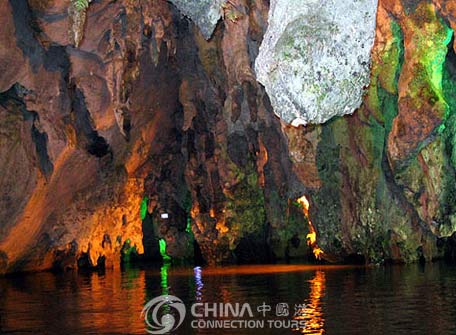
Eulogised in fantastic terms by Chinese tourist literature and hyped into superstardom by an advertising machine that magnifies its each and every charm, Gu ì l í n takes its position among the aristocracy of China's top sights with confidence and more than a measure of complacency.


Guilin prospered in the Tang and Song dynasties but remained a county. The city was also a nexus between the central government and the southwest border, and it was where regular armies were placed to guard that border. Canals were built through the city so that food supplies could be directly transported from the food-productive Yangtze plain to the farthest southwestern point of the empire.


Monday, 10 October 2011
Guangzhou City


Places of Interest
Known to many in the West as Canton, Gu ǎ ngzh ō u, the capital of Gu ǎ ngd ō ng, has been a busy trade hub in China since well before the heyday of cohong. Today it has become a sprawling city wrapped in a perpetual haze of pink smog and flashing neon lights.
However, not long ago the city began to ameliorate the worst of its rampant urbanisation with a makeover that has resulted in a clean, modern metro system, tougher traffic law enforcement, and greener roadsides, gardens and parks to add splashes of colour to the contemporary grey landscape.
General Information
Name: Cathedral Of The Sacred Heart
Address: Yide Xilu Haizhu Square
 The impressive twin-spired Roman Catholic Cathedral Of The Sacred Heart , built between 1863 and 1888, was designed by a French architect in the neo-Gothic style and built entirely of granite. The massive towers reach an impressive height of 48m. The four bronze bells were made in France, as was the original stained glass, most of which has now disappeared. Take bus 8, 82 or 86.
Name: Mausoleum Of The Nanyue King
Address: 867 Jiefang Beilu Opposite main entrance to Yuexiu Park
Telefax: 20 8666 4920
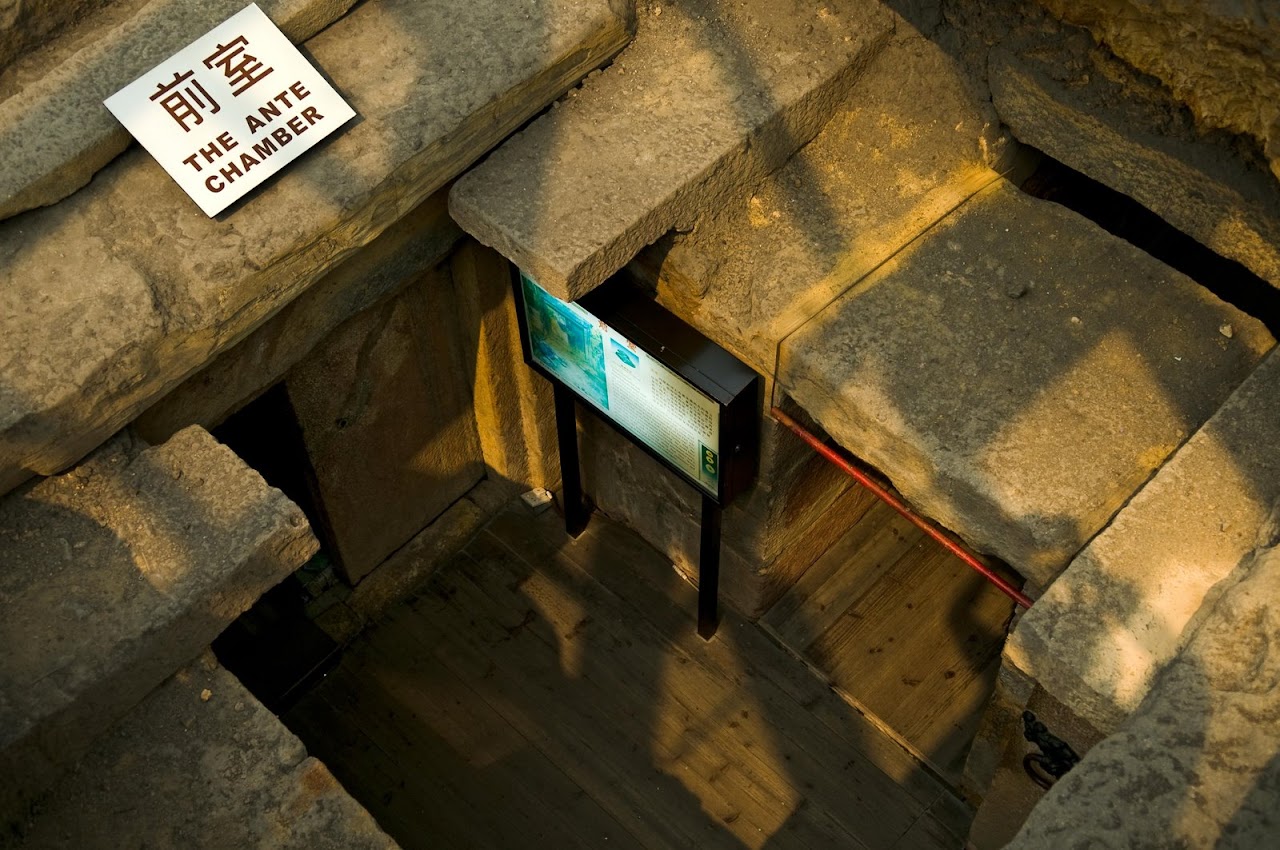 Just opposite the main entrance to Yuexiu Park, the superb Mausoleum Of The Nanyue King sits on the site of the 2000 year-old Nanyue Kingdom, discovered in 1983 when surprised workers discovered an ancient royal tomb in the course of excavation work for a shopping plaza. The tomb has been turned into one of China's best museums, making it a must on any itinerary.
Name: Guangxiao Temple
Address: 109 Jinghui Lu Xiguan
 The Guangxiao Temple, or 'Bright Filial Piety Temple', about 400m west of the Temple of the Six Banyan Trees, is the oldest temple in Gu ǎ ngzh ō u and dates back to the 4th century. By the Tang dynasty, it was well established as a centre of Buddhist learning in southern China. Many prominent monks came to teach here, including Bodhidarma, the founder of Chan (Zen) Buddhism.
Related city: Macau City, Shanghai City, Hong Kong City, Beijing City
Known to many in the West as Canton, Gu ǎ ngzh ō u, the capital of Gu ǎ ngd ō ng, has been a busy trade hub in China since well before the heyday of cohong. Today it has become a sprawling city wrapped in a perpetual haze of pink smog and flashing neon lights.
However, not long ago the city began to ameliorate the worst of its rampant urbanisation with a makeover that has resulted in a clean, modern metro system, tougher traffic law enforcement, and greener roadsides, gardens and parks to add splashes of colour to the contemporary grey landscape.
General Information
Name: Cathedral Of The Sacred Heart
Address: Yide Xilu Haizhu Square
Name: Mausoleum Of The Nanyue King
Address: 867 Jiefang Beilu Opposite main entrance to Yuexiu Park
Telefax: 20 8666 4920
Name: Guangxiao Temple
Address: 109 Jinghui Lu Xiguan
Related city: Macau City, Shanghai City, Hong Kong City, Beijing City

Friday, 8 July 2011
Macau City


Introduction
Gambling, greenery and glitz in a cultural mix. Macau is a city with two faces: the fortresses, churches and food of former colonial Portugese masters speak to a uniquely Mediterranean style on the China coast. And yet Macau is also the self-styled Las Vegas of the East. The last few years have seen once-sleepy little Macau booming.
Today's Macau woos commerce and tourism like never before, taking a tradition of gambling to new extremes. While the profileration of mega-casinos means there's plenty of places to try your hand with Lady Luck, many of Macau's pleasures are relaxed and laidback, architectural and atmospheric.
Macau is made up of two islands and a compact peninsula dangling off the Guangdong mainland into the South China Sea. Hong Kong is just a 65km (40mi) swim away across the Pearl River delta, and the Guangdong capital, Guangzhou (aka Canton), is on the Pearl River 150km (90mi) or so to the north. Macau is tiny: all up, the mainland peninsula plus its two southerly islands (Taipa and Coloane) add up to a measly 28.2 sq km (10.9 sq mi) - Hong Kong Island alone measures more than three times its size. Most of the sights are on the peninsula jutting down from Zh ū h ǎ i on the mainland. Avenida de Almeida Ribeiro, running from Avenida da Praia Grande to the Inner Harbour, is Macau's main street. Its extension, Avenida do Infante Dom Henrique, runs south to the Outer Harbour. Development is gradually overtaking the peninsula and Taipa, but Coloane remains largely unspoilt. Most of Macau's attractions are clustered around the peninsula's centre - it's a hilly but rewarding walk from church to fort and back again. Land reclamation at the foot of the peninsula has significantly increased Macau's acreage and created the two artificial Nam Van Lakes. Taipa Island is linked to the peninsula by three bridges and, until recently, a causeway linked Taipa with Coloane. This is currently being expanded in a massive land reclamation project: when it's finished, the Cotai Strip, as it will be known, will be home to a series of Las Vegas-owned and styled mega-casinos. The new Lotus Flower Bridge connects Taipa to the Chinese mainland and meets the Guangzhou-Zhuhai highway. This is expected to be the major artery that feeds gamblers into the strip.
Destination Facts
Time zone: GMT +8
Area: 28.2
Coordinates: 22.199213028 latitude and 113.545173645 longitude
Population: 482000
Currency: Pataca (MOP$)
Getting there and away
Macau opened a flash new airport on Taipa Island in December 1995, with high hopes for a tourism-led boom. Only trouble is there are few direct flights from Europe, so the dream of visitors jetting in direct to Macau rather than via Hong Kong is still to be realised. The airport is one of Asia's least used, so you'll whiz through immigration and baggage pick-up. But one, and possibly two, new low-cost airlines based in Macau are set to make the ultramodern airport much busier. New long-haul budget airline Viva Macau (www.flyvivamacau.com) is expected to service destinations including Milan, Moscow, Mumbai, Delhi, Jakarta, Manila and Abu Dhabi by late 2007. For now, Air Macau(www.airmacau.com.mo) has the lion's share of the traffic. Macau Airport has direct links to Asian cities like Bangkok, Singapore, Seoul, Taipei and Manila; mainland China destinations include Beijing, Shanghai, Fuzhou and Guilin. You can catch a helicopter to Hong Kong if you've got cash to spare. Hong Kong is linked to Macau by more than 150 sea crossings every day, with a choice of jetfoil, turbocat, foilcat or express ferry services; the trip takes just under an hour by jetfoil. There's a daily ferry crossing to Shekou in the Shenzhen Special Economic Zone, north of Hong Kong. The Zhuhai Special Economic Zone town of Gongbei borders Macau to the north, on the other side of the historic Barrier Gate, and there are regular buses to Gongbei and Guangzhou.
Getting around
To/from the airport: catch the airport bus AP1, which zips around Taipa before heading to the Macau ferry terminal and the Border Gate. The bus stops at a number of major hotels en route and departs frequently. Otherwise hire a taxi or there are bus services to Coloane (Nos 21 and 26) and the A-Ma Temple (No 21.) Other than walking, the best way to get around the Macau Peninsula is by air-conditioned bus or minibus. Routes take in most of the sights. Taxis are metered and reasonably priced, but not too many drivers speak English. As for those touristy three-wheeled pedicabs (triciclos) clustered round the Jetfoil pier and Lisboa Hotel - well, they can be more expensive than the taxis, plus they're slow-moving and restricted to touring the waterfront. Bicycles can be hired from Taipa Village but remember you cannot cross the Taipa-Macau bridges on a bike. Driving in Macau can be a somewhat hair-raising experience - there are way too many cars in too small a space, and the drivers all seem to think they're Grand Prix heroes. Cars can be hired though the traditional Mokes (Jeep like-convertible) may soon be phased out. Either way, they're best reserved for more tranquil Taipa and Coloane.
Weather
Macau has a sub-tropical climate, with a yearly average of 20 ° C (68 ° F). Humidity is highest through the typhoon season in June, when 30 ° C (86 ° F) temperatures accompany torrential downpours that continue through until September. Autumn (October-December) brings a cool change and the humidity declines a little. The winter period (January-March) can be cold (down to 10 ° C/50 ° F), but the sun is never far away. From April Macau starts to get muggy again, maintaining a yearly humidity average of between 70% and 90%.
Places of Interest
Macau is a city with two faces: the fortresses, churches and food of former colonial Portugese masters speak to a uniquely Mediterranean style on the China coast. And yet Macau is also the self-styled Las Vegas of the East. The last few years have seen once-sleepy little Macau booming.
Today's Macau woos commerce and tourism like never before, taking a tradition of gambling to new extremes. While the profileration of mega-casinos means there's plenty of places to try your hand with Lady Luck, many of Macau's pleasures are relaxed and laidback, architectural and atmospheric.

Gambling, greenery and glitz in a cultural mix. Macau is a city with two faces: the fortresses, churches and food of former colonial Portugese masters speak to a uniquely Mediterranean style on the China coast. And yet Macau is also the self-styled Las Vegas of the East. The last few years have seen once-sleepy little Macau booming.
Today's Macau woos commerce and tourism like never before, taking a tradition of gambling to new extremes. While the profileration of mega-casinos means there's plenty of places to try your hand with Lady Luck, many of Macau's pleasures are relaxed and laidback, architectural and atmospheric.
Macau is made up of two islands and a compact peninsula dangling off the Guangdong mainland into the South China Sea. Hong Kong is just a 65km (40mi) swim away across the Pearl River delta, and the Guangdong capital, Guangzhou (aka Canton), is on the Pearl River 150km (90mi) or so to the north. Macau is tiny: all up, the mainland peninsula plus its two southerly islands (Taipa and Coloane) add up to a measly 28.2 sq km (10.9 sq mi) - Hong Kong Island alone measures more than three times its size. Most of the sights are on the peninsula jutting down from Zh ū h ǎ i on the mainland. Avenida de Almeida Ribeiro, running from Avenida da Praia Grande to the Inner Harbour, is Macau's main street. Its extension, Avenida do Infante Dom Henrique, runs south to the Outer Harbour. Development is gradually overtaking the peninsula and Taipa, but Coloane remains largely unspoilt. Most of Macau's attractions are clustered around the peninsula's centre - it's a hilly but rewarding walk from church to fort and back again. Land reclamation at the foot of the peninsula has significantly increased Macau's acreage and created the two artificial Nam Van Lakes. Taipa Island is linked to the peninsula by three bridges and, until recently, a causeway linked Taipa with Coloane. This is currently being expanded in a massive land reclamation project: when it's finished, the Cotai Strip, as it will be known, will be home to a series of Las Vegas-owned and styled mega-casinos. The new Lotus Flower Bridge connects Taipa to the Chinese mainland and meets the Guangzhou-Zhuhai highway. This is expected to be the major artery that feeds gamblers into the strip.
Destination Facts
Time zone: GMT +8
Area: 28.2
Coordinates: 22.199213028 latitude and 113.545173645 longitude
Population: 482000
Currency: Pataca (MOP$)
Getting there and away
Macau opened a flash new airport on Taipa Island in December 1995, with high hopes for a tourism-led boom. Only trouble is there are few direct flights from Europe, so the dream of visitors jetting in direct to Macau rather than via Hong Kong is still to be realised. The airport is one of Asia's least used, so you'll whiz through immigration and baggage pick-up. But one, and possibly two, new low-cost airlines based in Macau are set to make the ultramodern airport much busier. New long-haul budget airline Viva Macau (www.flyvivamacau.com) is expected to service destinations including Milan, Moscow, Mumbai, Delhi, Jakarta, Manila and Abu Dhabi by late 2007. For now, Air Macau(www.airmacau.com.mo) has the lion's share of the traffic. Macau Airport has direct links to Asian cities like Bangkok, Singapore, Seoul, Taipei and Manila; mainland China destinations include Beijing, Shanghai, Fuzhou and Guilin. You can catch a helicopter to Hong Kong if you've got cash to spare. Hong Kong is linked to Macau by more than 150 sea crossings every day, with a choice of jetfoil, turbocat, foilcat or express ferry services; the trip takes just under an hour by jetfoil. There's a daily ferry crossing to Shekou in the Shenzhen Special Economic Zone, north of Hong Kong. The Zhuhai Special Economic Zone town of Gongbei borders Macau to the north, on the other side of the historic Barrier Gate, and there are regular buses to Gongbei and Guangzhou.
Getting around
To/from the airport: catch the airport bus AP1, which zips around Taipa before heading to the Macau ferry terminal and the Border Gate. The bus stops at a number of major hotels en route and departs frequently. Otherwise hire a taxi or there are bus services to Coloane (Nos 21 and 26) and the A-Ma Temple (No 21.) Other than walking, the best way to get around the Macau Peninsula is by air-conditioned bus or minibus. Routes take in most of the sights. Taxis are metered and reasonably priced, but not too many drivers speak English. As for those touristy three-wheeled pedicabs (triciclos) clustered round the Jetfoil pier and Lisboa Hotel - well, they can be more expensive than the taxis, plus they're slow-moving and restricted to touring the waterfront. Bicycles can be hired from Taipa Village but remember you cannot cross the Taipa-Macau bridges on a bike. Driving in Macau can be a somewhat hair-raising experience - there are way too many cars in too small a space, and the drivers all seem to think they're Grand Prix heroes. Cars can be hired though the traditional Mokes (Jeep like-convertible) may soon be phased out. Either way, they're best reserved for more tranquil Taipa and Coloane.
Weather
Macau has a sub-tropical climate, with a yearly average of 20 ° C (68 ° F). Humidity is highest through the typhoon season in June, when 30 ° C (86 ° F) temperatures accompany torrential downpours that continue through until September. Autumn (October-December) brings a cool change and the humidity declines a little. The winter period (January-March) can be cold (down to 10 ° C/50 ° F), but the sun is never far away. From April Macau starts to get muggy again, maintaining a yearly humidity average of between 70% and 90%.
Places of Interest
Macau is a city with two faces: the fortresses, churches and food of former colonial Portugese masters speak to a uniquely Mediterranean style on the China coast. And yet Macau is also the self-styled Las Vegas of the East. The last few years have seen once-sleepy little Macau booming.
Today's Macau woos commerce and tourism like never before, taking a tradition of gambling to new extremes. While the profileration of mega-casinos means there's plenty of places to try your hand with Lady Luck, many of Macau's pleasures are relaxed and laidback, architectural and atmospheric.
Sunday, 3 July 2011
Shanghai City

Introduction
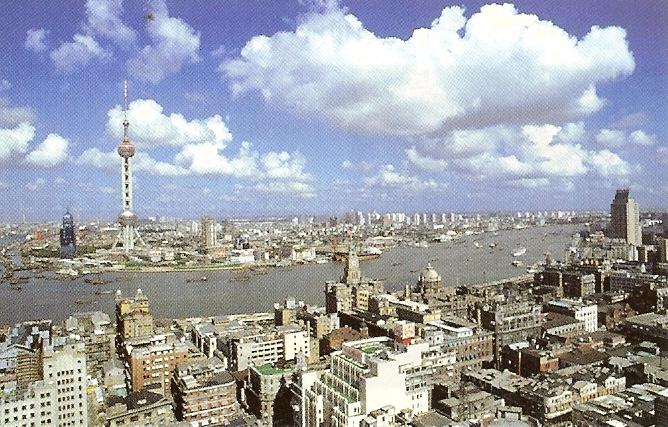
Shanghai has thrown on its Armani to strut on the global stage. Shanghai is a scintillating city swirling with rapid cultural change. Since market restrictions were lifted, it has embraced the forces of business and design and rewritten its rule book shaping a fresh, new city that is sophisticated, innovative and living a life it has never lived before.
While it can't match the epic history of Beijing or Xi'an's grander sights, Shanghai is the hotspot of modern China; a cosmopolitan city buzzing with the concept of 'lifestyle revolution', showcased in the architectural temples of art, fine dining and contemporary urban living on the Bund.
'As a city, Shanghai is like a beautiful young bitch who loves money.' - Chinese author Mian Mian
Shanghai municipality covers a huge area, but the city proper is more modest. Broadly, central Sh à ngh ǎ i is divided into two areas: P ǔ d ō ng (east of the Huangpu River) and P ǔ x ī (west of the Huangpu River). The First Ring Rd does a long elliptical loop around the city centre proper. The historical attractions belong to P ǔ x ī , where Shanghai's personality is also found: the Bund (officially and more prosaically called East Zhongshan No 1 Rd), major sights, the principal shopping streets, the former foreign concessions, and Shanghai's trendiest clusters of bars, restaurants and nightclubs are all in P ǔ x ī . The area around the Bund is the historical heart of the former International Settlement. From here East Nanjing Rd, China's busiest shopping street, runs west to People's Sq, a centre of gravity of sorts overlooked by the startling Tomorrow Square building, and home to the Shanghai Museum, Grand Theatre and the frantic Metro Line 1 and Line 2 interchange. West Nanjing Rd continues west from here. South of the Bund, the Old Town is a ragged maze of narrow lanes. The location of the original town of Shanghai, this is the oldest part of the city. South of Yan'an Rd, and west of the Old Town, the former French Concession is a large and leafy quarter of shops, bars and restaurants, popular with expats and white-collar Chinese. East of the Huangpu is the kit-city of P ǔ d ō ng, a special economic zone of Maglev trains, mega-malls, banks, glistening skyscrapers, building sites and residential complexes, eventually petering out into farmland. In the central district (around Nanjing Rd), the provincial names run north-south, and city names run east-west. Some roads use compass points, such as South Sichuan Rd and North Sichuan Rd. Encircling Shanghai proper, Zhongshan Rd is split by sectors, such as East Zhongshan No 2 Rd and East Zhongshan No 1 Rd.
Destination Facts
Time zone: GMT +8
Area: 6340
Coordinates: 31.24799919 latitude and 121.4729996 longitude
Population: 19200000
Languages: China's language is officially Mandarin, as spoken in Beijing. The Chinese call it Putonghua. About 70% of the population speak Mandarin, but that's just the tip of the linguistic iceberg. The country is awash with dialects, and dialects within dialects - and few of them are mutually intelligible.The largest single dialect within Wu Chinese (the second most widely spoken language group in China, after Mandarin), Shanghainese is the everyday language of the city. It is unintelligible to Mandarin speakers, who are usually deferred to by the good folk of Shanghai.
Currency: Yuan Renminbi (Y)
Area codes: 021
Getting there and away
Shanghai is easy to get to. It is China's second-largest international air hub (third-largest if you count Hong Kong) and if you can't fly direct, you can go via Beijing or Hong Kong. With rail and air connections to places all over China, ferries travelling up the Yangzi River, many boats along the coast, and buses to destinations in adjoining provinces, you'll be hard pushed to find somewhere you can't get to.
Getting around
Shanghai isn't exactly a walker's paradise. There are some fascinating areas to stroll around, but new road developments, building sites and shocking traffic conditions conspire to make walking an exhausting,stressful and sometimes dangerous experience. Travelling on buses can also be hard work; the routes, and particularly the stops, are not easy to figure out and buses are packed at rush hour. The metro system, however, is a dream. Taxis are reasonably cheap and east to flag down.
Weather
Shanghai starts the year shivering in midwinter, when temperatures can drop below freezing and the vistas are grey and misty. Spring brings warmth; April to mid-May is probably one of the best times to visit weather-wise, along with autumn (late September to mid-November). In summer the hot and humid weather makes conditions outside uncomfortable, with temperatures sometimes as high as 40 ° C (104 ° F) in July and August. In short, you'll need silk long johns and down jackets for winter, an ice block for each armpit in summer and an umbrella wouldn't go astray in either of these seasons.
Places of Interest
Shanghai is a scintillating city swirling with rapid cultural change. Since market restrictions were lifted, it has embraced the forces of business and design and rewritten its rule book shaping a fresh, new city that is sophisticated, innovative and living a life it has never lived before. While it can't match the epic history of Beijing or Xi'an's grander sights, Shanghai is the hotspot of modern China; a cosmopolitan city buzzing with the concept of 'lifestyle revolution', showcased in the architectural temples of art, fine dining and contemporary urban living on the Bund.
Events
Shanghai's revelling options are myriad; the city's inhabitants celebrate everything from the dead poets to beer, and they do it with a vibrant dash you'll remember long after you've licked away the last crumbs of moon cake. The biggest event in Shanghai's calendar is the Spring Festival, otherwise known as Chinese New Year, when many people take a week off. The Longhua Temple has large celebrations, with dragon and lion dances. The Lantern Festival (February) is a lovely time to visit - buildings are decorated with coloured lanterns. A Temple Fair is held at the Longhua Temple on the third day of the third lunar month (around April). It's eastern China's largest and oldest folk gathering. The Shanghai International Tea Culture Festival is usually at the end of April. Tomb Sweeping Day, also in April, is a day for worshipping ancestors; people visit the graves of their dearly departed relatives and often burn 'ghost money' (for use in the afterworld) for the departed. The Dragon Boat Festival on the fifth day of the fifth lunar month (June) commemorates the death of Qu Yuan, a 3rd-century-BC poet-statesman who drowned himself to protest against the corrupt government. The Shanghai Beer Festival staggers into town around the end of July. The Mid-Autumn Festival is also known as the Moon Festival and is the time to eat tasty moon cakes. It takes place in September, on the 15th day of the 8th moon. The Shanghai Tourism Festival kicks off in late September and offers a wide variety of cultural programs. In November and early December there's an annual International Arts Festival.

Shanghai has thrown on its Armani to strut on the global stage. Shanghai is a scintillating city swirling with rapid cultural change. Since market restrictions were lifted, it has embraced the forces of business and design and rewritten its rule book shaping a fresh, new city that is sophisticated, innovative and living a life it has never lived before.
While it can't match the epic history of Beijing or Xi'an's grander sights, Shanghai is the hotspot of modern China; a cosmopolitan city buzzing with the concept of 'lifestyle revolution', showcased in the architectural temples of art, fine dining and contemporary urban living on the Bund.
'As a city, Shanghai is like a beautiful young bitch who loves money.' - Chinese author Mian Mian
Shanghai municipality covers a huge area, but the city proper is more modest. Broadly, central Sh à ngh ǎ i is divided into two areas: P ǔ d ō ng (east of the Huangpu River) and P ǔ x ī (west of the Huangpu River). The First Ring Rd does a long elliptical loop around the city centre proper. The historical attractions belong to P ǔ x ī , where Shanghai's personality is also found: the Bund (officially and more prosaically called East Zhongshan No 1 Rd), major sights, the principal shopping streets, the former foreign concessions, and Shanghai's trendiest clusters of bars, restaurants and nightclubs are all in P ǔ x ī . The area around the Bund is the historical heart of the former International Settlement. From here East Nanjing Rd, China's busiest shopping street, runs west to People's Sq, a centre of gravity of sorts overlooked by the startling Tomorrow Square building, and home to the Shanghai Museum, Grand Theatre and the frantic Metro Line 1 and Line 2 interchange. West Nanjing Rd continues west from here. South of the Bund, the Old Town is a ragged maze of narrow lanes. The location of the original town of Shanghai, this is the oldest part of the city. South of Yan'an Rd, and west of the Old Town, the former French Concession is a large and leafy quarter of shops, bars and restaurants, popular with expats and white-collar Chinese. East of the Huangpu is the kit-city of P ǔ d ō ng, a special economic zone of Maglev trains, mega-malls, banks, glistening skyscrapers, building sites and residential complexes, eventually petering out into farmland. In the central district (around Nanjing Rd), the provincial names run north-south, and city names run east-west. Some roads use compass points, such as South Sichuan Rd and North Sichuan Rd. Encircling Shanghai proper, Zhongshan Rd is split by sectors, such as East Zhongshan No 2 Rd and East Zhongshan No 1 Rd.
Destination Facts
Time zone: GMT +8
Area: 6340
Coordinates: 31.24799919 latitude and 121.4729996 longitude
Population: 19200000
Languages: China's language is officially Mandarin, as spoken in Beijing. The Chinese call it Putonghua. About 70% of the population speak Mandarin, but that's just the tip of the linguistic iceberg. The country is awash with dialects, and dialects within dialects - and few of them are mutually intelligible.The largest single dialect within Wu Chinese (the second most widely spoken language group in China, after Mandarin), Shanghainese is the everyday language of the city. It is unintelligible to Mandarin speakers, who are usually deferred to by the good folk of Shanghai.
Currency: Yuan Renminbi (Y)
Area codes: 021
Getting there and away
Shanghai is easy to get to. It is China's second-largest international air hub (third-largest if you count Hong Kong) and if you can't fly direct, you can go via Beijing or Hong Kong. With rail and air connections to places all over China, ferries travelling up the Yangzi River, many boats along the coast, and buses to destinations in adjoining provinces, you'll be hard pushed to find somewhere you can't get to.
Getting around
Shanghai isn't exactly a walker's paradise. There are some fascinating areas to stroll around, but new road developments, building sites and shocking traffic conditions conspire to make walking an exhausting,stressful and sometimes dangerous experience. Travelling on buses can also be hard work; the routes, and particularly the stops, are not easy to figure out and buses are packed at rush hour. The metro system, however, is a dream. Taxis are reasonably cheap and east to flag down.
Weather
Shanghai starts the year shivering in midwinter, when temperatures can drop below freezing and the vistas are grey and misty. Spring brings warmth; April to mid-May is probably one of the best times to visit weather-wise, along with autumn (late September to mid-November). In summer the hot and humid weather makes conditions outside uncomfortable, with temperatures sometimes as high as 40 ° C (104 ° F) in July and August. In short, you'll need silk long johns and down jackets for winter, an ice block for each armpit in summer and an umbrella wouldn't go astray in either of these seasons.
Places of Interest
Shanghai is a scintillating city swirling with rapid cultural change. Since market restrictions were lifted, it has embraced the forces of business and design and rewritten its rule book shaping a fresh, new city that is sophisticated, innovative and living a life it has never lived before. While it can't match the epic history of Beijing or Xi'an's grander sights, Shanghai is the hotspot of modern China; a cosmopolitan city buzzing with the concept of 'lifestyle revolution', showcased in the architectural temples of art, fine dining and contemporary urban living on the Bund.
Events
Shanghai's revelling options are myriad; the city's inhabitants celebrate everything from the dead poets to beer, and they do it with a vibrant dash you'll remember long after you've licked away the last crumbs of moon cake. The biggest event in Shanghai's calendar is the Spring Festival, otherwise known as Chinese New Year, when many people take a week off. The Longhua Temple has large celebrations, with dragon and lion dances. The Lantern Festival (February) is a lovely time to visit - buildings are decorated with coloured lanterns. A Temple Fair is held at the Longhua Temple on the third day of the third lunar month (around April). It's eastern China's largest and oldest folk gathering. The Shanghai International Tea Culture Festival is usually at the end of April. Tomb Sweeping Day, also in April, is a day for worshipping ancestors; people visit the graves of their dearly departed relatives and often burn 'ghost money' (for use in the afterworld) for the departed. The Dragon Boat Festival on the fifth day of the fifth lunar month (June) commemorates the death of Qu Yuan, a 3rd-century-BC poet-statesman who drowned himself to protest against the corrupt government. The Shanghai Beer Festival staggers into town around the end of July. The Mid-Autumn Festival is also known as the Moon Festival and is the time to eat tasty moon cakes. It takes place in September, on the 15th day of the 8th moon. The Shanghai Tourism Festival kicks off in late September and offers a wide variety of cultural programs. In November and early December there's an annual International Arts Festival.
Thursday, 23 June 2011
Hong Kong City


Introduction
On-the-boil Hong Kong will bowl you over. Hong Kong has the big city specials like smog, odour, 14 million elbows and an insane love of clatter. But it's also efficient, hushed and peaceful: the transport network is excellent, the shopping centres are sublime, and the temples and quiet corners of parks are contemplative oases.
The best thing about being in Hong Kong is getting flummoxed and fired by the confluences and contradictions of a Chinese city with multi-Asian and Western elements. It's about savouring new tastes, weaving through a human gridlock and humming some dumb Cantopop tune while slurping your noodles.
Hong Kong is divided into four main areas - Kowloon, Hong Kong Island, the New Territories and the Outlying Islands. Kowloon and the New Territories are on a peninsula of the Chinese mainland, on the northern side of Victoria Harbour; Hong Kong Island is on the southern side of the harbour facing Kowloon; the Outlying Islands simply refers to any of the other 234 islands. The New Territories has a 20km (12mi) land border with China proper. The city itself is centred around Victoria Harbour. The main business district is Central, on Hong Kong Island. East of Central lies the Admiralty commercial district; Wan Chai, known for restaurants and clubs; then Causeway Bay, a major shopping area. Towering above it all is the Peak, Hong Kong's premier scenic outlook and residential district, which happily has plenty of public green space. In Kowloon, Tsim Sha Tsui (on the southern tip), Jordan and Yau Ma Tei are busy hotel and shopping areas, while Mong Kok is a bustling residential and shopping area.
Destination Facts
President: Hu Jintao
Chief Executive: Donald Tsang
Time zone: GMT +8 (Hong Kong Standard Time).
Area: 1098
Coordinates: 22.3798961639 latitude and 114.230117798 longitude
Population: 7094000
Area codes: 852
Getting There
Weatherwise, October, November and most of December are the best months to visit Hong Kong; the skies are clear and the sun shines. The June to August heat/rain combo might push your endurance but there's a lot of sunshine and, after all, it's summer. Hotels tend to offer substantial discounts outside the high seasons of March-April and October-November. Travel can be difficult during Chinese New Year in late January/early February.
Getting there and away
Most international travellers arrive and depart via Hong Kong International Airport (www.hongkongairport.com). More than 60 airlines operate between Hong Kong and about 140 destinations worldwide. Competition keeps fares relatively low, and it's a great place to find discounted tickets. Travellers to and from mainland China can use ferry, road or rail links to Guangdong and points beyond. Hong Kong can be reached from Macau via ferry or helicopter.
Getting around
The Airport Express line of the MTR (Mass Transit Railway) is the fastest, easiest and consequently the most expensive public route to/from Hong Kong International Airport at Chek Lap Kok, off the northern coast of Lantau. A gaggle of much cheaper buses connect the airport with Lantau, the New Territories, Kowloon and even Hong Kong Island. Hong Kong's public transport system is the envy of cities the world over. It's fast, easy to navigate, relatively inexpensive and ridiculously easy with the Octopus card payment system. From the moment you arrive you'll be wondering why more cities can't operate transport like Hong Kong. There are old harbour ferries and narrow trams, ultra modern trains and the world's longest escalator. If you can't get from A to B with style in Hong Kong, you're not trying.
Weather
Many prefer to visit Hong Kong during November and December when there are pleasant breezes, plenty of sunshine and comfortable temperatures. January and February are OK times to visit, but the temperature can drop to below 10 ° C (50 ° F). Warmer temperatures make March and April pleasant months to go, but in May the air becomes uncomfortably sticky and humid. Typhoons hit Hong Kong most years between about May and September, though the city is so well prepared it would need to be a very big storm to disrupt your travel too much.
Places of Interest
An ultramodern city with plenty of ancient soul. Hong Kong has enough towering urbanity, electric streetscapes, enigmatic temples, commercial fervour and cultural idiosyncrasies to utterly swamp the senses of a visitor, and enough spontaneous, unexpected possibilities to make a complete mockery of any attempt at a strictly organised itinerary.
Hong Kong has the big city specials like smog, odour, 14 million elbows and an insane love of clatter. But it's also efficient, hushed and peaceful: the transport network is excellent, the shopping centres are sublime, and the temples and quiet corners of parks are contemplative oases. The best thing about being in Hong Kong is getting flummoxed and fired by the confluences and contradictions of a Chinese city with multi-Asian and Western elements. It's about savouring new tastes, weaving through a human gridlock and humming some dumb Cantopop tune while slurping your noodles.
Events
Hong Kong's combined use of the Western calendar and the Chinese lunar calendar can make trying to determine the exact date of festivals a bit tricky. Chinese New Year takes place in late January/early February, and many people get four days off for the event. Expect a massive fireworks display over Victoria Harbour. The Tin Hau Festival is a Taoist festival falling around late April/early May. Junks are decorated and sail in long rows to Tin Hau temples to pray for clear skies and good fishing. The Dragon Boat Festival is held in June, with dragon boat races taking place in Hong Kong and Outlying Islands. The colourful Mid-Autumn Festival takes place in September or October. It marks an uprising against the Mongols in the 14th century when plans for a revolution were passed around in little round 'moon' cakes, which are still eaten on this day. The Festival of Asian Arts is a major international event and usually occurs in October or November. The Hong Kong Tourism Board website (www.discoverhongkong.com) should have accurate dates.
On-the-boil Hong Kong will bowl you over. Hong Kong has the big city specials like smog, odour, 14 million elbows and an insane love of clatter. But it's also efficient, hushed and peaceful: the transport network is excellent, the shopping centres are sublime, and the temples and quiet corners of parks are contemplative oases.
The best thing about being in Hong Kong is getting flummoxed and fired by the confluences and contradictions of a Chinese city with multi-Asian and Western elements. It's about savouring new tastes, weaving through a human gridlock and humming some dumb Cantopop tune while slurping your noodles.
Hong Kong is divided into four main areas - Kowloon, Hong Kong Island, the New Territories and the Outlying Islands. Kowloon and the New Territories are on a peninsula of the Chinese mainland, on the northern side of Victoria Harbour; Hong Kong Island is on the southern side of the harbour facing Kowloon; the Outlying Islands simply refers to any of the other 234 islands. The New Territories has a 20km (12mi) land border with China proper. The city itself is centred around Victoria Harbour. The main business district is Central, on Hong Kong Island. East of Central lies the Admiralty commercial district; Wan Chai, known for restaurants and clubs; then Causeway Bay, a major shopping area. Towering above it all is the Peak, Hong Kong's premier scenic outlook and residential district, which happily has plenty of public green space. In Kowloon, Tsim Sha Tsui (on the southern tip), Jordan and Yau Ma Tei are busy hotel and shopping areas, while Mong Kok is a bustling residential and shopping area.
Destination Facts
President: Hu Jintao
Chief Executive: Donald Tsang
Time zone: GMT +8 (Hong Kong Standard Time).
Area: 1098
Coordinates: 22.3798961639 latitude and 114.230117798 longitude
Population: 7094000
Area codes: 852
Getting There
Weatherwise, October, November and most of December are the best months to visit Hong Kong; the skies are clear and the sun shines. The June to August heat/rain combo might push your endurance but there's a lot of sunshine and, after all, it's summer. Hotels tend to offer substantial discounts outside the high seasons of March-April and October-November. Travel can be difficult during Chinese New Year in late January/early February.
Getting there and away
Most international travellers arrive and depart via Hong Kong International Airport (www.hongkongairport.com). More than 60 airlines operate between Hong Kong and about 140 destinations worldwide. Competition keeps fares relatively low, and it's a great place to find discounted tickets. Travellers to and from mainland China can use ferry, road or rail links to Guangdong and points beyond. Hong Kong can be reached from Macau via ferry or helicopter.
Getting around
The Airport Express line of the MTR (Mass Transit Railway) is the fastest, easiest and consequently the most expensive public route to/from Hong Kong International Airport at Chek Lap Kok, off the northern coast of Lantau. A gaggle of much cheaper buses connect the airport with Lantau, the New Territories, Kowloon and even Hong Kong Island. Hong Kong's public transport system is the envy of cities the world over. It's fast, easy to navigate, relatively inexpensive and ridiculously easy with the Octopus card payment system. From the moment you arrive you'll be wondering why more cities can't operate transport like Hong Kong. There are old harbour ferries and narrow trams, ultra modern trains and the world's longest escalator. If you can't get from A to B with style in Hong Kong, you're not trying.
Weather
Many prefer to visit Hong Kong during November and December when there are pleasant breezes, plenty of sunshine and comfortable temperatures. January and February are OK times to visit, but the temperature can drop to below 10 ° C (50 ° F). Warmer temperatures make March and April pleasant months to go, but in May the air becomes uncomfortably sticky and humid. Typhoons hit Hong Kong most years between about May and September, though the city is so well prepared it would need to be a very big storm to disrupt your travel too much.
Places of Interest
An ultramodern city with plenty of ancient soul. Hong Kong has enough towering urbanity, electric streetscapes, enigmatic temples, commercial fervour and cultural idiosyncrasies to utterly swamp the senses of a visitor, and enough spontaneous, unexpected possibilities to make a complete mockery of any attempt at a strictly organised itinerary.
Hong Kong has the big city specials like smog, odour, 14 million elbows and an insane love of clatter. But it's also efficient, hushed and peaceful: the transport network is excellent, the shopping centres are sublime, and the temples and quiet corners of parks are contemplative oases. The best thing about being in Hong Kong is getting flummoxed and fired by the confluences and contradictions of a Chinese city with multi-Asian and Western elements. It's about savouring new tastes, weaving through a human gridlock and humming some dumb Cantopop tune while slurping your noodles.
Events
Hong Kong's combined use of the Western calendar and the Chinese lunar calendar can make trying to determine the exact date of festivals a bit tricky. Chinese New Year takes place in late January/early February, and many people get four days off for the event. Expect a massive fireworks display over Victoria Harbour. The Tin Hau Festival is a Taoist festival falling around late April/early May. Junks are decorated and sail in long rows to Tin Hau temples to pray for clear skies and good fishing. The Dragon Boat Festival is held in June, with dragon boat races taking place in Hong Kong and Outlying Islands. The colourful Mid-Autumn Festival takes place in September or October. It marks an uprising against the Mongols in the 14th century when plans for a revolution were passed around in little round 'moon' cakes, which are still eaten on this day. The Festival of Asian Arts is a major international event and usually occurs in October or November. The Hong Kong Tourism Board website (www.discoverhongkong.com) should have accurate dates.
Tuesday, 14 June 2011
Beijing City


Introduction
Where the mojo of MTV and mobile phones has eclipsed the magic of Mao. Capital of the country everyone's talking about, Beijing is a dynamic clash of the ancient and the modern. Steeped in history it might be, but Beijing redefi nes and reinvents itself while other cities are content to rest on their laurels.
The pace of Beijing is at times bewildering, and you'll be left gasping at its contrasts. Stunning historical sights rub shoulders with cutting-edge architecture, while serene temples coexist with buzzing nightspots, hip galleries and over 60,000 restaurants.
With a total area of 16,800 sq km, Beijing municipality is roughly the size of Belgium. The city itself may appear unforgivingly huge, but Beijing is a city of very orderly design. Think of the city as one giant grid, with the Forbidden City at its centre. The historical central areas east and west of the Forbidden City are Dongcheng and Xicheng, respectively. South of Tiananmen Sq are the districts of Xuanwu and Chongwen, while the huge district of Chaoyang occupies much of Beijing's east and north. The large district of Haidian ranges to the northwest. Street names can be confusing. Jianguomenwai Dajie means 'the avenue (dajie) outside ( wai) Jianguo Gate (Jianguomen)' - that is, outside the old wall - whereas Jianguomennei Dajie means 'the avenue inside Jianguo Gate'. The gate in question no longer exists, so it survives in name alone. A major boulevard can change names six or even seven times along its length. Streets and avenues can also be split along compass points: Dong Dajie (East Ave), Xi Dajie (West Ave), Bei Dajie (North Ave) and Nan Dajie (South Ave). All these streets head off from an intersection, usually where a gate once stood. Six ring roads circle the city centre in concentric rings, while a seventh is rumoured to be forming. Bus, taxi and train are the main methods of transport to the city centre from B ě ij ī ng's Capital Airport, 27km away.
Destination Facts
Time zone: GMT +8
Area: 16800
Coordinates: 39.9061927795 latitude and 116.388038635 longitude
Population: 16330000
Area codes: 010
Getting There
Of the shoulder seasons, autumn is optimal - the weather is gorgeous and fewer tourists are in town. Locals describe this short season as tiangao qishuang - literally 'the sky is high and the air is fresh' - with clear skies and breezy days. Spring is less pleasant - not many tourists but lots of wind and dust. Summer (June to August) is considered peak season, when hotels typically raise their rates and the Great Wall nearly collapses under the weight of marching tourists. Winter is the extreme opposite but makes for pretty surrounds if you can stand the freezing temperatures; you'll have Beijing to yourself and many hotels offer substantial discounts. Everything is chock-a-block during the Chinese New Year (usually in January or February) and the week-long holidays of International Labour Day (May 1) and National Day (Oct 1).
Weather
Autumn is lovely, with clear skies and breezy days. Arid spring is ok, apart from the (worsening) sand clouds that sweep in from Inner Mongolia and the ubiquitous static electricity that discharges everywhere. Spring also sees the snow-like liuxu (willow catkins) wafting through the air like snow and collecting in drifts. From May onwards the mercury can surge well over 30 ° C (86 ° F). Beijing simmers under a scorching sun in summer (reaching over 40 ° C/104 ° F), and there can also be heavy rainstorms late in the season. In winter it's glacial outside (dipping as low as -20 ° C/-4 ° F) and the northern winds cut like a knife through bean curd. Note that air pollution can be very harsh in summer and winter.
Places of Interest
From history to hysterical, Beijing by bike is best. The spinsterish Beijing of old is having a facelift and the cityscape is changing daily. Within the city, however, you'll still find some of China's most stunning sights: the Forbidden City, Temple of Heaven Park and the Lama Temple, to name just a few.
Capital of the country everyone's talking about, Beijing is a dynamic clash of the ancient and the modern. Steeped in history it might be, but Beijing redefi nes and reinvents itself while other cities are content to rest on their laurels. The pace of Beijing is at times bewildering, and you'll be left gasping at its contrasts. Stunning historical sights rub shoulders with cutting-edge architecture, while serene temples coexist with buzzing nightspots, hip galleries and over 60,000 restaurants.
Events
Beijing becomes a more relaxed city when it erupts in the colour and excitement of its traditional festivals. Domestic tourists flood sights to capacity and hotel room rates go up. The dates of many traditional festivals are based on the lunar calendar, so they take place at different times each year. But as well as its age-old celebrations, Beijing hosts an increasing array of arts and music festivals.Spring festival or Chinese New Year (usually celebrated between late January and mid-February) is a riot of fireworks and family reunions. Locals head to temple fairs; Beijing's best is at the Lama Temple. Fifteen days after the start of Spring festival, lanterns go up throughout Beijing's major parks to mark the end of Chinese New Year. Sweet rice dumplings are traditionally eaten during Lantern festival. On April 4 (April 5 on a leap year) Chinese people remember their ancestors on Tomb Sweeping Day; families visit and clean their relatives' graves and burn paper money in honour of the deceased. Mid-Autumn Festival (usually in September), also known as the Moon festival, sees families get together to eat moon cakes. October 1 is China's National Day, commemorating Mao's declaration of the People's Republic from Beijing's Tiananmen Gate. It kicks off a week-long holiday.
Where the mojo of MTV and mobile phones has eclipsed the magic of Mao. Capital of the country everyone's talking about, Beijing is a dynamic clash of the ancient and the modern. Steeped in history it might be, but Beijing redefi nes and reinvents itself while other cities are content to rest on their laurels.
The pace of Beijing is at times bewildering, and you'll be left gasping at its contrasts. Stunning historical sights rub shoulders with cutting-edge architecture, while serene temples coexist with buzzing nightspots, hip galleries and over 60,000 restaurants.
With a total area of 16,800 sq km, Beijing municipality is roughly the size of Belgium. The city itself may appear unforgivingly huge, but Beijing is a city of very orderly design. Think of the city as one giant grid, with the Forbidden City at its centre. The historical central areas east and west of the Forbidden City are Dongcheng and Xicheng, respectively. South of Tiananmen Sq are the districts of Xuanwu and Chongwen, while the huge district of Chaoyang occupies much of Beijing's east and north. The large district of Haidian ranges to the northwest. Street names can be confusing. Jianguomenwai Dajie means 'the avenue (dajie) outside ( wai) Jianguo Gate (Jianguomen)' - that is, outside the old wall - whereas Jianguomennei Dajie means 'the avenue inside Jianguo Gate'. The gate in question no longer exists, so it survives in name alone. A major boulevard can change names six or even seven times along its length. Streets and avenues can also be split along compass points: Dong Dajie (East Ave), Xi Dajie (West Ave), Bei Dajie (North Ave) and Nan Dajie (South Ave). All these streets head off from an intersection, usually where a gate once stood. Six ring roads circle the city centre in concentric rings, while a seventh is rumoured to be forming. Bus, taxi and train are the main methods of transport to the city centre from B ě ij ī ng's Capital Airport, 27km away.
Destination Facts
Time zone: GMT +8
Area: 16800
Coordinates: 39.9061927795 latitude and 116.388038635 longitude
Population: 16330000
Area codes: 010
Getting There
Of the shoulder seasons, autumn is optimal - the weather is gorgeous and fewer tourists are in town. Locals describe this short season as tiangao qishuang - literally 'the sky is high and the air is fresh' - with clear skies and breezy days. Spring is less pleasant - not many tourists but lots of wind and dust. Summer (June to August) is considered peak season, when hotels typically raise their rates and the Great Wall nearly collapses under the weight of marching tourists. Winter is the extreme opposite but makes for pretty surrounds if you can stand the freezing temperatures; you'll have Beijing to yourself and many hotels offer substantial discounts. Everything is chock-a-block during the Chinese New Year (usually in January or February) and the week-long holidays of International Labour Day (May 1) and National Day (Oct 1).
Weather
Autumn is lovely, with clear skies and breezy days. Arid spring is ok, apart from the (worsening) sand clouds that sweep in from Inner Mongolia and the ubiquitous static electricity that discharges everywhere. Spring also sees the snow-like liuxu (willow catkins) wafting through the air like snow and collecting in drifts. From May onwards the mercury can surge well over 30 ° C (86 ° F). Beijing simmers under a scorching sun in summer (reaching over 40 ° C/104 ° F), and there can also be heavy rainstorms late in the season. In winter it's glacial outside (dipping as low as -20 ° C/-4 ° F) and the northern winds cut like a knife through bean curd. Note that air pollution can be very harsh in summer and winter.
Places of Interest
From history to hysterical, Beijing by bike is best. The spinsterish Beijing of old is having a facelift and the cityscape is changing daily. Within the city, however, you'll still find some of China's most stunning sights: the Forbidden City, Temple of Heaven Park and the Lama Temple, to name just a few.
Capital of the country everyone's talking about, Beijing is a dynamic clash of the ancient and the modern. Steeped in history it might be, but Beijing redefi nes and reinvents itself while other cities are content to rest on their laurels. The pace of Beijing is at times bewildering, and you'll be left gasping at its contrasts. Stunning historical sights rub shoulders with cutting-edge architecture, while serene temples coexist with buzzing nightspots, hip galleries and over 60,000 restaurants.
Events
Beijing becomes a more relaxed city when it erupts in the colour and excitement of its traditional festivals. Domestic tourists flood sights to capacity and hotel room rates go up. The dates of many traditional festivals are based on the lunar calendar, so they take place at different times each year. But as well as its age-old celebrations, Beijing hosts an increasing array of arts and music festivals.Spring festival or Chinese New Year (usually celebrated between late January and mid-February) is a riot of fireworks and family reunions. Locals head to temple fairs; Beijing's best is at the Lama Temple. Fifteen days after the start of Spring festival, lanterns go up throughout Beijing's major parks to mark the end of Chinese New Year. Sweet rice dumplings are traditionally eaten during Lantern festival. On April 4 (April 5 on a leap year) Chinese people remember their ancestors on Tomb Sweeping Day; families visit and clean their relatives' graves and burn paper money in honour of the deceased. Mid-Autumn Festival (usually in September), also known as the Moon festival, sees families get together to eat moon cakes. October 1 is China's National Day, commemorating Mao's declaration of the People's Republic from Beijing's Tiananmen Gate. It kicks off a week-long holiday.
Subscribe to:
Posts (Atom)