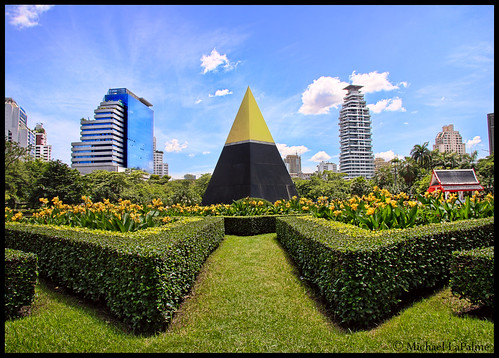
IntroductionAn exotic, hot and spicy dish that is never, ever boring. Bangkok has dominated Thailand's urban hierarchy as well as its political, commercial and cultural life since the late 18th century. Join the urban orbit in this rowdy metropolis that never sleeps, always eats and specialises in a good time.
Bangkok proper seethes on the east side of the Mae Nam Chao Phraya (Chao Phraya River), drawing rural Thai folk into its cluttered fold daily. The city is reportedly sinking at a rate of 5cm (2in) every year, but there's too much sànùk (a Thai sense of fun) going on for that to get anyone down. '
As Calcutta smells of death and Bombay of money, Bangkok smells of sex, but this sexual aroma is mingled with the sharper whiffs of death and money':
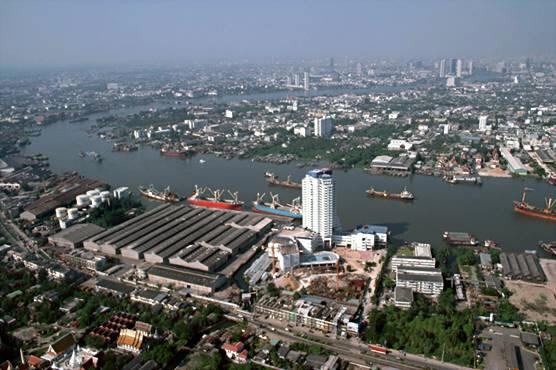
Paul TherouxMetropolitan Bangkok covers 1569sq km (612sq mi) of southern Thailand, sitting smack in the middle of the most fertile rice-producing delta in the world. A network of natural and artificial canals crisscross the city, feeding to and from Thailand's hydrological lifeline - the broad Mae Nam Chao Phraya - which snakes through the city providing transport for passengers and cargo. Bangkok is divided in two by the main north-south train line.
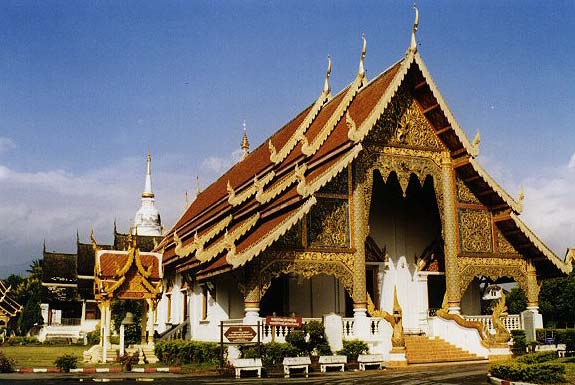
Old Bangkok, where a large proportion of the city's temples and palaces and its Chinese and Indian districts are found, lies between the river and the railway. East of the railway, comprising the main business and residential districts, is 'new' Bangkok. Of course, outside of these general classifications, Bangkok spreads in all directions with a mixture of commercial, industrial and residential areas.
Destination FactsTime zone: GMT +7
Area: 1569
Coordinates: 13.75 latitude and 100.516670227 longitude
Population: 12390000
Languages: Thai is a complicated language with its own unique alphabet, but it's fun to try at least a few words. The main complication with Thai is that it is tonal: the same word could be pronounced with a rising, falling, high, low or level tone and could theoretically have five meanings!
Currency: Baht (Bht)
Area codes: 02
Getting there and awayBangkok is a major Southeast Asian air hub, and dozens of airlines fly regularly between the Thai capital and the rest of the world. Bangkok is the centre for bus and train services that fan out all over Thailand and into neighbouring countries. Bus and train services to Southeast Asian countries are not so reliable, direct or fast.
Getting aroundGetting around Bangkok may be difficult for the uninitiated, but once you're familiar with the transport system the whole city is accessible. The main obstacle is traffic, which moves at a snail's pace during the day. This means advance planning is a must when you're attending scheduled events or making appointments. If you can, avoid the traffic and travel by river, canal or Skytrain. Over the years boat services along Bangkok and Thonburi's klorng (canals) have diminished, but with mounting traffic woes there may be plans to revive these water networks.
WeatherBangkok and Central Thailand are well within tropical latitudes and experience alternating periods of a dry and wet monsoon climate. The south-west monsoon arrives between May and July and lasts into October. This is followed by a dry period from November to May, a period that begins with lower relative temperatures until mid- February (because of the influences of the north-east monsoon, which bypasses this part of Thailand, but results in cool breezes), followed by much higher relative temperatures from March to May. According to the official Thai agricultural calendar, the rains begin in July; however, the arrival of the monsoon can vary.

Occasional rains in the dry season are known as 'mango showers'. In Bangkok it usually rains most during August and September, though it can flood in October since the ground has reached full saturation by then. If you are in Bangkok in early October, you may find yourself in hip-deep water in certain parts of the city. During the cool/dry season (November to February), night-time temperatures may dip as low as 12° C (54° F), with normal daytime temperatures averaging around 28° C (82° F). During the rainy months (June to October), the temperature averages 32° C (89° F) in the daytime, and 26° C (79° F) to 28° C (82° F) at night.

Add four or five degrees to the latter temperatures for the hot season (March to May) average. As the city climate is very humid for most of the year, perceived temperatures are often higher than thermometer readings. During the hot season the humidity is compounded by air pollution - the high level of particulate keeps the moisture in the air from evaporating. The lowest humidity occurs between November and May, especially when the occasional upland breeze arrives from the Khorat Plateau to the northeast and pushes back the humid delta air.
WarningAnti-government protests have ended in Bangkok, but the political situation in Thailand remains volatile. Go to the BBC for news updates or check out what travellers are saying on the Thorn Tree forum.