Showing posts with label Japan. Show all posts

Monday, 6 February 2012

Fukuoka City

its
its
Introduction
Wrap your hands around a steaming bowl of r ā men before partying the night away. The biggest city in Kyūshū , cosmopolitan Fukuoka is renowned for its nightlife and culinary scene. One dish in particular reigns supreme - rāmen - noodles in a distinctive, whitish broth made from pork bones: slurping sounds emanate from the 400-plus r ā men shops and numerous yatai (food stalls).
its
Fukuoka-ites are reputedly hard drinkers and outstandingly friendly. The city is full of clubs and bars, and it's often possible to drink for free much of the night in exchange for on-the-spot English practice. Oddly, Friday nights can be kind of dead, as many people work six days a week.
its
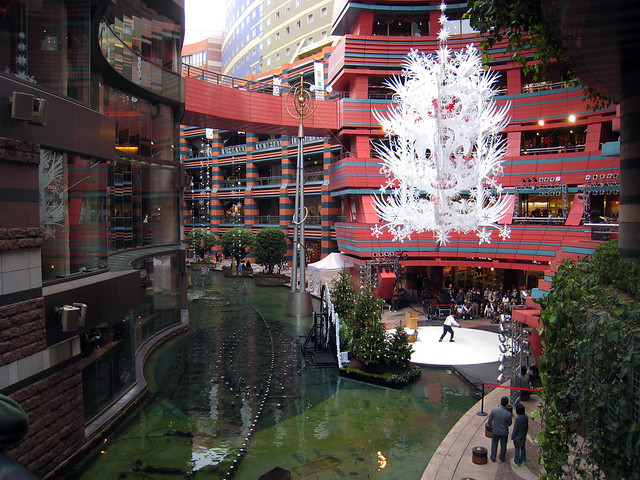
JR Hakata station is the transport centre for the city and is surrounded by hotels. Tenjin is the business and shopping centre - its focus is along Watanabe-dōri. Underneath this busy street is Tenjin Chikagai, a crowded underground shopping mall that extends for 400m (1312ft). The Tenjin bus centre is close to the terminus of the private Nishitetsu Ō muta line. Separating Hakata and Tenjin to the west is the Naka-gawa, site of the impressive Canal City and the island of Nakasu, the entertainment centre of the city. It's a maze of restaurants, strip clubs, hostess bars, cinemas, department stores and the famed yatai (food stalls).
its
Destination Facts
Time zone: GMT +9
Area: 6668
Coordinates: 33.583 latitude and 130.400 longitude
Population: 2375000
Currency: Yen (¥)
Area codes: 092
its
Languages:
Set aside several years if you want to learn to read Japanese. Japan has one of the most complex writing systems in the world, using three different scripts (four if you include the increasingly used Roman script romaji). Fortunately, for visitors to Japan, it's not all bad news. Unlike other Asian languages, Japanese is not tonal and the pronunciation system is fairly easy to master. In fact, with a little effort, getting together a repertoire of travellers' phrases should be no trouble - the only problem will be understanding what people say back to you.
its
Getting there and away
Fukuoka/Hakata is a major international gateway with flights to and from many major cities in Japan, Asia and even Honolulu. ANA and JAL are the two most common carriers, and both have offices here. Cathay Pacific offers flights into Fukuoka via Hong Kong. Japan's only independent cut-price carrier, Skymark, has daily flights to Tokyo's Haneda airport.Ferry services from Fukuoka/Hakata connect to Okinawa and other islands off Ky ū sh ū . An international high-speed hydrofoil service called Biitoru run by JR Ky ū sh ū connects the city with Pusan in Korea. The Camellia line has a regular ferry service to Pusan.Long-distance buses depart from the K ō ts ū bus centre near JR Hakata Station and also from the Tenjin bus centre. Destinations include Tokyo (14.5hrs), Osaka (9.5hrs), Nagoya (11hrs) and many other places around Ky ū sh ū .JR Hakata station is currently the western terminus of the 1175km (730mi)-long Tokyo-Osaka-Hakata shinkansen (bullet train), with services to/from Tokyo (5-6hrs), Osaka (2.5-3hrs) and Hiroshima (1-2hrs).JR lines also fan out from Fukuoka/Hakata to other parts of Kyūshū .
its
Getting around
City bus services operate from the Kōtsū bus centre in Hakata and the Tenjin bus centre. There are two subway lines in Fukuoka/ Hakata. The Kūkō (airport) line runs from Fukuoka domestic airport terminal to Meinohama station via Hakata, Nakasu-Kawabata and Tenjin stations. The Hakozaki line runs from Nakasu-Kawabata station to Kaizuka. Trains stop running around midnight.
its
Weather
The island of Kyūshū experiences extreme temperatures that vary tremendously from season to season. In the winter, it can still be quite cold, near freezing at night, and many of the mountains retain their snow caps for much of the year. During the rainy season it is inundated with heavy, often torrential rain. Summer is hot and oppressively humid, and autumn regularly brings typhoons. Landslides are a common problem in less built-up areas due to deforestation, logging, earthquakes, and rain. Travellers to Fukuoka should bring layers and a waterproof rain shell, as it is often too windy to use an umbrella.

Wednesday, 16 November 2011

Sapporo City

its
its
Introduction
Wash down Sapporo's pleasures with a slug of its famous beer. On the same beer-soaked latitude as Munich and Milwaukee, Sapporo lays undisputed claim to the title of Japan's brewing mecca. Beer-makers Sapporo, Asahi, Kirin and a host of local microbreweries have all set up shop here, helping to make this energetic city even more spirited and rambunctious.

its
Destination Facts
Time zone: GMT +9
Area: 1120
Coordinates: 43.0550003052 latitude and 141.345993042 longitude
Population: 1800000
Area codes: 011
its
Getting there and away
Sapporo is served mainly by the New Chitose airport, 40km (25mi) southeast of the city. There is also a subsidiary airport at Okadama, about 10km (6mi) north of the city. Flights connect Sapporo with most of the major cities on Honshu and Okinawa. Air Do has brought almost every major carrier's price down for the 2hr flight to Tokyo. There are regular flights to Osaka or Kansai, and international destinations include Guam, Seoul and Amsterdam. Chitose Airport is accessible from Sapporo by kaisoku (rapid train) or bus. The airport has its own train station and bus centre, as well as car-rental counters. From the airport, there are bus services to various destinations on Hokkaid ō . Taxis can be found at stands in front of the airport. Sapporo is linked with the rest of Hokkaid ō by an extensive network of long-distance bus services. The main bus station is next to Sapporo station; access is via the underground shopping plaza. Some buses also leave from the Chuo bus station and Ō d ō ri bus centre near Ō d ō ri-k ō en. If you're short on time, consider taking one of the less-expensive night buses. Two of the fastest rail connections from Tokyo are the Hokutosei Express, a direct 16hr sleeper to Sapporo, and a combination of the shinkansen (bullet train) to Morioka followed by a tokkyu (limited express) via Aomori (10hr).
its
Getting around
The main station for city buses is adjacent to the Sogo department store. From late April to early November, the Sapporo Lincle tourist bus makes a loop of 22 major sights around the city. There is a single tramline that heads west from Ō d ō ri, turns south and then loops back to Susukino. It's convenient for Moiwa-yama. The subway is the most efficient way to get around Sapporo. There are three lines, the two most useful being the Nanboku line, which runs on a north-south axis, and the T ō zai line, which runs on an east-west axis. There are good-value passes that cover travel on Sapporo's buses and trams as well as on the subway.
its
Weather
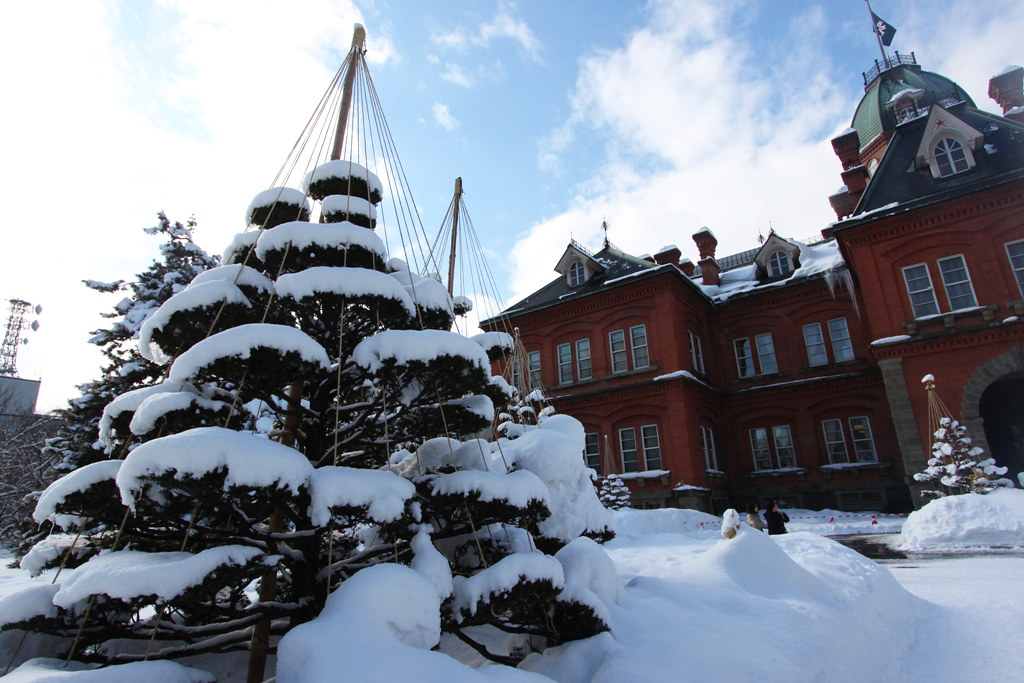
Hokkaid ō island becomes terribly cold in the winter and receives plenty of snow. During summer the weather heats up considerably and can be humid as well. May to July are the wettest months. Typhoons, though rare, are possible in autumn.
its
Place of interest
Actually we didn't spent much time in Sapporo because we were too busy visiting other cities in Hokkaido. However, there are also many interesting places to be visit here. For chocolate lover, Shiroi Koibito Park is a place where you can experience many activities in making cookies and cakes from chocolate. Shiroi Koibito is the famous chocolate company in Hokkaido. Natures lover who like to understand the life history of salmon, including how they return to the Toyohira River, Sapporo Salmon Museum is the best place for you. There is no charge for admission. You can visit here for more information.
its
Related Cities: Tokyo, Nagoya, Osaka, Kyoto

Saturday, 29 October 2011

Tokyo City

its
its
Introduction
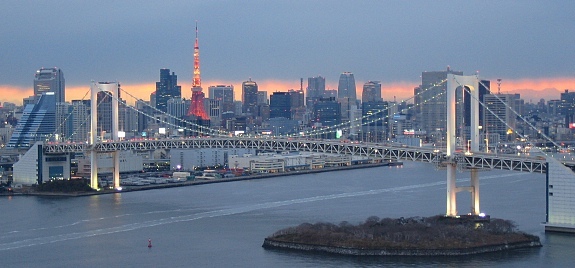
An adrenaline-pumping bullet-train ride to a place of deep calm. The sheer level of energy is the most striking aspect of Japan's capital city. Tokyo is a place where the urgent rhythms of consumer culture collide with the quieter moments that linger from older traditions. It's hectic madness leavened by the most Zen-like of calms.

its
While it's true the exciting vibe has a somewhat depressing flip side - shoebox housing estates and office blocks traversed by overhead expressways crowded with traffic - Tokyo remains a glittering example of the 'miracle' of post-WWII Japan. 'You can see more chronological strata of futuristic design in a Tokyo streetscape than anywhere else in the world.' - William Gibson
its
Tokyo is a vast conurbation spreading out across the Kant ō Plain from Tokyo Bay (Tokyo-wan). The central metropolitan area is made up of 23 ku (wards), while outlying areas are divided into 27 separate shi (cities), a gun (county) and four island-districts. Nearly everything of interest to visitors lies on or near the JR Yamanote line, the rail loop that circles central Tokyo. Areas not on the Yamanote line - like Roppongi, Tsukiji and Asakusa - are nonetheless within easy reach, as the central city is crisscrossed by Tokyo's excellent subway system. In Edo times, Yamanote referred to 'Uptown': the estates and residences of feudal barons, military aristocracy and other Edo elite, in the hilly regions of the city. Shitamachi or 'Downtown' was home to the working classes, merchants and artisans. Even today this distinction persists. The areas west of the Imperial Palace (K ō kyo) are more modernised, housing the commercial and business centres of modern Tokyo; the areas east of the palace retain more of the character of old Edo. A trip around the JR Yamanote line makes a good introduction to the city. You might start at Tokyo station, the first point of arrival for many travellers. Near the station are the Marunouchi and Ō temachi office districts and the high-class shopping district of Ginza. Continuing north from Tokyo station brings you to Akihabara, the discount electronics centre of Tokyo. Further along is Ueno, home to many of the city's museums. After rounding the top of the loop you descend into Ikebukuro, a shopping and entertainment district. A few stops further on is Shinjuku, a massive shopping, entertainment and business district considered by many the heart of modern Tokyo. From there, trains continue through to the youth-oriented, fashionable shopping areas of Harajuku, Shibuya and Ebisu. A swing through Shinagawa at the bottom of the loop then brings you back to Tokyo station.
its
Destination Facts
Time zone: GMT +9
Area: 2168
Coordinates: 35.6829986572 latitude and 139.809005737 longitude
Population: 13010000
Area codes: 03

Getting There
Blooming cherry blossoms should be reason enough to visit Tokyo in spring. Likewise, the mellow hues of autumn also provide a poignant example of the Japanese aesthetic. The muggy summer is not for everyone; just remember there's roughly 5500 persons per sq km (over 14,000 per sq mi)! It might also be wise to avoid an even more crowded Tokyo during the Golden Week national holiday, from 29 April to 5 May.

Places of Interest
Sightseeing with that sardines-in-a-can kind of energy. What makes Tokyo fascinating is the tension between mammoth scale and meticulous detail. Lightseeing in its streets can be a neon assault that leaves you elated and breathless, or an encounter with the exquisite art of understatement. Jump aboard the subway and see how one city is really many.
its
The sheer level of energy is the most striking aspect of Japan's capital city. Tokyo is a place where the urgent rhythms of consumer culture collide with the quieter moments that linger from older traditions. It's hectic madness leavened by the most Zen-like of calms. While it's true the exciting vibe has a somewhat depressing flip side - shoebox housing estates and office blocks traversed by overhead expressways crowded with traffic - Tokyo remains a glittering example of the 'miracle' of post-WWII Japan.

Weather
Tokyo kicks off its year with high, cold winter days and, occasionally, snowfalls. Though temperatures sometimes drop below freezing, in general the winter months are reasonable with the right kind of clothing. Spring brings pleasant, warm days. Summer is hot and muggy. The temperature and humidity are at their worst in August and late June can see torrential rains that pound the city during some monsoon seasons. After spring, autumn is the most pleasant season. Temperatures cool down to a cosy level and days are often clear and fine.
its
Events
Old Edo was home to an abundance of matsuri (festivals), which originated in farming communities as expressions of the Shint ō religion. Spring festivals were held to supplicate the local gods and to secure a plentiful harvest, while autumn festivals were held in thanks and celebration of a rich harvest. Summer and winter festivals were less common, though this changed with the rise of large urban settlements, where they were held in the hope of circumventing pestilence and plague. Today, Tokyo's civic calendar is jam-packed with matsuri as well as a mix of events from traditional flower viewings to trade shows covering everything from motorcycles to design.

Related Cities: Nagoya, Osaka, Kyoto City

Sunday, 17 July 2011

Nagoya City

its
its
Introduction
A bit like Toyko with a dash of Osaka. Nagoya, Japan's fourth-largest city, isn't a traditional tourist destination, but it has a number of worthwhile sights, some good restaurants and places to shop. In spirit, this major industrial centre, the capital of Aichi-ken, feels like a scaled-down, less breakneck-paced Tokyo.

Destination Facts
Time zone: GMT +9
Area: 5150
Coordinates: 35.1549987793 latitude and 136.921005249 longitude
Population: 2184000
Area codes: 52

Getting There
Since Nagoya is not a 'hot' tourist destination, it is safe to visit any time of year. However, the best time to come is probably autumn, from late September to November, after the intense heat of summer, when the weather is usually sunny and warm. Spring, from March to May, is another beautiful season; the temperature is mild and Nagoya's cherry blossoms bloom. Winter, from December to March, is dry and temperatures hover just above zero. You may wish to avoid the rainy season (June), and the rest of summer (July and August), when the weather is often unpleasantly hot and humid.

Getting there and away
Nagoya airport is linked by air with most of Japan's major cities. If you're coming from Tokyo, however, the shinkansen (high-speed train, or 'bullet' train) is much quicker than flying: the shinkansen takes 2hrs, whereas the bus ride from the airport to Nagoya's city centre takes 30mins. Nagoya is a major shinkansen stop between Tokyo, Osaka, Kyoto and Hiroshima. Ise is connected to Nagoya by the private Kintetsu line. Tokky ū (limited express trains) run to Ise and other trains run to Nara on the Kintetsu line. Other lines have trains to the Japan Alps, Takayama and Gifu. Direct trains run to Inuyama from Nagoya every 30mins. JR and Meitetsu highway buses run between Nagoya and Kanazawa, Kyoto, Osaka and Tokyo. JR and Meitetsu also run overnight buses to Hiroshima, K ō chi, Fukuoka and Nagasaki. Taiheiyo ferries run between Nagoya and Tomakomai (Hokkaid ō , 40hrs) via Sendai (21hrs) every second evening.

Getting around
Express buses run from Nagoya airport to Meitetsu bus station, which is just southeast of JR Nagoya station. A taxi ride from the city to the airport takes around 30mins. Nagoya has an excellent subway system with four lines, all clearly signposted in English and Japanese. There is an extensive city bus system, but the subway is easier to use for those who don't know much Japanese. If you plan to do a lot of travel by subway or bus, you can save money with a one-day pass, available at subway stations. The one-day 'Ikomai Pass' includes all transport plus free or discounted admission to selected attractions.

Weather
From April to October Nagoya is usually fairly warm or hot, but from November all the way to March a definite chill creeps in, with temperatures regularly falling below 10 ° C (50 ° F).

Monday, 27 June 2011

Osaka City

its
its
Introduction
Have a fried-octopus ball in high-wired Osaka. Famous for its down-to-earth citizens and hearty cuisine, Osaka combines historical and cultural attractions with all the delights of a Japanese urban phenomenon. At night Osaka is live-wired with flashing neon, beckoning with promises of tako-yaki (fried octopus ball), good times and lots of beer.
Often maligned by visitors as 'ugly' and still best viewed under the neon light of night, Osaka is currently undergoing a facelift to woo daytime visitors to its concrete and pachinko city grid. Waterfront developments are restoring Osaka's image as a port town and creating new attractions for tourists.

Osaka is in the heart of the Kansai region in central Japan, about 350km (215mi) west of Tokyo. The city is divided into northern and southern areas. Kita (north), also known as Umeda, is the city's main business and administrative centre. Its biggest train stations, JR Osaka and Hankyu Umeda, are the gateways to K ō be and Kyoto. Minami (south) is the city's entertainment district and contains the hyperactive shopping and nightlife areas of Namba and Shinsaibashi. In between is the peaceful green Nakanoshima Park, on a small island bounded by the Dojimagawa and Tosaborigawatwo rivers. Osaka-wan, the bay area in the west, is home to a number of attractions, including the spanking-new Universal Studios and the excellent Osaka Aquarium.

Destination Facts
Time zone: GMT +9
Area: 221
Coordinates: 34.66667 latitude and 135.5 longitude
Population: 2600000
Languages: Set aside several years if you want to learn to read Japanese. Japan has one of the most complex writing systems in the world, using three different scripts (four if you include the increasingly used Roman script romaji). Fortunately, for visitors to Japan, it's not all bad news. Unlike other Asian languages, Japanese is not tonal and the pronunciation system is fairly easy to master. In fact, with a little effort, getting together a repertoire of travellers' phrases should be no trouble - the only problem will be understanding what people say back to you.
Currency: Yen ( ¥ )
Area codes: 06

Getting There
Osaka's Kansai International Airport (KIX) is a state-of-the-art virtual city built on an entirely man-made island, the first of its kind. 50km (30mi) south of downtown Osaka, KIX handles all international and some domestic flights, while the ageing Itami airport (10km/6mi northeast of Osaka) only handles domestic traffic. All international carriers fly to and from KIX; departure tax is 20.00. The flight from Tokyo (Haneda or Narita airports) is only an hour or so. Limousine airport buses shuttle passengers direct from Itami to Osaka (Namba, Umeda or Tennoji stations). KIX has every known transport possible into Osaka including limousine bus, taxi, ferry, shuttle bus and passenger train, but by far the most convenient and fun is the sleek Nankai Railways Rapito, a great introduction to the joys of bullet-train travel that takes only 29 minutes. It really is the only way to go. Osaka is also on the main shinkansen (bullet train) route through Japan. The Tokaido shinkansen (Hikari) makes the sprint from Tokyo to JR Shin-Osaka in three hours, passing through Yokohama and Shizuoka on the way. Most trains coming from the north of Japan pass through Tokyo on the way to Osaka. For water babies there's a ferry service between Shanghai and Osaka (Nanko International Ferry Terminal).

Getting around
The tongue-twisting names of the city's subway system are a challenge; thankfully it is also colour coded and so fairly simple to use. Wherever you need to go in Osaka the subway system usually has it covered. There is also a JR Loop line which links in well with key subway stations. There is a handy prepaid day card available for unlimited subway and city bus travel. Private and JR train lines also run through town. The names of JR, subway and private railway stations are displayed in both Japanese and English. Although trains are more convenient for getting around, Osaka does have a bus network, which uses the same ticketing system as the subway. There's also a sightseeing bus, with a range of different tours available. It leaves from Umeda train station. Osaka operates a range of ferries and sightseeing cruises around its bay. Most of these originate or stop around the Tempozan Harbour Village (Chuo subway line, Osakako station). The Aqua-bus Aqua-liner travels on the Okawa River in northern Osaka and takes in Osaka Castle, Tenmabashi, Yodoyabashi and Osaka Amenity Park (OAP). Taxi stands can be found in front of most train stations and it's possible to hail a cab on heavily trafficked streets. Having your destination written down in Kanji will be a help as many drivers don't speak English. Whatever you do, don't try to open the left rear door - only the driver has this privilege. There's no need to tip. There are several car rental agencies based at both Itami and Kansai International Airport (KIX). You can hire a car on presentation of an International Driving Permit. Note: Osaka's roads aren't cheap, with steep levies applied on all major tollways through the city. The best means of exploring Osaka's inner-city warrens is on foot. Although cycling in Osaka is very popular with locals (the city is completely flat) there are no bike paths.

Weather
Osaka has a temperate weather pattern; the summers are hot and humid and the winters are cold. Plenty of rain falls over the summer months of June and early July, while the warm weeks of September and early October bring occasional typhoons. The autumn is usually sunny and cool. It seldom snows in the winter, as temperatures rarely fall below freezing.

Events
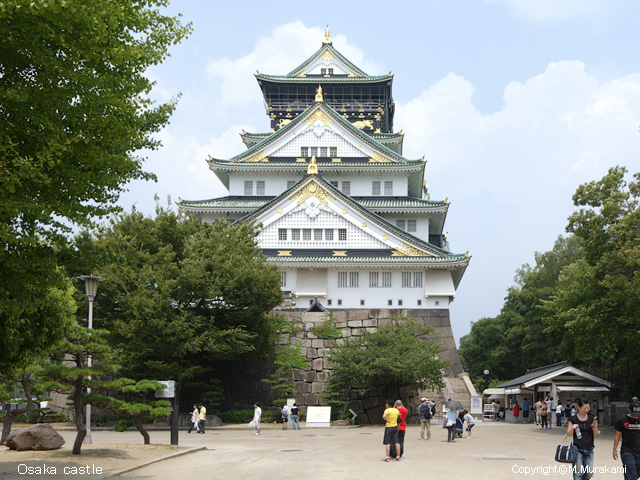
The highlight of the Osaka calendar is the annual hanami (cherry blossom) viewing in late March to early April. Popular sites from which to view the blossom are Osaka Castle Park and Osaka Amenity Park. Osaka's Tenjin Matsuri has been celebrated for over 1000 years and over a million people come every July to enjoy the festival on the river and marvel at the fireworks display. September's Kishiwada Danjiri Matsuri is another huge event that attracts large crowds. The Midosuji Parade sends Osaka's citizens into an autumn spin with a huge street parade of marching bands and floats from many countries.
its

Wednesday, 13 April 2011

Kyoto City

its
its
Introduction
Kyoto will satisfy a Fuji-sized appetite for the classic Japanese aesthetic. Kyoto, with its hundreds of temples and gardens, was the imperial capital between 794 and 1868, and remains the cultural centre of Japan. Its raked pebble gardens, sensuously contoured temple roofs and mysterious Shint ō shrines fulfill the Japanese fantasy of every Western clich é hunter.
With an astonishing 1600 Buddhist temples, 400 Shint ō shrines, a trio of palaces, and dozens of gardens and museums, Kyoto is Japan's cultural treasure house. Seventeen of Kyoto's ancient structures and gardens have been declared UNESCO World Heritage sites.

The city is commonly divided into five sections - the raku-ch ū (central), raku-t ō (eastern), raku-hoku (northern), raku-sai (western) and raku-nan (southern) areas of town, plus raku-gai, which refers to the outskirts of the city. It's laid out on a rectangular grid system based on the classical Chinese concept, and is easy to navigate. The main business district is in the south and centre of town; the less populated northern parts have a far greener feel, and you can still find people tending the rice fields sandwiched between apartment buildings. Although many of the major sights are in the centre, the best of Kyoto's sightseeing is on the fringes of the city in the north, east and west.

Destination Facts
Time zone: GMT +9
Area: 610
Coordinates: 35 latitude and 135.75 longitude
Population: 1400000
Languages: Set aside several years if you want to learn to read Japanese. Japan has one of the most complex writing systems in the world, using three different scripts (four if you include the increasingly used Roman script romaji). Fortunately, for visitors to Japan, it's not all bad news. Unlike other Asian languages, Japanese is not tonal and the pronunciation system is fairly easy to master. In fact, with a little effort, getting together a repertoire of travellers' phrases should be no trouble - the only problem will be understanding what people say back to you.
Currency: Yen ( ¥ )
Area codes: 075

Getting there and away
There's no major international or domestic airport in Kyoto, but Osaka's Itami domestic airport and Kansai International Airport (KIX) are both within easy reach. Japan's expansive and highly efficient railway services make train travel an ideal way of getting from anywhere in the country to Kyoto. Buses are slower, but as reliable as every other form of Japanese public transport.

Getting around
Because central Kyoto is laid out in a logical grid, it's an easy city to get around by public transport, cycling or walking. There is an intricate network of bus routes at a moderate price, and many of the routes used by visitors have announcements in English. Kyoto has two efficient subway lines, which operate from 05:30 to 23:30. Getting around by car is less enticing, given Kyoto's traffic problems, and you will almost always do better on a bicycle or public transport. Kyoto is a great city to explore by bicycle; it's mostly flat and there is a new bike path running the length of the Kamo-gawa.Walking is often the best way to explore the city, taking away the cost and concerns of traffic and parking and allowing you the chance to wander through narrow backstreets where you're far more likely to catch a glimpse of old Kyoto.

Weather
There's no question that the most appealing seasons in Kyoto are spring and autumn. Summers are too muggy; the surrounding mountains keep the air from moving around, making things stifled and sticky and producing ample rain. Winter is cold but not devastatingly so, and aesthetically speaking it's quite pretty. However, spring cherry blossoms and autumn amber leaves are just too good to miss.

Events
Kyoto's greatest living treasures are its raucous matsuri (festivals). The city hosts some 500 of these colourful events throughout the year, and almost any visit should provide the chance to catch at least one. Some of the more fascinating festivals include Hatsu Ebisu, 8 to 12 January, where a party is held for Ebisu the patron deity of merchants, and Godai Rikison Ninno-e, 23 February, at which participants lift two gigantic rice cakes: 150kg (330lbs) for men, 90kg (200lbs) for women. Gion Matsuri, 17 July, is perhaps the most renowned of all Japanese festivals, when over 200,000 people throng the Shijo-Karasuma area. Its climax is a Yamaboko-junko parade of over 30 floats accompanied by flutes, drums and gongs. During Daimon-ji Gozan Okuribi, 16 August, enormous fires are lit on five mountains in the form of Chinese characters or other shapes.