
Showing posts with label Italy. Show all posts
Showing posts with label Italy. Show all posts
Thursday, 6 September 2012
Convicts serve tourists on Italian island

Tuesday, 13 March 2012
Naples City


A vigorous city that delights in flouting order. Naples (Napoli if you live there) is raucous, polluted, anarchic, deafening, crumbling and aristocratic. It's also a lot of fun. Superbly positioned on a bay, Naples screams with energy, pulsating with noisy street markets and colourful characters.


Time zone: GMT +1
Area: 117
Coordinates: 40.833366394 latitude and 14.2500247955 longitude
Population: 1000470
Languages: A Latin language related to French, Spanish, Portuguese and Romanian. Standard Italian and numerous dialects are spoken.
Currency: Euro (€)
Daylight Saving: From last Sunday in March to last Sunday in October
Area codes: 081

Situated on the shin of Italy, Naples has a fair expanse of Mediterranean in front of it, bringing those hot dry summers and cool sea breezes straight to Naples' door. It's much wetter than Italy's east coast; most rain occurs around autumn and winter months. Unlike Mediterranean islands where the sea keeps winter temperatures warm, Naples has inland winds that make for quite chilly winters.

An ongoing dispute about waste disposal has taken its toll on Naples, where some 3,500 tons of uncollected trash are piled up around city streets. Angry residents have taken to burning the rubbish, magnifying the potential health and environmental hazards of the situation. Italy's president, Silvio Berlusconi, has vowed to address the crisis, but in the meantime, Naples may not be the most relaxing place for a holiday.
Saturday, 4 February 2012
Milan City

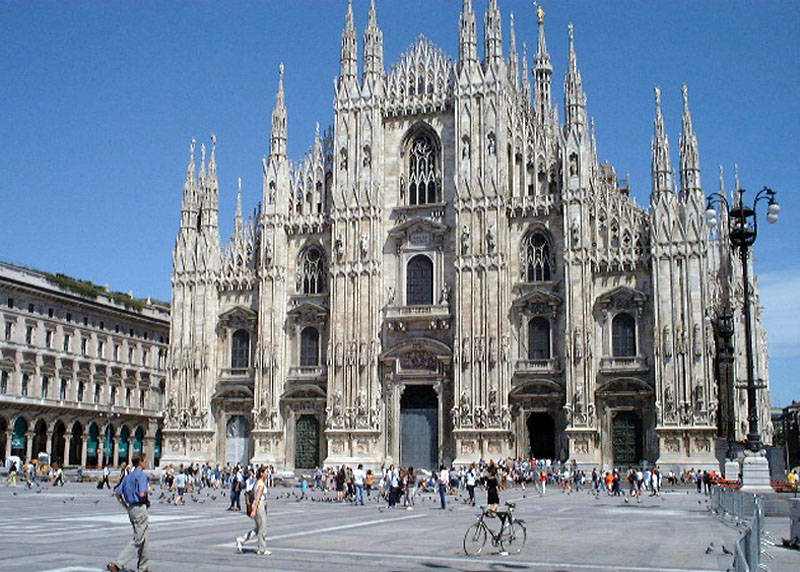
Frock up to fit in when visiting the world fashion and design capital. The now and the next are invented daily in Milan, the engine room of the country's economy. Milan is Italy's city of the future, a fast-paced metropolis where creativity is big business, looking good is compulsory and after-work drinks, aperitivi, are an artform.


Time zone: GMT/UTC +2
Area: 1980
Coordinates: 45.46427 latitude and 9.18951 longitude
Population: 1307000
Languages: A Latin language related to French, Spanish, Portuguese and Romanian. Standard Italian and numerous dialects are spoken.
Currency: Euro (€)
Daylight Saving: From last Sunday in March to last Sunday in October
Area codes: 02

Milan sees a lot of international and domestic traffic and there is a constant stream of planes, buses, trains and cars pouring into the city. Public transport is efficient, with an underground rail system, buses and trams covering the city. Road traffic is pretty much to the Italian template - organised chaos.

Though Italy has a predominantly Mediterranean climate, Milan's winters (December-February) are certainly brisk, with lows below freezing. Still, mountains shield the city from the worst of the Northern European winter. Summer (May-Sept) can be hot and muggy. In August, most of the city heads to the beaches to escape the 30 ° C-plus (86 ° F-plus) heat; the rest are in Milan's many gardens and parks.

Milan likes to celebrate the spiritual and material worlds with equal gusto. The Festa di Sant'Ambrogio, on 7 December, is Milan's biggest feast day, and is marked with religious celebrations and a large Christmas fair at Castello Sforzesco. La Scala marks the solemn occasion by opening its opera season on this day. In February, Carnevale Ambrosiano (the world's longest carnival) culminates with a procession to the Duomo. The first 10 days of June are devoted to the Festa del Naviglio, a smorgasbord of parades, music and other performances. For La Bella Estate, more than 400 concerts, exhibitions and family events are organised by the city government to entertain those who haven't escaped to the beach or lakes during June, July and August. If you feel the need for speed, Milan has the raceway for you: the Monza Autodrome, 20km (12mi) northeast of the city, hosts the Italian Grand Prix in September. Glimpse the future of wardrobes worldwide four times a year, when designers parade next season's collections at the seasonal Milan Fashion Weeks. The men's shows head the A/W (autumn/winter) schedule in January, with the women's following in February. Men's S/S (spring/summer) take place in June and the women's in September. The other major trade event, held in April, is Salone Internazionale del Mobile, the world's most prestigious furniture fair.
Saturday, 7 January 2012
Florence City


Introduction
Florence's elegant sights are conveniently clustered. For eye-watering attractions you won't need to venture far from Florence's centre, a medieval wonderland containing the graceful span of Ponte Vecchio, the Duomo's skyscraping dome, the gilded splendour of Basilica di San Lorenzo and the well-hung Uffizi gallery.
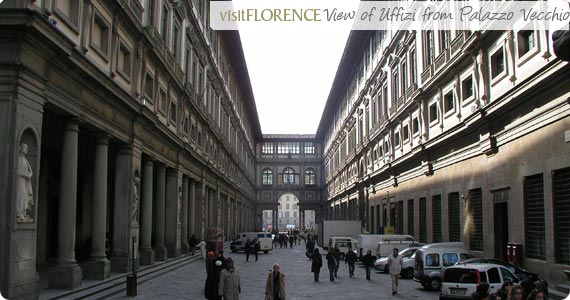 Florence's lofty domes and sacred art will make your senses reel. The cultural and historical impact of Florence (or Firenze) is overwhelming. Close up, however, the city is one of Italy's most atmospheric and pleasant, retaining a strong resemblance to the small late-medieval centre that contributed so much to the artistic and political development of Europe.
 Its striking buildings, formidable galleries and treasure-crammed churches attest to the Florentine love of display. Even long after it had set on the political and economic horizon, Florence upheld its elegant appearance: its skyline, all russet rooftops and lofty domes, is indeed picturesque.
 Florence is the capital of the region of Tuscany, on Italy's northwest coast. A good reference point for navigating your way around is the central train station, Santa Maria Novella, although the Duomo is impossible to miss. The city has two airports: Amerigo Vespucci is 5km (3.1mi) northwest of the city centre and Galileo Galilei (for international flights) is about 75km (46.6mi) west of the city, near Pisa. You can walk from one end of the city centre to the other in about 30 minutes.
 Destination Facts
Time zone: GMT +1
Area: 3514
Coordinates: 43.7815742493 latitude and 11.2077455521 longitude
Population: 374500
Daylight Saving: From last Sunday in March to last Sunday in October
Area codes: 055
 Getting There
The best time to visit Florence is in the low season, from April to June and in September/October, when the weather is usually good, prices are lower and there are fewer tourists - if you come in July or August, expect a Renaissance Disneyland experience and plenty of sweat in your socks. Early winter, in December, can also be surprisingly pleasant, with crisp air and sunny days and far, far fewer people clogging up the piazzas.
 Weather
Florence's position in a river basin, walled in by hills to the south and the foothills of the Apennines to the north, largely determines its climate. In summer the city is a like a pressure cooker as heat and humidity soar. July is the worst month (closely followed by August) and there are days when there is not a whisper of air. The average highs hover around 31 ° C (88 ° F). Occasionally you can enjoy the temporary relief of a cracking good thunderstorm. Winter, on the other hand, is cool and often wet, although mercifully it doesn't last too long. Average temperatures in January range between 1°C (33°F) and 10°C (50°F) and snow is rare.
Florence's elegant sights are conveniently clustered. For eye-watering attractions you won't need to venture far from Florence's centre, a medieval wonderland containing the graceful span of Ponte Vecchio, the Duomo's skyscraping dome, the gilded splendour of Basilica di San Lorenzo and the well-hung Uffizi gallery.
Time zone: GMT +1
Area: 3514
Coordinates: 43.7815742493 latitude and 11.2077455521 longitude
Population: 374500
Daylight Saving: From last Sunday in March to last Sunday in October
Area codes: 055
The best time to visit Florence is in the low season, from April to June and in September/October, when the weather is usually good, prices are lower and there are fewer tourists - if you come in July or August, expect a Renaissance Disneyland experience and plenty of sweat in your socks. Early winter, in December, can also be surprisingly pleasant, with crisp air and sunny days and far, far fewer people clogging up the piazzas.
Florence's position in a river basin, walled in by hills to the south and the foothills of the Apennines to the north, largely determines its climate. In summer the city is a like a pressure cooker as heat and humidity soar. July is the worst month (closely followed by August) and there are days when there is not a whisper of air. The average highs hover around 31 ° C (88 ° F). Occasionally you can enjoy the temporary relief of a cracking good thunderstorm. Winter, on the other hand, is cool and often wet, although mercifully it doesn't last too long. Average temperatures in January range between 1°C (33°F) and 10°C (50°F) and snow is rare.
Thursday, 5 January 2012
Bologna City


Introduction
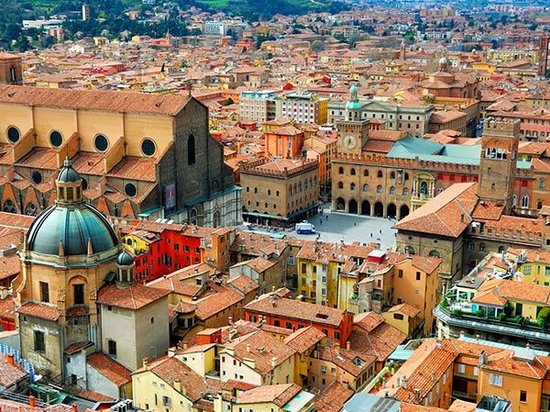
Where the intelligentsia and the gastronomes strut among the hills. Bologna offers a chance to rest and savour before joining the masses of tourists in Florence and Venice. Surrounded by hills, the city's centre is still much as it was during the Renaissance:
dusky red-coloured buildings, wide piazzas and arched porticoes with floors laid with marble.
 Destination Facts
Time zone: GMT +1
Area: 140
Coordinates: 44.5029983521 latitude and 11.3339996338 longitude
Population: 373000
Area codes: 051
 Getting there and away
Bologna's Guglielmo Marconi airport, northwest of the city at Borgo Panigale, is serviced mainly by European airlines. You can fly in from Rome, Venice, Pisa, Frankfurt, Paris and London, among others. ATC Aerobus connects the city with the airport and leaves from in front of the train station roughly every 15 or 20 minutes until midnight. Budget carrier Ryanair flies into Forli, 70km southeast of Bologna. The airport is serviced by local buses that coincide with flights.Bologna is a major railway junction for regional centres and northern Italy, with frequent services from Rome and Milan, many of them Eurostar trains. Bus services to regional centres such as Ravenna, Ferrara and Modena leave from the depot opposite Piazza XX Settembre, around the corner from the train station. There are also buses to Ancona and Milan, and international buses to Amsterdam, Paris, London, Brussels, Prague and Warsaw. If travelling by car, you can reach Bologna on the A1 Autostrada del Sole, which also links Milan, Florence and Rome. The A13 heads directly for Ferrara, Padova and Venezia, the A14 for Rimini and Ravenna, and the Via Emilia (S9), goes on to connect Milan with the Adriatic coast. The S64 leads to Ferrara. If you want to hire a car, you'll find all of the major hire companies have offices in the city, most also have outlets at the airport.
 Getting around
Bologna has an efficient bus system, run by ATC; you'll find information booths at the train station and on Via Marconi at the junction with Via Ugo Bassi and Via Lame. There are frequent buses from the train station to the city centre. Not all bus routes operate on Sunday. Taxis are also freely available.
 Weather
Winter in northern Italy can be can very cold, especially in January, and summers very hot, especially in July and August. By August so many businesses in Bologna are closed it seems the whole city has gone to the beach.
 Car: recommended
Perfect for visiting Tuscany or Emilia, the house is in a quiet mountain hamlet on the Emilia/Tuscany border, 1hr or less from Florence, Bologna, Lucca and Pisa. The nearest airports are Florence, Bologna and Pisa, all roughly 1hr away, (Bologna Forli 2hrs). The quiet spa town of Porretta Terme, with restaurants bars and a health complex, is 20 mins away. 1km from the house is a local shop and train station and the Tuscan village of Pracchia (10 mins) has a bank, hotel, restaurant, bar etc. The house is surrounded by woodland and is ideal for adventurous people who want to walk, explore, build log fires in the evening and hear very little other than bird song, woodpeckers, owls and the odd wild boar. The stars at night are brilliantly bright. It is a comfortable family home and not for those looking for hotel-standard luxury. The 1km road to the house from the main road up the mountain is steep.
Where the intelligentsia and the gastronomes strut among the hills. Bologna offers a chance to rest and savour before joining the masses of tourists in Florence and Venice. Surrounded by hills, the city's centre is still much as it was during the Renaissance:
dusky red-coloured buildings, wide piazzas and arched porticoes with floors laid with marble.
Time zone: GMT +1
Area: 140
Coordinates: 44.5029983521 latitude and 11.3339996338 longitude
Population: 373000
Area codes: 051
Bologna's Guglielmo Marconi airport, northwest of the city at Borgo Panigale, is serviced mainly by European airlines. You can fly in from Rome, Venice, Pisa, Frankfurt, Paris and London, among others. ATC Aerobus connects the city with the airport and leaves from in front of the train station roughly every 15 or 20 minutes until midnight. Budget carrier Ryanair flies into Forli, 70km southeast of Bologna. The airport is serviced by local buses that coincide with flights.Bologna is a major railway junction for regional centres and northern Italy, with frequent services from Rome and Milan, many of them Eurostar trains. Bus services to regional centres such as Ravenna, Ferrara and Modena leave from the depot opposite Piazza XX Settembre, around the corner from the train station. There are also buses to Ancona and Milan, and international buses to Amsterdam, Paris, London, Brussels, Prague and Warsaw. If travelling by car, you can reach Bologna on the A1 Autostrada del Sole, which also links Milan, Florence and Rome. The A13 heads directly for Ferrara, Padova and Venezia, the A14 for Rimini and Ravenna, and the Via Emilia (S9), goes on to connect Milan with the Adriatic coast. The S64 leads to Ferrara. If you want to hire a car, you'll find all of the major hire companies have offices in the city, most also have outlets at the airport.
Bologna has an efficient bus system, run by ATC; you'll find information booths at the train station and on Via Marconi at the junction with Via Ugo Bassi and Via Lame. There are frequent buses from the train station to the city centre. Not all bus routes operate on Sunday. Taxis are also freely available.
Winter in northern Italy can be can very cold, especially in January, and summers very hot, especially in July and August. By August so many businesses in Bologna are closed it seems the whole city has gone to the beach.
Perfect for visiting Tuscany or Emilia, the house is in a quiet mountain hamlet on the Emilia/Tuscany border, 1hr or less from Florence, Bologna, Lucca and Pisa. The nearest airports are Florence, Bologna and Pisa, all roughly 1hr away, (Bologna Forli 2hrs). The quiet spa town of Porretta Terme, with restaurants bars and a health complex, is 20 mins away. 1km from the house is a local shop and train station and the Tuscan village of Pracchia (10 mins) has a bank, hotel, restaurant, bar etc. The house is surrounded by woodland and is ideal for adventurous people who want to walk, explore, build log fires in the evening and hear very little other than bird song, woodpeckers, owls and the odd wild boar. The stars at night are brilliantly bright. It is a comfortable family home and not for those looking for hotel-standard luxury. The 1km road to the house from the main road up the mountain is steep.
Subscribe to:
Posts (Atom)